 AfriqueUnie
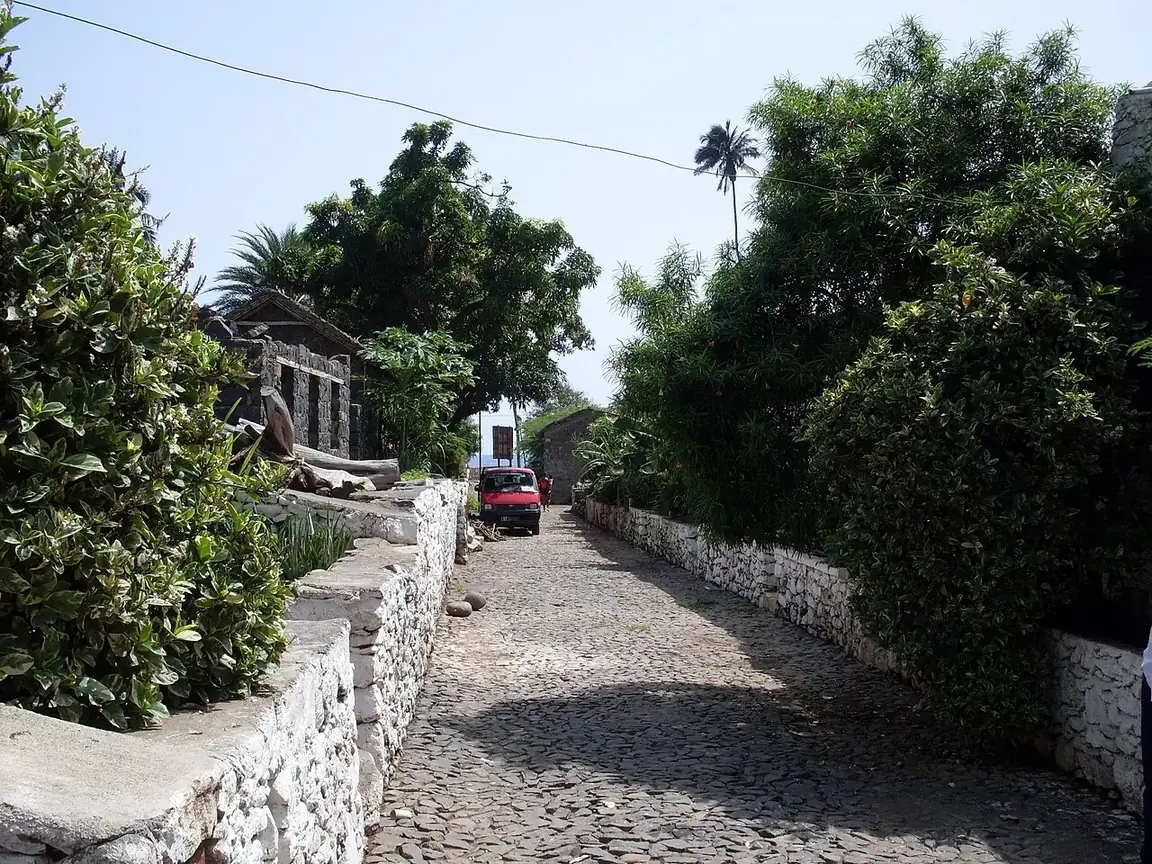 Photo: Xandu · Public domain
Published by Adama Doumbia, founder of Afrique Unie · updated 28 November 2026 · our method and sources
- Days 1-2
Praia and Cidade Velha
Arrive in Praia, the capital, on the island of Santiago. Stay on the Plateau, the historic quarter perched above the city, with its colourful façades, central square and ethnographic museum. The next day, head to Cidade Velha, about fifteen kilometres to the west. Founded by the Portuguese in the 15th century, it was the first European colonial town in the tropics and a hub of the Atlantic slave trade; it is now listed by UNESCO. Climb to the Fortaleza Real de São Filipe for the view, then explore Rua Banana, one of the oldest streets in the archipelago, the pillory and the ruins of the cathedral. Back in town, dive into the bustle of Sucupira market.
- Day 3
Inland Santiago and Tarrafal
Cross the island from south to north on a mountain road of an hour and a half to two hours, through farming valleys, maize fields and hilltop villages. Stop in Assomada, whose market is one of the liveliest on the island, then in the Serra Malagueta natural park for a short hike along the ridges, often in the mist. On arrival, Tarrafal has a pretty beach of pale sand lined with palm trees, one of the most pleasant on Santiago for swimming. Also visit the former colonial-era camp for political prisoners, now a museum, a sober and moving place. In the evening, have grilled fish facing the bay.
- Days 4-5
The Fogo volcano
Return to Praia for a very short flight, or a longer ferry trip, to São Filipe on the island of Fogo. The small town of colonial houses overlooks a black sand beach. Then drive up, in about an hour, to Chã das Caldeiras, a village set inside the caldera, partly destroyed by the 2014 and 2015 eruption and rebuilt by its inhabitants, who grow vines there. The next day, set off at dawn with a local guide to climb Pico do Fogo, at 2,829 metres: a steep ascent of several hours, then a fast descent through the ash. Less demanding, the walk around Pico Pequeno, the crater of the latest eruption, is just as impressive.
- Days 6-7
Mindelo, capital of music
Head back down to São Filipe for a flight to São Vicente, usually connecting in Praia. Mindelo, the home town of Cesária Évora, curves around a superb bay, with its pastel-coloured colonial houses. The next day, stroll around Praça Nova, the municipal market and the fish market, then drive up Monte Verde, the island's highest point, for the view over the archipelago. In the afternoon, the beach at Baía das Gatas, sheltered by a rocky reef, is good for swimming. The evening is the best time: many bars and restaurants host musicians playing morna and coladeira. If you come in February, the carnival is unforgettable.
- Days 8-9
The valleys of Santo Antão
The ferry links Mindelo with Porto Novo, on Santo Antão, in about an hour; the crossing can be rough. Then take the cobbled Corda road, which climbs through the mountains among ridges and pine woods, down to the north coast. The next day, do the island's most famous hike: from the Cova crater, you walk down into the Paul Valley, among terraced crops, sugar cane and banana trees, in three to four hours. Alternatively, follow the coastal path between Ponta do Sol and Cruzinha, via the village of Fontainhas, clinging to the cliff. Stay in a guesthouse, where you will be served cachupa, the national dish.
- Day 10
Back to Mindelo and home
Catch the morning ferry from Porto Novo back to Mindelo, leaving some margin: timetables can change with the weather and the season. Use your last hours for a little shopping in town, such as grogue, the local sugar cane spirit, coffee from Fogo or recordings of Cape Verdean music. São Vicente airport, about fifteen minutes from the centre, has a few direct international flights, but most travellers fly home with a connection via Praia, Sal or Lisbon. Check your connection times carefully in advance: it is often wiser to spend a night on the island your long-haul flight departs from.
Getting around
There are two ways to travel between the islands: domestic flights, quick but with changeable schedules, and ferries, cheap but sometimes slow and at the mercy of the sea. The link between São Vicente and Santo Antão is the most reliable. On the islands, aluguers, shared minibuses and pick-ups, connect the villages; taxis and hiring a car with a driver are handy for mountain stages.
When to do this trip
From November to June, the dry season brings sunny, pleasant weather, with often strong winds from December to March. This is the best time for hiking on Santo Antão and climbing Pico do Fogo. From August to October, some rain falls and it is hotter and more humid, but the valleys turn lush and green. The sea stays cool in winter.
The travel notebook
The itinerary, practical information (entry, health, money, emergencies) and the checklist in a few pages, to print or keep offline on your phone.
Variations
- In 7 days: drop Santiago and Fogo, and focus on Mindelo and Santo Antão, flying straight into São Vicente.
- In 14 days: add four days on the beach on Sal, in Santa Maria, or on Boa Vista and its dunes, ideally at the end of the trip.
- Hiking version: spend four nights on Santo Antão to string together the great trails of the north coast and the central plateau.