AfriqueUnie
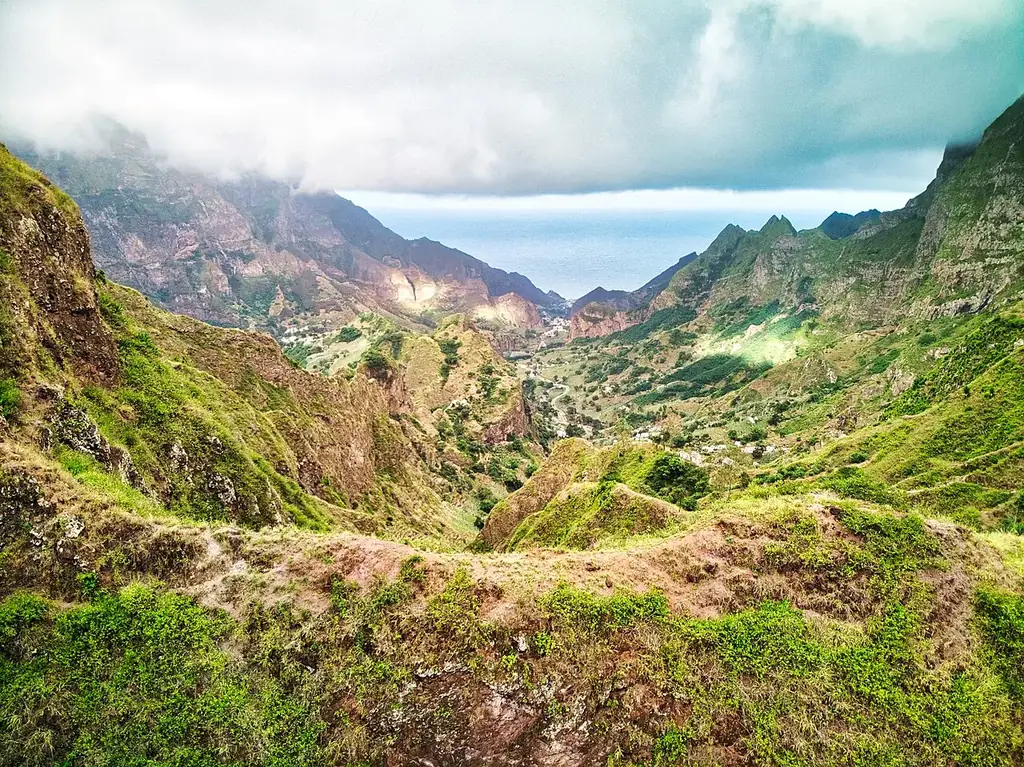 Photo: CaptainDarwin · CC BY-SA 4.0
Published by Adama Doumbia, founder of Afrique Unie · updated 28 November 2026 · our method and sources
Why go
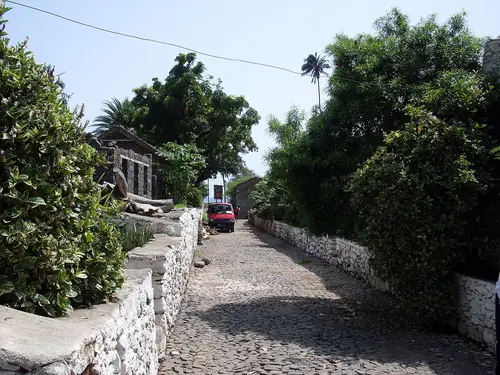
Santo Antão is the hikers' island. Mountainous and green in its north-east, it offers some of the most spectacular landscapes in the Atlantic: deep valleys terraced with sugar cane, knife-edge ridges, perched villages and cobbled paths cut into the cliffs. The contrast is striking between the dry, lunar south and the north, kept damper by the trade winds.
The Paul and Ribeira Grande valleys are the most famous: you walk among banana, mango and coffee trees, passing locals carrying their harvest by donkey. The coastal path between Ponta do Sol and Cruzinha, via the village of Fontainhas clinging to a ridge, is unforgettable. The Cova crater, an old volcano now under cultivation, also makes a superb starting point.
Getting there
Santo Antão is reached by ferry from Mindelo, on São Vicente, in about an hour. The boat arrives at Porto Novo; from there, aluguers and taxis go to Ribeira Grande, Paul and Ponta do Sol, by the coast road or the old mountain road.
Frequently asked questions
How do I get to Santo Antão?
Only by ferry from Mindelo, on the island of São Vicente: the crossing to Porto Novo takes about an hour. The island has no working airport, which makes any medical air evacuation very difficult. In rough seas the crossing can be unpleasant or delayed.
What are the best hikes on Santo Antão?
The coastal path from Ponta do Sol to Cruzinha, via the ridge-top village of Fontainhas, is the most famous. The descent from the Cova crater into the Paul valley, past terraces and banana plants, is another classic. The Ribeira Grande valley also has fine walks.
Do you need a guide to hike on Santo Antão?
The most popular trails are easy to follow, but a local guide is recommended for less well-marked routes. Tell your accommodation where you are going, and carry enough water and sun protection. The steep, cobbled descents are often harder going than the climbs.
When is the best time to hike on Santo Antão?
From November to June, when the weather is dry and temperatures are pleasant for walking. The rainy season, from August to October, is short, but heavy downpours can cause landslides on roads and trails. The north-east of the island stays green for much of the year thanks to the trade winds.
How many days should you spend on Santo Antão?
At least three days, to do two or three good hikes without rushing. Ponta do Sol, Ribeira Grande or the Paul valley make good bases. Aluguers (shared minibuses) and taxis link Porto Novo with the villages in the north.
 Guinea
 Algeria
 Angola