 AfriqueUnie
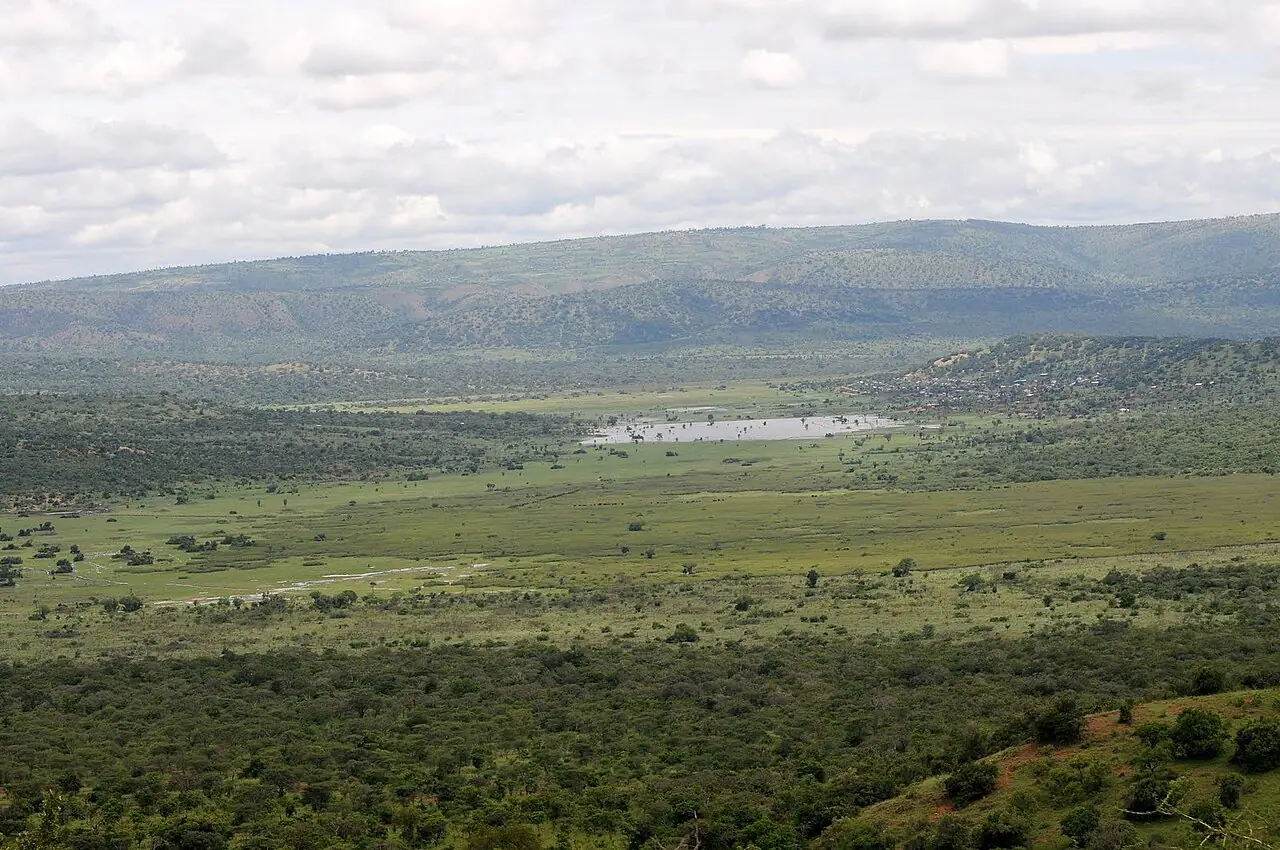 Photo: Louis Dewame · CC BY 3.0
Published by Adama Doumbia, founder of Afrique Unie · updated 28 November 2026 · our method and sources
- Days 1-2
Kigali, capital of a thousand hills
Kigali surprises with its calm, its cleanliness and its green hills. Start at the Kigali Genocide Memorial in Gisozi, where more than two hundred and fifty thousand victims are buried: allow two hours for this sober and deeply moving visit, essential to understanding the country. The next day, change mood at Kimironko market, with its fabrics and mountains of fruit, then the city's contemporary art galleries. The livelier Nyamirambo district is best discovered on a walking tour led by local women. If you are there on the last Saturday of the month, the morning is given over to umuganda, community work, and traffic is very limited.
- Days 3-4
Safari in Akagera National Park
Two and a half to three hours' drive east takes you to Akagera, the country's only savannah, along the Tanzanian border. Restored since 2010, the park has seen lions and then rhinos return, and all of the Big Five can now be found here, although sightings are never guaranteed. Go on game drives early in the morning and late in the afternoon, and do not miss the boat trip on Lake Ihema, among hippos, crocodiles and water birds. A night drive with a ranger offers a chance to see nocturnal animals. Stay inside the park to make the most of the cooler hours.
- Days 5-6
The gorillas of Volcanoes National Park
The drive to Musanze, at the foot of the Virunga volcanoes, takes five to six hours via Kigali: arrive early so you can rest. The next day, gorilla trekking starts at dawn at the park headquarters in Kinigi, where rangers assign visitors to the families habituated to humans, according to their fitness. The walk lasts from one to several hours through bamboo forest and up often muddy slopes, then you spend an hour close to the gorillas: an unforgettable moment. Permits are limited and expensive, and must be booked months ahead; the minimum age is fifteen. Porters can be hired at the trailhead.
- Day 7
Golden monkeys, Dian Fossey and the twin lakes
Keep an extra day around Musanze, as the volcanoes offer other fine encounters. In the morning, track golden monkeys, a rare and lively species that lives in the bamboo: the walk is shorter and easier than the gorilla trek. The more energetic can hike up to Dian Fossey's grave, at the site of her former Karisoke research centre on the slopes of Bisoke, or climb that volcano to its crater lake, a full day. In the afternoon, tour the twin lakes of Burera and Ruhondo, by boat or along the tracks, among cultivated hills with views of the volcanoes.
- Day 8
The shores of Lake Kivu
An hour and a half's drive takes you from Musanze to the shores of Lake Kivu, then the lake road, known as the Kivu Belt, runs south past a succession of bays, hills and coffee plantations to Karongi, formerly Kibuye. Allow half a day on the road with stops. Karongi is peaceful: take a boat trip to the islands, swim in the lake, which is said to carry little risk of bilharzia, or visit a coffee cooperative. In the evening, watch the fishermen set off singing in their pirogues, linked by long poles. Avoid going near the Congolese border, which runs along the western shore of the lake.
- Days 9-10
Nyungwe Forest, then back to Kigali
Allow about three hours' drive along the lake and then through tea plantations to Nyungwe Forest, one of the oldest montane forests in Africa. The next day, set off before dawn to track chimpanzees, which is less predictable than gorilla trekking, then walk the suspended canopy walkway, several dozen metres above the ground. The trails are also home to colobus monkeys, waterfalls and orchids. Then take the road back to Kigali, five to six hours via Huye, where the Ethnographic Museum is worth a stop. If your flight leaves early the next day, plan an extra night in Kigali.
Getting around
Roads are good and distances short: the easiest option is a car with a driver-guide, or a 4x4 rental if you are comfortable driving in the mountains. Traffic drives on the right. Comfortable buses link Kigali with Musanze, Rubavu, Karongi and Huye, but not with the parks. Domestic flights to the west exist but are not essential. Border crossings with the DR Congo can close without notice and the border area, particularly in Rusizi district, is subject to official warnings: check your government's travel advice before you leave.
When to do this trip
The dry seasons, from June to September and from December to February, are the most pleasant for treks: less muddy trails and easier roads. The rainy seasons, from March to May and from October to November, make the slopes slippery, but the vegetation is superb and the parks quieter. Thanks to the altitude, temperatures stay mild all year round, and nights are cool near the volcanoes.
The travel notebook
The itinerary, practical information (entry, health, money, emergencies) and the checklist in a few pages, to print or keep offline on your phone.
Variations
- In 7 days: keep Kigali, Volcanoes National Park and Lake Kivu, and drop Akagera or Nyungwe depending on whether you prefer savannah or forest.
- In 14 days: take time to walk or cycle part of the Congo Nile Trail along Lake Kivu, or combine with the gorillas of Bwindi in neighbouring Uganda.
- Primate version: add a second gorilla trek and track chimpanzees in Nyungwe on two mornings, to improve your chances of good sightings.