 AfriqueUnie
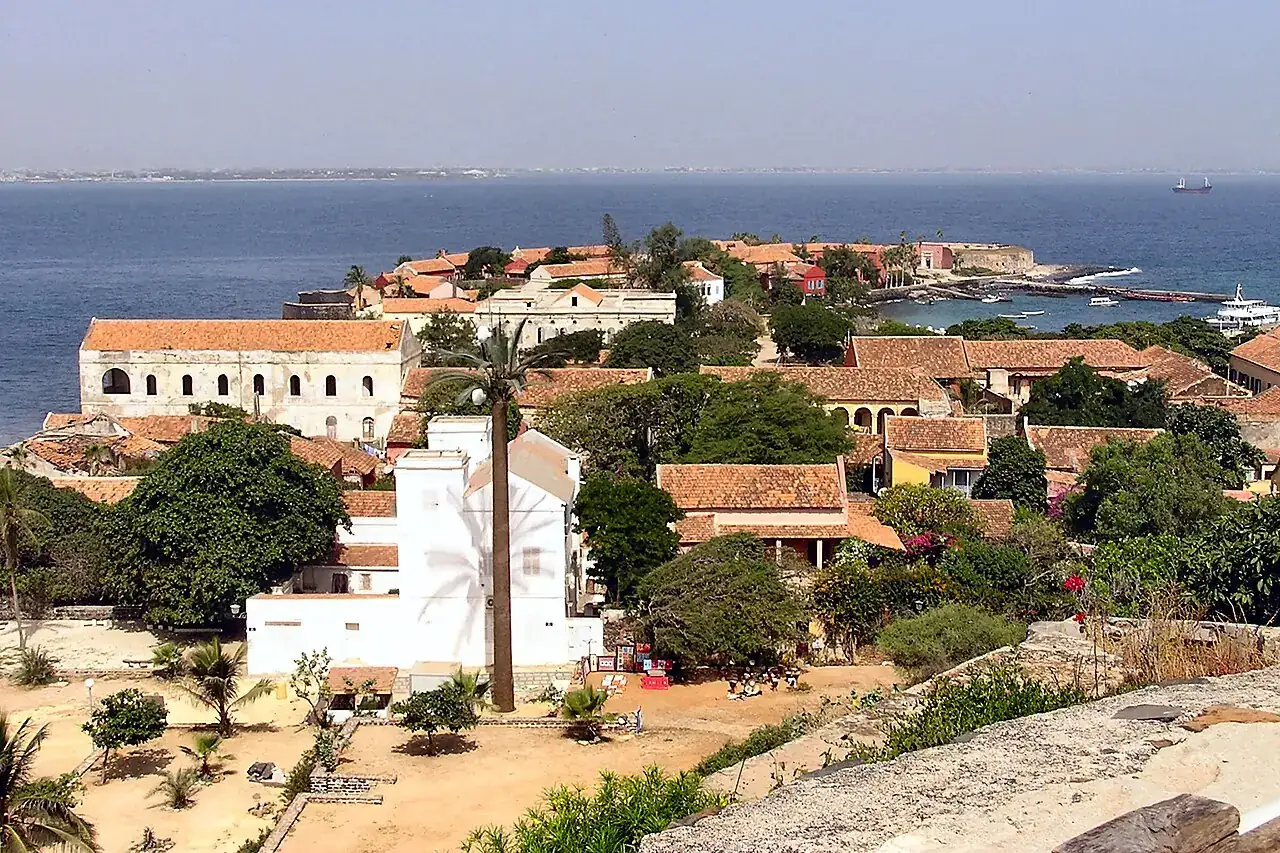 Photo: Manu25 · CC BY-SA 4.0
Published by Adama Doumbia, founder of Afrique Unie · updated 28 November 2026 · our method and sources
Why go
Gorée is a small basalt island, barely a kilometre long, off the coast of Dakar. You land on a beach where children play, then lose yourself in car-free sandy lanes lined with ochre and pink houses spilling over with bougainvillea. After the bustle of the capital, the calm is striking. Among the very first sites inscribed on UNESCO's World Heritage List, the island was in turn a Portuguese, Dutch, English and French trading post.
It has become a universal place of remembrance of the Atlantic slave trade. The House of Slaves, with its famous door opening onto the ocean, welcomes visitors from all over the world every year, among them many descendants of deported Africans and several heads of state. Historians debate the exact role this house played in the trade, but its symbolic power remains intact. Fort d'Estrées houses the History Museum, and the Castel, at the top of the island, looks out over Dakar.
Getting there
The ferry leaves from the maritime station in the port of Dakar, on Le Plateau, and reaches the island in about twenty minutes. There are regular departures throughout the day, more frequent at weekends; the fare is higher for foreign visitors than for residents. A tourist tax is collected on arrival. On the island, you get everywhere on foot.
Frequently asked questions
Do you need to book the ferry to Gorée?
No, tickets are sold at the ticket office of the ferry terminal in Dakar port on the day. At weekends and during holidays the queue can be long, so arrive early and check the time of the last boat back.
When is the House of Slaves open?
It is generally open every day except Monday, with a break in the middle of the day. Opening times can change, so check locally or on arrival on the island before planning your visit. Avoid going to Gorée on a Monday if the House of Slaves is your priority.
What is there to see on Gorée Island besides the House of Slaves?
Don't miss the Castel, the island's high point with the remains of fortifications and views of Dakar, or the Historical Museum of Senegal housed in Fort d'Estrées. The church of Saint Charles Borromeo, the mosque and the lanes lined with colonial houses are also worth a wander. Many artists have studios on the island, particularly around the Castel.
Can you swim on Gorée?
Yes, the small sheltered beach by the jetty is fine for swimming and is very popular with Dakar families at weekends. The water is usually calm, but lifeguards are not guaranteed. Away from the beach, dress modestly in the lanes and at the memorial sites.
How do you get around Gorée Island?
On foot only: the island is car-free and can be crossed in a few minutes. The lanes are sandy and the climb to the Castel is fairly steep, so wear comfortable shoes. Take water and a hat, as shade is scarce at the top of the island.

 Benin
 Cape Verde
 Ghana
 Mauritania