“Akwaaba”: the Twi word of welcome greets you at the airport, on signs at the entrance to villages and, above all, in the manner of Ghanaians, whose calm courtesy puts you at ease straight away. Ghana is an English-speaking country at the heart of a French-speaking region, stable and democratic, and relatively easy to travel around. For a visitor coming from francophone West Africa, it's a stimulating change of atmosphere: churches with extravagant names, slogans painted on the tro-tros, a passion for football and highlife, and a national pride that has been palpable ever since the pioneering independence of 1957.
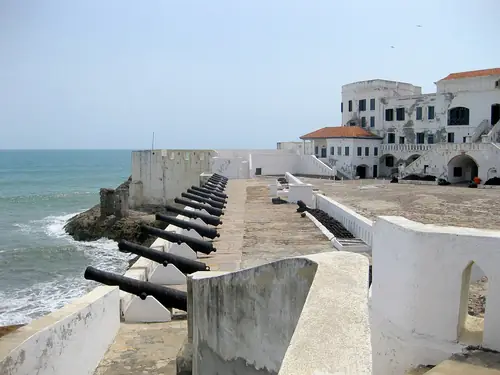
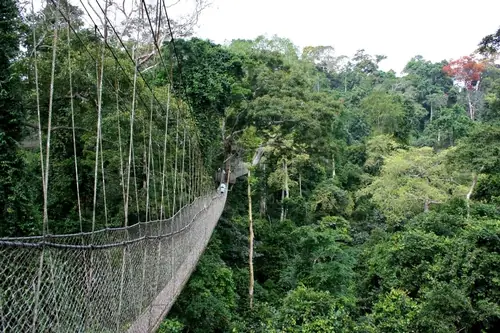
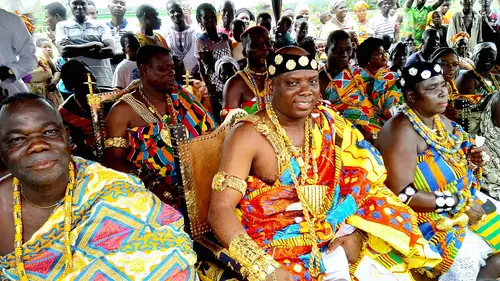
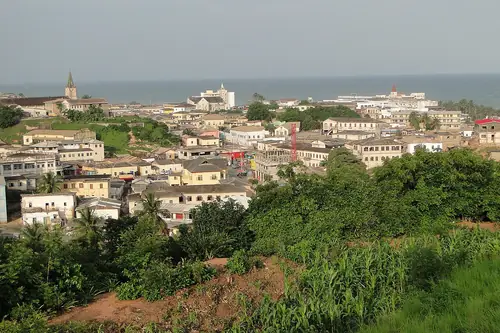
The country's geography reads like a story. Along the coast, a string of forts and castles built by European powers tells the history of gold and then of the slave trade; at Cape Coast and Elmina, visiting the dungeons is a deeply moving experience, especially for visitors from the African diaspora who come here to reconnect with their origins. Inland, the rainforest of Kakum can be explored on walkways suspended in the canopy. Further into the centre, Kumasi remains the living capital of the Ashanti kingdom, with its chiefs, royal umbrellas, hand-woven kente and adinkra symbols. The drier, Sahelian north offers walking safaris in Mole, Sudanese-style mosques and yet another culture.
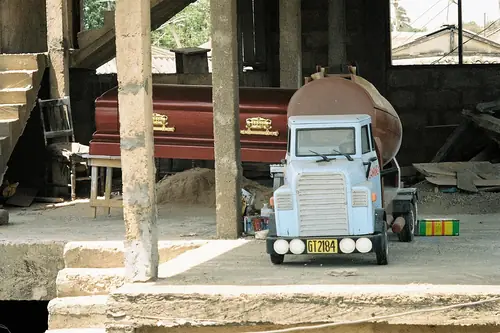
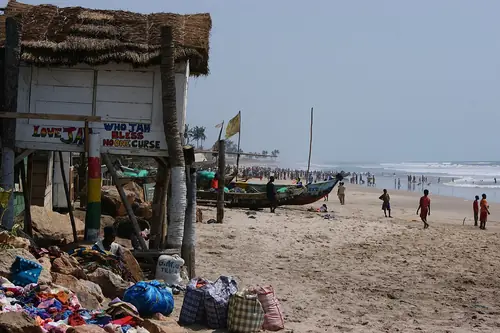
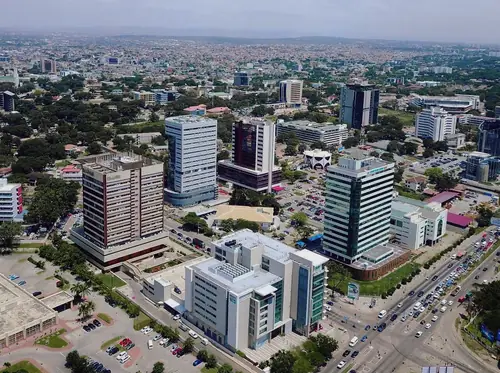
Accra, meanwhile, has become one of the continent's creative capitals: contemporary art galleries, a street festival in Jamestown, fashion, food and a music scene where afrobeats and azonto have taken over from highlife. In a single day you can go from Labadi Beach to the workshops of Teshie's carved coffin makers. Ghana wins you over with this balance between memory and modernity, and with a heartfelt hospitality that makes you want to return.
History and culture
Long before the Europeans, the region was criss-crossed by trade routes linking the forest to the Sahel, carrying gold and kola nuts. The ancient Ghana Empire, which gave the country its name, actually lay further north-west, in present-day Mauritania and Mali. The Portuguese built Elmina Castle in 1482, soon followed by the Dutch, British, Danes and Swedes on what became the Gold Coast. From the 17th century the Ashanti kingdom, united around the Golden Stool, became one of the great powers of West Africa and long resisted the British, until the early 20th century.
On 6 March 1957, under the leadership of Kwame Nkrumah, the Gold Coast became Ghana, the first country in sub-Saharan Africa to free itself from colonial rule and a beacon of pan-Africanism. After a period of coups, the country has enjoyed regular democratic life since 1992, with several peaceful transfers of power. In 2019 the “Year of Return”, held four centuries after the first enslaved Africans arrived in Virginia, invited the diaspora to come back to the land of their ancestors, and many chose to settle. Today the country remains a major producer of gold and cocoa.
8 experiences not to miss in Ghana
Photo : Rjruiziii · CC BY-SA 3.001The dungeons of Cape CoastTake the guided tour of the castle, from the dungeons to the Door of No Return, a moment of reflection that should not be hurried.
Photo : Paul5263 · CC BY-SA 4.003Akwasidae in KumasiIf the dates line up, attend this Ashanti ceremony at which the Asantehene receives chiefs and subjects beneath great umbrellas.
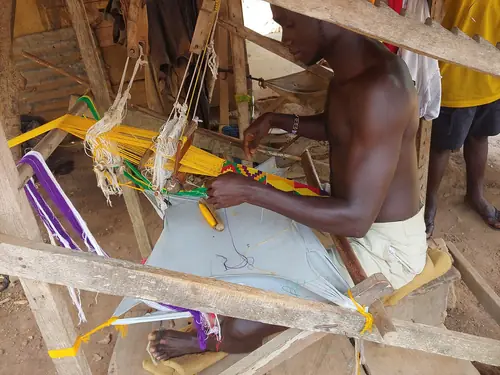
Photo : Sadads · CC BY-SA 4.004Kente weavingVisit the weaving villages near Kumasi, such as Bonwire, and watch the narrow-strip looms at work.
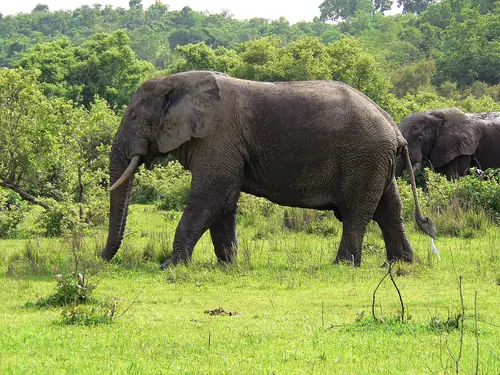
Photo : Stig Nygaard · CC BY 2.005Walking safari in MoleApproach elephants on foot with a ranger, a rare experience in West Africa.
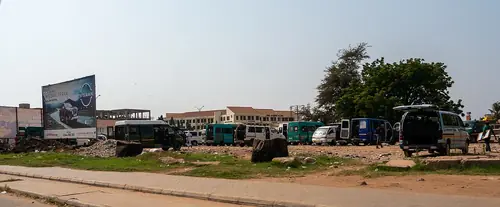
Photo : Matti Blume · CC BY-SA 4.007Tro-tros and marketsRide a tro-tro, one of the shared minibuses, at least once, and let yourself be guided through the organised chaos of Makola.
Photo : Annabel Symington · CC BY 2.008Kokrobite BeachWest of Accra, a laid-back beach where people come for the drumming, the dancing and the evenings.
When to go to Ghana
The dry season, from November to March, is the most pleasant time to travel: passable roads, often clear skies on the coast, and the best wildlife viewing in Mole, when animals gather around the waterholes. The harmattan, between December and February, brings hazy mornings and fine dust, especially in the north. In the south, the main rainy season lasts roughly from April to June, with a second, shorter spell in September and October; July and August are often cooler and cloudier on the coast, a perfectly workable time to travel. The north has only one rainy season, from about May to October, during which some tracks become difficult.
Getting around
Accra International Airport (called Kotoka until February 2026) is the main gateway. Domestic flights link Accra with Kumasi, Tamale and other cities, handy for reaching the north. Coaches run by several companies, both public and private, cover the main routes in reasonable comfort, and you can book your seat the day before. Tro-tros, shared minibuses, serve the whole country cheaply but with no fixed timetable. In Accra and Kumasi ride-hailing apps work well and save you the haggling. The main roads are good, but distances and traffic make journeys longer: allow plenty of time, especially to get out of Accra.
Etiquette and customs
Always greet people before asking for anything, even a quick piece of information. The Ghanaian handshake often ends with a finger snap between the two hands: let someone show you how. Never use your left hand to give, receive, eat or gesture. Ghana is a deeply religious country, mostly Christian in the south and more Muslim in the north: dress respectfully in places of worship and respect the rites. In villages, introduce yourself to the chief before exploring. When meeting traditional chiefs, sit down and speak only when invited to. Ghanaians value politeness and often speak calmly: avoid raising your voice.
Food and drink in Ghana
Jollof rice, rice cooked in a spicy tomato sauce, is a matter of national pride, and of good-natured rivalry with Nigeria. Try banku, a fermented dough of maize and cassava, with grilled tilapia and a chilli sauce; fufu, pounded with great thumps of the pestle and served in light soup or groundnut soup; kenkey with fried fish and shito, a black condiment of chilli and shrimp. Waakye, rice and beans, is eaten for breakfast, red red, beans in palm oil with fried plantain, at any time, and kelewele, spicy fried plantain, on street corners in the evening. To drink: hibiscus sobolo and palm wine.
The must-sees: Cape Coast and Elmina Castles, Kakum National Park, Mole National Park, Lake Volta.
Which cities should I visit in Ghana?
Accra, Kumasi, Cape Coast. The capital is Accra.
How much should I budget for a trip to Ghana?
Mid-range: around €60–120 per person per day, excluding flights. This is only a guide and depends above all on the accommodation and activities you choose.
The main international airport has the code ACC. Compare flights with the ‘Flights’ button on this page.
Do I need a visa to visit Ghana?
Entry requirements depend on your nationality and change regularly. Check them on the country's official website or with your foreign ministry before booking, and make sure your passport is valid.
What should I eat in Ghana?
Dishes to try while you're there: Jollof rice, banku, fufu.
Domestic flights link Accra with Kumasi, Tamale and Takoradi, handy for saving time on the way north. Rail plays little part for travellers: only a few short lines run, such as Tema–Mpakadan and Takoradi–Sekondi. STC and VIP coaches handle the main intercity routes, while trotros, shared minibuses, cover everything else. In Accra, Uber and Bolt are well established; you can rent a car, preferably with a driver, and driving is on the right.
Health and safety
Yellow fever
Vaccination certificate required on entry for all travellers (from 9 months); vaccine recommended for the whole country (from 9 months).
Malaria
Present throughout the country: ask a doctor about preventive medication and protect yourself from mosquitoes.
Water and food
Unless your accommodation says otherwise, drink sealed bottled or filtered water, and wash your hands often.
Source: US CDC, November 2026. Rules change: see a travel health clinic before you leave, and the UK Foreign Office travel advice for safety.
Useful numbers
Local emergency numbers
Police: 191 or 192 Ambulance: 192 Fire: 193 General emergency number: 999 or 112 (FCDO), 999 (France Diplomatie), 112 (Viaggiare Sicuri). France Diplomatie: police 191, ambulance 192, fire brigade 193; the FCDO gives 192 for the police.
Sources: France Diplomatie, Viaggiare Sicuri, Belgian Foreign Affairs, GOV.UK, checked in November 2026. All 54 countries
Entry requirements (visas, vaccinations) and security conditions change regularly: check them with the official authorities before booking. Official tourism website: Ghana Tourism Authority.
Affiliate cookiesWe would like to load a script from our partner Travelpayouts. It may set cookies so that we receive a commission when you book through our links, at no extra cost to you. If you decline, the site works in exactly the same way. Find out more
 AfriqueUnie
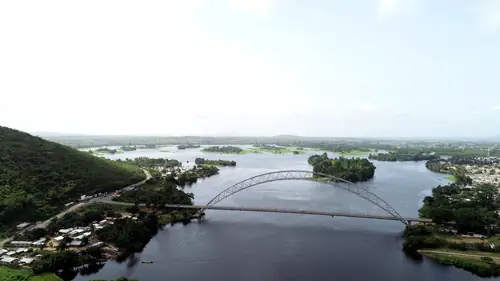
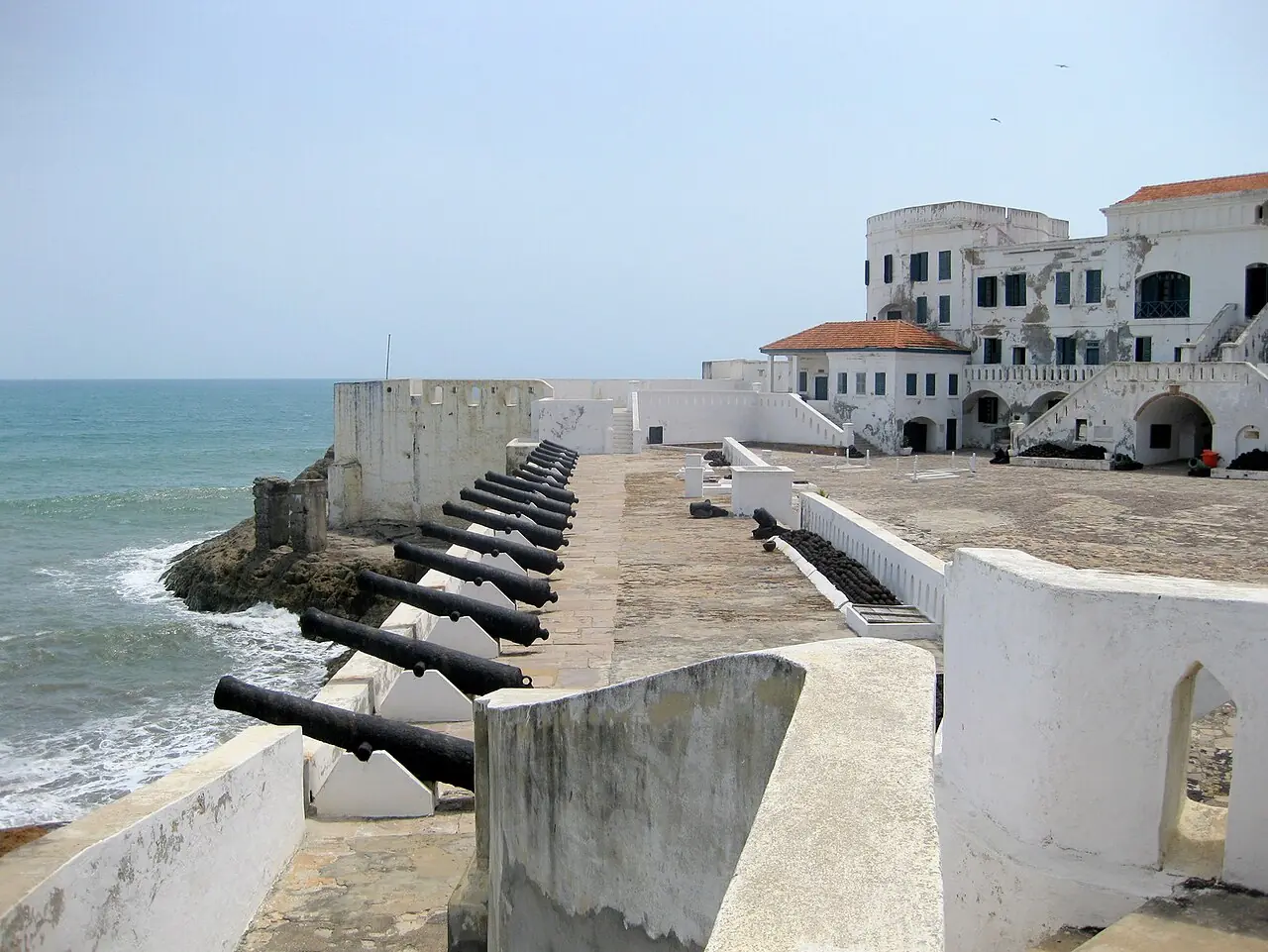 Photo: Rjruiziii · CC BY-SA 3.0
 Ghana
 Ghana or Senegal

 Ghana or Nigeria
 Benin
 Burkina Faso
 Cape Verde
 Guinea
 Guinea-Bissau
 Liberia
 Mali
 Mauritania
 Niger
 Sierra Leone
 The Gambia
 Togo