AfriqueUnie
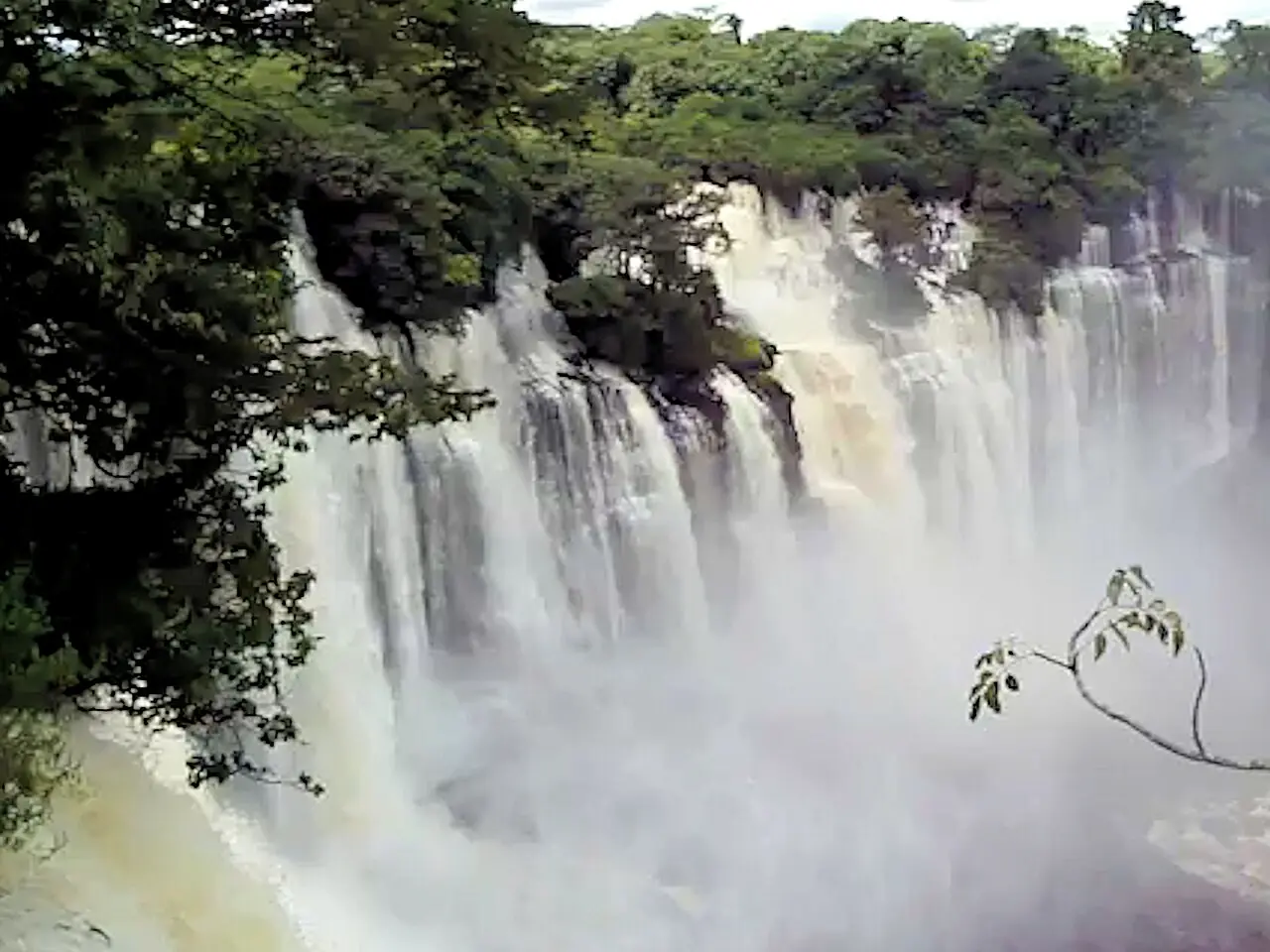 Photo: Zorglub · CC BY-SA 3.0
Published by Adama Doumbia, founder of Afrique Unie · updated 28 November 2026 · our method and sources
Why go
In Malanje province, the Lucala River plunges about 105 metres over a front several hundred metres wide, forming the Kalandula Falls, among the largest in Africa by volume. Long known as the Duque de Bragança Falls in colonial times, they form a curved curtain of water that thunders through the forest, throwing up clouds of spray visible from afar. All around, wooded savannah and the farming villages of the Malanje plateau make a peaceful setting, far from the bustle of the coast.
The spectacle changes with the season. During the rains, from roughly November to April, the falls are at their peak, brown and deafening. In the dry season the flow drops and the water splits into several channels, revealing the rock. A viewpoint lets you admire the whole scene from above, and a steep path leads down to the foot of the falls for an even more breathtaking view.
Getting there
The falls are about 80 kilometres from the town of Malanje, itself several hours' drive from Luanda, which makes a long day's journey from the capital. Most travellers spend a night in Malanje or at the falls. A car with a driver is recommended.
Frequently asked questions
When are the Kalandula Falls at their most impressive?
During the rainy season, roughly November to April, the Lucala River forms a thundering brown curtain about 105 metres high and 400 metres wide. In the dry season the flow drops and the rock shows through, but the path down is less slippery. Heavy rain also damages roads in the north of the country, so check conditions before setting off.
Can you walk down to the bottom of the Kalandula Falls?
Yes, a steep path leads from the viewpoint down to the foot of the falls. It is slippery, especially in the rainy season, so proper walking shoes are essential. Protect your camera from the spray and keep away from the edges and wet rocks.
How do you get from Luanda to the Kalandula Falls?
By road, via the town of Malanje, about 80 kilometres from the falls and several hours' drive from Luanda. Plan a night in Malanje or near the falls, and at least two days for the round trip. France Diplomatie advises always travelling in daylight and avoiding public transport, so a vehicle with a driver is the best option.
What health precautions should you take when visiting Kalandula?
As of November 2026, France Diplomatie reports an active cholera outbreak, notably in Luanda, Cuanza Norte (which the road crosses) and Malanje provinces: drink bottled water, wash your hands often and avoid raw food. Angola is also a malaria area, so talk to your doctor before you travel. Landmines may still be present away from main roads, and the UK government warns that floods can shift them in the rainy season, so always stay on well-used roads and paths.
What else is there to see near the Kalandula Falls?
The Pedras Negras of Pungo Andongo, huge black rock formations in the same province, combine easily with the falls. Malanje Province is also home to Cangandala National Park, a refuge for the giant sable antelope (palanca negra), Angola's national symbol; access is controlled, so ask before going.
 Cameroon
 Equatorial Guinea
 Gabon