 AfriqueUnie
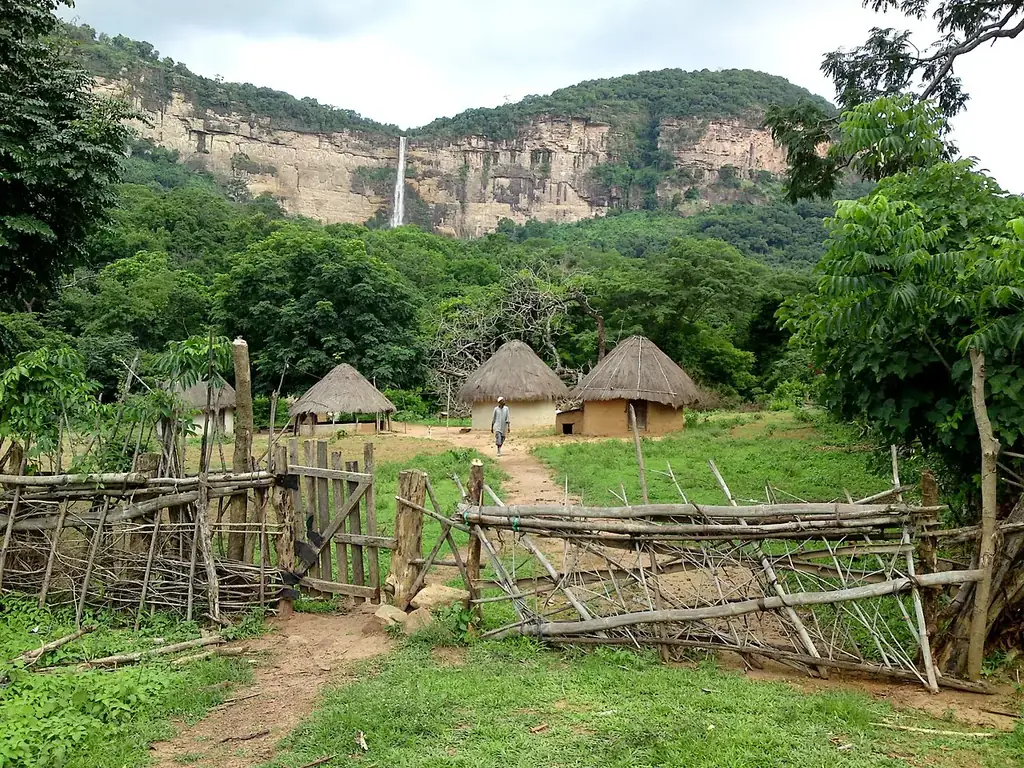 Photo: Maarten van der Bent · CC BY-SA 2.0
Published by Adama Doumbia, founder of Afrique Unie · updated 28 November 2026 · our method and sources
Why go
The Fouta Djallon is a vast upland massif occupying the centre of Guinea, mostly at altitudes of between 800 and 1,500 metres. Its sandstone plateaux, cut by deep canyons, alternate with lush valleys, gallery forests and cliffs over which countless waterfalls tumble. Several of West Africa's great rivers rise here, hence its nickname as the region's water tower. Among the most famous falls, those of Kambadaga, near Pita, and Ditinn, near Dalaba, impress with their height and power.
The massif is also the cradle of a refined Fulani culture, shaped by Islam, poetry and cattle herding. The villages, with their thatched round huts surrounded by living hedges, welcome hikers with great hospitality. The Fouta Djallon is particularly well suited to treks of several days, staying with local families or in community lodges.
Getting there
From Conakry, the road leads to Mamou, then on to Dalaba, Pita and Labé; allow a good day's drive to reach the heart of the massif, depending on the state of the road and the traffic. Go by 4x4 with a trusted local driver, and only in daylight: the French government advises against motorbike taxis and shared transport, and reports highway robbers at night, especially around Kindia and Mamou. The natural sites are then reached on tracks and footpaths with a local guide.
Frequently asked questions
When is the best time to hike in the Fouta Djallon?
From November to February, just after the rains: the waterfalls are still powerful, the landscape is green and temperatures are pleasant. Torrential rain from June to November often makes roads and tracks impassable. Towards the end of the dry season it gets hotter and some falls lose much of their flow.
How do I get from Conakry to the Fouta Djallon?
Take the road via Kindia and Mamou towards Dalaba, Pita and Labé: allow a full day to reach the heart of the highlands. The French government advises against motorbike taxis and shared public transport, recommends a trusted local driver and a 4x4, and says you must not drive at night, as highway robbers have been reported around Kindia and Mamou. Set off early so that you arrive before dark.
Do you need a guide to hike in the Fouta Djallon?
Yes, it is strongly recommended: trails are not waymarked and waterfalls are often at the end of hard-to-find paths. A local guide also makes it easier to be welcomed in villages and to arrange homestays. Guides are easy to find in Dalaba, Pita or Labé.
Which are the most beautiful waterfalls in the Fouta Djallon?
The Kambadaga Falls near Pita and the Ditinn Falls near Dalaba are the best known for their height and power. They are at their most spectacular at the end of the rainy season and the start of the dry season. Take care near the edges, which are often slippery and unfenced.
Does it get cold in the Fouta Djallon?
Days stay warm, but nights can be cool, especially from December to February, as much of the massif lies between 800 and 1,500 metres. Bring a fleece or jumper for the evenings. In the dry season the harmattan, a dry, dusty wind, can also leave the sky hazy.
 Cape Verde
 Algeria
 Angola