 AfriqueUnie
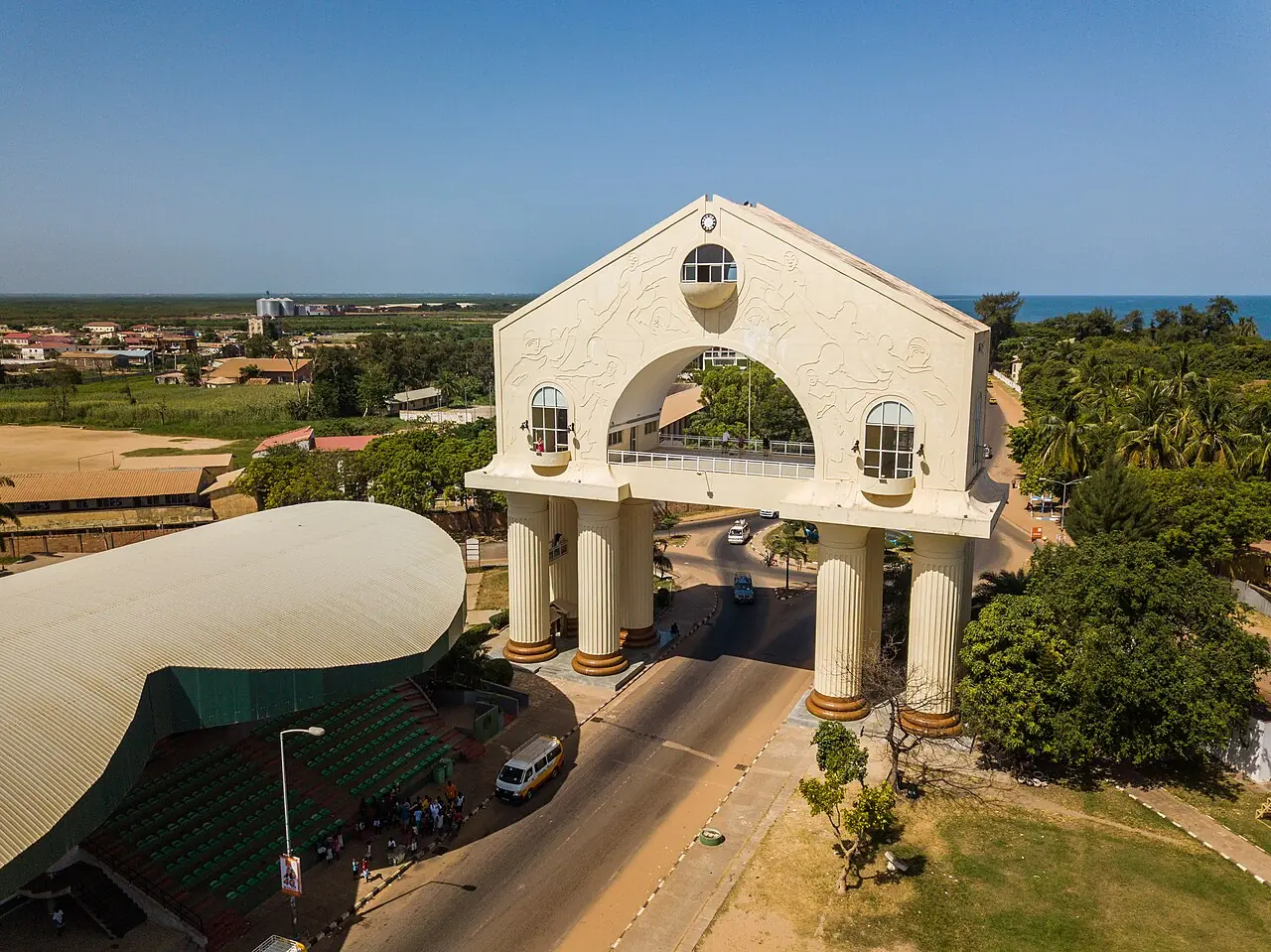 Photo: Hannu Sääskilahti · CC BY-SA 4.0
Published by Adama Doumbia, founder of Afrique Unie · updated 16 November 2026 · our method and sources
- Distance
- about 300 km (185 miles) via Karang and the ferry, about 450 km (280 miles) via the Farafenni bridge
- Bus journey
- 6 to 9 hours via Karang and the ferry, 8 to 11 hours via the bridge, including the border wait
- Border crossing
- Karang (Senegal) – Amdalai (The Gambia), or Keur Ayib (Senegal) – Farafenni (The Gambia) and the Senegambia Bridge
- Border opening hours
- not published by any official source we checked: cross in daylight
- Currencies
- CFA franc (XOF), then Gambian dalasi (GMD)
- Best time to go
- November to June, outside the rainy season
The route and how to travel
The most direct route leaves Dakar for Kaolack, then heads south via Sokone to the border at Karang on the Senegalese side and Amdalai on the Gambian side. From there it is about 30 km to Barra, where a ferry crosses the mouth of the River Gambia to Banjul. The journey is about 300 km, but the wait for the ferry is unpredictable and can last several hours.
The other route continues from Kaolack to Nioro du Rip and enters The Gambia at Farafenni, then crosses the river on the Senegambia Bridge, opened in January 2019, before reaching Banjul along the south bank road. It is longer, about 450 km, but avoids the ferry, and the UK government suggests it as an alternative.
Scheduled coaches and bush taxis (the seven-seater sept-places) leave Dakar for the border and for Banjul, with minibuses taking over on the Gambian side. Allow 6 to 9 hours via Karang and the ferry, 8 to 11 hours via the bridge. If you drive, bring the ECOWAS Brown Card and the vehicle documents.
Crossing the border
On the direct route, formalities take place at Karang (exit from Senegal) and then at Amdalai (entry into The Gambia). Via the bridge, they take place at Keur Ayib on the Senegalese side and Farafenni on the Gambian side. We could not find opening hours published by an official source, so plan to cross during the day.
The Barra ferry is often overcrowded and overloaded, and it has run aground on sandbanks several times, the UK government warns. If you take it with a car, get out of the vehicle as soon as it is parked so that you are not trapped inside for the crossing.
A Senegalese-registered vehicle must pay a passavant (temporary pass) at Gambian customs, for which you receive a receipt (France Diplomatie); the UK government also mentions a registration fee for private vehicles at land borders.
Documents you need
Senegal and The Gambia are both ECOWAS members: their citizens and those of other member states cross without a visa for up to 90 days, through an official post, with a valid travel document and an international vaccination certificate. The Gambia also admits citizens of every African country without a visa, according to the African Development Bank's 2025 visa openness report.
British travellers do not need a visa for The Gambia, where they receive a 28-day entry stamp, or for Senegal, where they can stay for three months with proof of return travel and accommodation (GOV.UK). For other passports, our visa pages give the rules country by country.
Vaccinations and health checks
Senegal and The Gambia both require a yellow fever certificate from travellers arriving from a country with a risk of transmission, and each of them is on that list, the UK government points out. When travelling between the two, always carry the original certificate.
Money and exchange
You switch from the CFA franc (XOF) to the dalasi (GMD). In Senegal, the UK government warns of the risk of fake notes when changing cash: change small amounts at the border, ideally with money changers who have been recommended to you, and check every note.
In The Gambia, ATMs are scarce outside the Senegambia tourist area, so arrive with enough cash for the journey and your first evening.
Road safety and security
Neither route passes through an area the French or British governments advise against. Casamance, south of The Gambia, is not on the way to Banjul: if you continue to Ziguinchor, France Diplomatie advises against its border areas with The Gambia away from the main tarmac roads, except for essential travel.
France Diplomatie advises against intercity travel at night in Senegal, because of the lack of lighting and pedestrians on the roads, and also recommends avoiding night driving in The Gambia. With the uncertainty of the ferry, leave Dakar very early so that you reach Banjul before dark.
When to travel
The dry season, from November to June, is the easiest time for this trip. The rainy season runs from July to October in Senegal and from June to October in The Gambia, according to France Diplomatie, bringing violent storms, flooded roads and dirt tracks best avoided.
Before major holidays such as Eid al-Adha (Tabaski), departures from Dakar are packed: book ahead or leave at dawn.
Rules checked in November 2026 with: CEDEAO, protocole de 1979 sur la libre circulation · GOV.UK, The Gambia safety and security (bac et pont de Farafenni) · GOV.UK, The Gambia entry requirements · GOV.UK, Senegal entry requirements · France Diplomatie, Sénégal : sécurité · France Diplomatie, Gambie : entrée et séjour · France Diplomatie, Gambie : sécurité · Banque africaine de développement, indice d'ouverture des visas en Afrique. Distances and times are rounded estimates that vary with traffic and the border wait. Entry rules change often: check them before you go with the authorities or embassy of the country you are entering.
Plan your trip
- Our Dakar guide (Senegal)
- Our Banjul guide (The Gambia)
- Our Senegal guide · Senegal visa by passport
- Our The Gambia guide · The Gambia visa by passport
- Africa visas with a Senegalese passport
- Between African countries
- CFA franc: the 14 countries
- Yellow fever and malaria: the rules country by country
- Africa visa requirements country by country
Frequently asked questions
How long does it take to get from Dakar to Banjul?
Allow 6 to 9 hours for about 300 km via Karang and the Barra ferry, depending on the wait at the border and for the ferry. Via the Farafenni bridge, the trip is about 450 km and takes 8 to 11 hours, but does not depend on the ferry.
Do I have to take the ferry to get to Banjul?
No. The Barra–Banjul ferry is the most direct option, but it is often overcrowded and delays are common. Since January 2019, the Senegambia Bridge near Farafenni has carried the road across the River Gambia, and the UK government suggests it as an alternative.
Do I need a visa to travel from Senegal to The Gambia?
Not if you are an ECOWAS citizen, as you can enter visa-free for 90 days, and not, according to the African Development Bank, if you are a citizen of another African country. British travellers do not need one either. For other passports, check our visa pages.
Is the CFA franc accepted in The Gambia?
The Gambia's currency is the dalasi (GMD). Change a small amount at the border, checking the notes, and carry cash, as ATMs are scarce outside the tourist area.