 AfriqueUnie
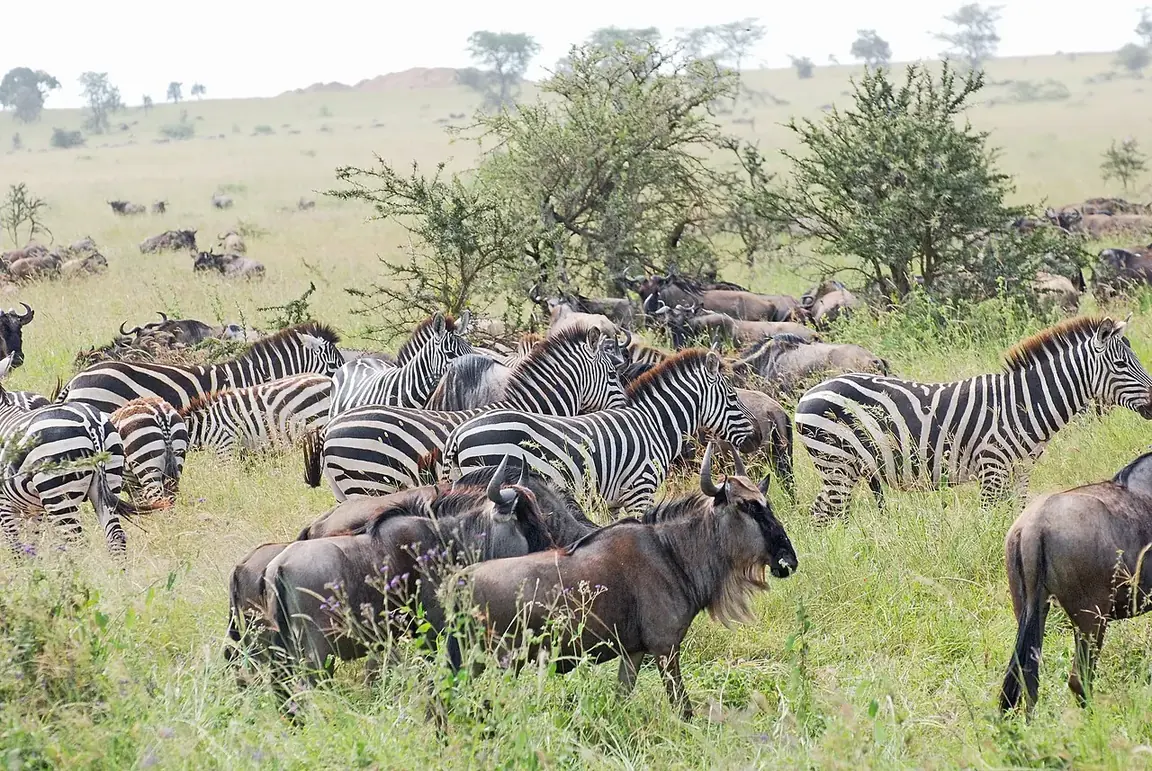 Photo: Harvey Barrison from Massapequa, NY, USA · CC BY-SA 2.0
- Our verdict
- Peak season: ideal
- Afternoon in Dodoma
- 30 °C
- Night
- 19 °C
- Rain
- 140 mm, about 10 days
- The country's best time
- June to October, January to February
What to expect in Tanzania in January
In January, Tanzania is split in two. The centre and south, around Dodoma, are in the middle of the rainy season: heavy heat, close to 30°C, and about ten days of thundery showers. The northern safari circuit, from Arusha to the Serengeti, enjoys a lull between the short rains of November and December and the long rains of March to May: the landscapes are green, showers possible but short.
In Zanzibar it is hot, around 32°C, and humid, with the sea at 29°C and little rain. This is a good season, less busy than summer once the first week of the month has passed. January suits those who want to see the vast wildebeest herds in the southern Serengeti and then relax on the beach. The southern parks, however, are waterlogged and best avoided.
What to do in Tanzania in January
The herds of the southern Serengeti
From December to March, the wildebeest and zebras of the Great Migration gather on the short-grass plains in the south of Serengeti National Park and the neighbouring Ndutu area. In late January the first births begin. The herds move with the showers, so a well-informed guide makes all the difference.
A green Ngorongoro Crater
The rains have turned the floor of the Ngorongoro Crater green; lions, hyenas, buffaloes and a few black rhinos live here all year round. In January there are fewer vehicles than in summer. It is cool and often misty in the morning on the crater rim, at more than 2,000 metres above sea level.
Climbing Kilimanjaro
January and February are, along with June to October, one of the two good seasons for climbing Kilimanjaro. It is milder than in summer on the slopes, and fresh snow can fall near the summit. Choose a route of at least seven days so that you acclimatise properly to the altitude.
Nungwi and Kendwa beaches
In the north of Zanzibar, the beaches of Nungwi and Kendwa allow swimming at any time, because the tide exposes little of the seabed there, unlike on the east coast. In January the north-east wind can raise a slight chop at Nungwi; Kendwa, which faces west, stays more sheltered.
Our tips for this month
Bring light clothes that cover you, a thin waterproof jacket and a fleece for the rim of Ngorongoro. Kilimanjaro requires full cold-weather kit. The roads are dangerous: no night driving, no shared minibuses, and flights for long distances. See a doctor about malaria. The French authorities advise against all travel to the border with Mozambique and the Mtwara region, and against all but essential travel to the Lindi and Ruvuma regions.
Frequently asked questions
Does it rain in Tanzania in January?
It depends on the region. The centre and south are in the rainy season, with about ten days of showers in Dodoma. The north and Zanzibar have a drier spell, with short showers.
Where can you see the Great Migration in Tanzania in January?
In the southern Serengeti and around Ndutu, on the short-grass plains. The wildebeest gather there before the calving season, which usually begins in late January.
Can you swim in Zanzibar in January?
Yes, the sea is about 29°C and the weather is hot and fairly dry. The northern beaches, Nungwi and Kendwa, are swimmable at low tide as well as high tide.
Temperatures and rainfall: averages measured in Dodoma (climate table of the Wikipedia article “Dodoma”). The climate varies by region, and any given year can differ from the averages.
Plan
Go further
Guides