 AfriqueUnie
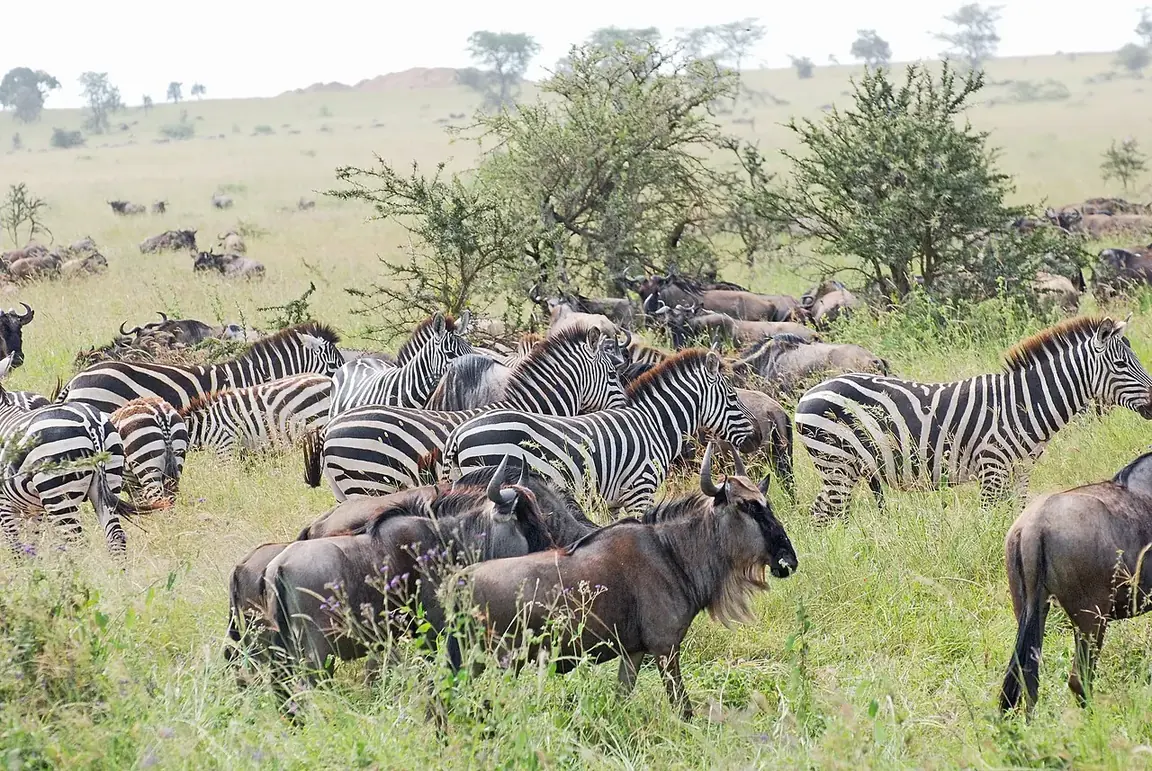 Photo: Harvey Barrison from Massapequa, NY, USA · CC BY-SA 2.0
Published by Adama Doumbia, founder of Afrique Unie · updated 28 November 2026 · our method and sources
- Day 1
Arrival in Arusha
Most international flights land at Kilimanjaro airport, less than an hour's drive from Arusha. On a clear day, Kilimanjaro and Mount Meru rise above the coffee plantations. Stay in a lodge on the outskirts, quieter than the centre, and use the afternoon to recover from the journey. If you have energy, a walk through a coffee plantation or a visit to the central market gives a first glimpse of local life. Your driver-guide often comes by in the evening to go through the programme: this is the moment to ask your questions and check your kit, binoculars included.
- Day 2
The elephants and baobabs of Tarangire
About two hours' drive separates Arusha from Tarangire National Park, often wrongly overlooked in favour of its neighbours. In the dry season, the Tarangire River draws huge herds of elephants, seen among centuries-old baobabs. Giraffes, zebra, wildebeest, buffalo and lions are also present, along with a wide variety of birds. Have a picnic in the park and stay out until late afternoon, when the golden light makes the baobabs spectacular. Then head to Karatu, a small highland town surrounded by fields and plantations, close to Ngorongoro. Nights there are cool: pack a fleece.
- Days 3-5
Three days in the Serengeti
The road to the Serengeti crosses the Ngorongoro Conservation Area, with a first glimpse of the crater from the rim, then the Maasai plains. Stop at Olduvai Gorge, where some of the oldest fossils of the human lineage were found. Allow five to six hours to reach the centre of the park, game drive included. Over the next two days, head out at dawn and in the late afternoon: lions, cheetahs and leopards are especially plentiful around the Seronera area. The Great Migration moves with the seasons, from the south of the park early in the year to the north at the end of the dry season: your guide will adapt the route.
- Days 6-7
The Ngorongoro Crater
A last morning game drive in the Serengeti, then back towards Ngorongoro to sleep on the crater rim or in Karatu. The next day, descend into the caldera as soon as it opens: some six hundred metres below, the flat floor, around twenty kilometres across, holds an exceptional concentration of wildlife. Lions, elephants, hyenas, buffalo, flamingos on Lake Magadi and, with luck, black rhinos, often seen at a distance. Time inside the crater is limited, so make the most of the first hours, the finest of the day. Climb out around midday, have lunch on the rim, then drive back to Arusha, about three hours away, for a last night on the mainland.
- Days 8-9
Stone Town, Zanzibar's old quarter
A flight of about an hour links Arusha or Kilimanjaro to Zanzibar. Stay in Stone Town, the UNESCO-listed old town, and lose yourself in its maze of lanes lined with carved wooden doors. The next day, visit the Anglican cathedral, built on the site of the former slave market, with its interpretation centre, then Darajani market and its spice stalls. In the afternoon, a spice farm tour introduces you to cloves, cinnamon, vanilla and nutmeg on the plant. At sunset, head to the Forodhani Gardens on the seafront, where stalls selling grilled food and Zanzibari pizza set up every evening.
- Days 10-11
The beaches of Nungwi and Kendwa
About an hour and a half by road takes you to the island's northern tip. Nungwi, a village of fishermen and dhow builders, is livelier; Kendwa, just to the south, has a long beach where the tides are less pronounced, so you can swim at almost any time. Spend a day snorkelling off Mnemba Atoll, with its crystal-clear water, where turtles and dolphins are often seen. The rest of the time, simply enjoy the beach. At sunset, board a dhow for a gentle cruise along the coast. Dress modestly away from the beaches: the island is predominantly Muslim.
- Day 12
Jozani Forest, then home
On your last day, make a detour to Jozani Forest, in the centre of the island, on the way to the airport. This national park protects the Zanzibar red colobus, a monkey found only on the island, which lives in small, rather relaxed groups on the forest edge. A wooden boardwalk then crosses a mangrove where crabs and fish can be seen at low tide. Allow two hours for the visit, guide included. Zanzibar airport is a few kilometres from Stone Town; it has direct flights to Europe and the Gulf, as well as connections via Dar es Salaam or Nairobi.
Getting around
On the mainland, the safari is done in a pop-up-roof 4x4 with a driver-guide, booked for the whole circuit: you do not drive yourself in the parks. The tracks are long and dusty, but part of the experience. For Zanzibar, the flight from Arusha or Kilimanjaro is by far the most practical option. On the island, taxis and private drivers link Stone Town with the northern beaches in about an hour and a half.
When to do this trip
From June to October, the dry season brings the best wildlife viewing, short vegetation and the migration in the northern Serengeti. January and February are also excellent, with the wildebeest calving in the south of the park. The long rains, from March to May, close some lodges and bring heavy rain to Zanzibar. The short rains of November and December are usually compatible with the trip.
The travel notebook
The itinerary, practical information (entry, health, money, emergencies) and the checklist in a few pages, to print or keep offline on your phone.
Variations
- In 9 days: drop Tarangire and spend just one night in Stone Town before two nights on the beach.
- In 18 days: add a six- or seven-day Kilimanjaro climb before the safari, or two extra nights in the northern Serengeti during the migration.
- Quieter version: swap Nungwi and Kendwa for Zanzibar's calmer east coast, around Paje or Matemwe.