AfriqueUnie
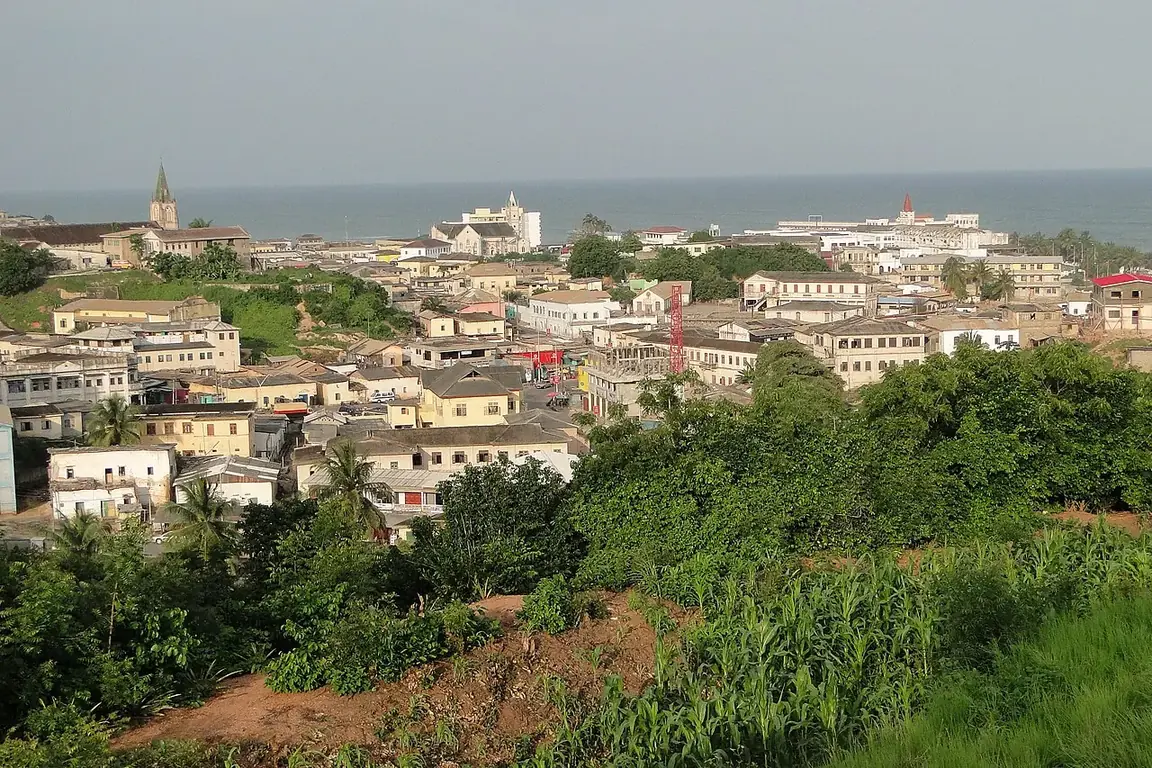 Photo: Adam Jones from Kelowna, BC, Canada · CC BY-SA 2.0
Published by Adama Doumbia, founder of Afrique Unie · updated 28 November 2026 · our method and sources
Why visit Cape Coast?
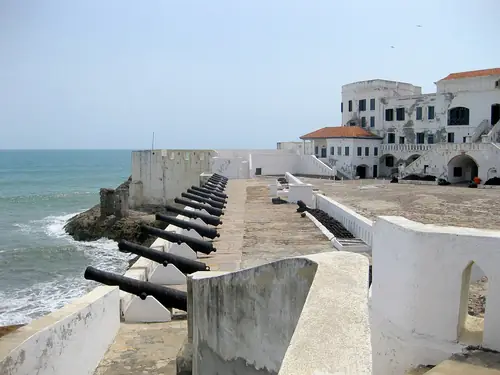
Cape Coast is a mid-sized coastal town with a slightly dilapidated charm, where colonial houses with wooden balconies stand alongside churches, prestigious schools and markets. It was the capital of the British Gold Coast colony until 1877, and its white castle, perched on the rocks facing the ocean, still dominates the town. It is one of the most important places for understanding the history of the Atlantic slave trade.
Beyond this heavy memory, Cape Coast is a lively student town, proud of its schools and university. The fishermen's colourful pirogues are drawn up on the beach below the castle, the markets sell smoked fish, and the town comes alive in September for the great Fetu Afahye festival, with its processions of chiefs and its dancing.
It makes an ideal base for exploring the central coast: Elmina Castle, about twenty minutes away, Kakum National Park and its canopy to the north, and the beaches and fishing villages dotted along the road west. People often spend two or three days here.
Things to do in Cape Coast: 6 ideas
- 01Cape Coast CastleA deeply moving guided tour of the dungeons, the courtyard and the Door of No Return, followed by the museum.
- 02ElminaThe oldest European castle in sub-Saharan Africa and its fishing harbour crammed with countless pirogues.
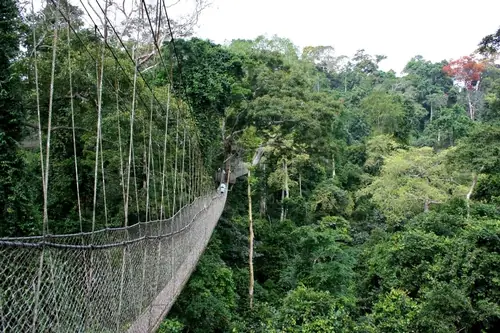
- 03Kakum National ParkThe canopy walkways are about half an hour's drive to the north.
- 04Fort WilliamClimb up to this old fort, now a lighthouse, for views over the town and the ocean.
- 05Kotokuraba MarketThe town's main market, for its fabrics, its fish and its atmosphere.
- 06Central coast beachesBetween Cape Coast and Elmina, beaches and lodges tempt you to linger by the water.
A little history
Before the Europeans arrived, Oguaa, the Fante name for Cape Coast, was a fishing village. The Portuguese sailed along this coast from the late 15th century, and in 1653 the Swedes built a first timber fort here. Fought over by the Swedes, Danes and Dutch, the site was taken by the English in 1664 and became Cape Coast Castle, enlarged during the 18th century. Tens of thousands of enslaved Africans passed through its dungeons before being shipped to the Americas.
After Britain abolished its slave trade in 1807, Cape Coast remained the seat of the Gold Coast administration until the capital moved to Accra in 1877. The town then turned to education: its secondary schools, founded from the late 19th century, and the university, established in 1962, have educated much of Ghana's elite. Listed as a UNESCO World Heritage Site in 1979, the castle has become a major place of remembrance for the African diaspora, who return for visits and festivals.
What to eat in Cape Coast
Cape Coast is in Fante country, and Fante kenkey, a ball of fermented maize cooked in banana leaves, is the signature dish: it comes with fried fish, fresh chilli and shito, a dark sauce of chilli and dried shrimp. Banku with grilled tilapia, fufu with light soup (a clear, peppery soup) or palm-nut soup, and red red, a bean stew in red palm oil served with fried plantain, are everywhere.
Kelewele, spicy fried plantain cubes, is an evening street snack. To drink, sobolo (hibiscus tea) is found everywhere, palm wine is drunk fresh in the villages, and akpeteshie, a very strong local spirit, should be approached with care. Chop bars, local eateries where you eat with your hand, Kotokuraba market and the fish smokers near the beach are the best places to discover this food.
Where to stay in Cape Coast
In central Cape Coast, simple hotels and guesthouses put you within walking distance of the castle and the markets. Along the coast towards Elmina, several beachfront hotels and lodges offer a more relaxed atmosphere, with a pool or access to the ocean. Some travellers prefer to stay in Elmina for the atmosphere of the harbour. Near Kakum, eco-lodges let you be on the spot early in the morning.
Getting there and getting around
Cape Coast has no international airport: you fly into Accra International Airport (code ACC, called Kotoka until February 2026), about 150 km to the east. The coast road takes around three hours, longer at rush hour on the way out of Accra; coaches and tro-tros (minibuses) leave from the capital's bus stations, and a car with a driver lets you stop along the way.
In town, shared taxis follow fixed routes, and you can also hire a taxi for half a day to Elmina or Kakum. The currency is the Ghanaian cedi: ATMs are plentiful in the centre and cards are accepted in hotels, but cash and mobile money dominate elsewhere.
Cape Coast is not among the areas official advice warns against (the French authorities place it under heightened vigilance, like most of the country): the warnings mainly concern the far north of the country, notably Bawku Municipality and the area near the border with Burkina Faso. Petty crime does occur, especially on beaches at night. The best time to go is from November to March; the rains are heaviest from April to June, then again in September and October.
See places to stay in Cape Coast
Frequently asked questions
How many days do you need in Cape Coast?
Two or three days let you visit Cape Coast Castle, Elmina Castle and the Kakum canopy walk without rushing. Add a night or two if you want to enjoy the beaches and fishing villages along the coast to the west.
How do you get from Accra to Cape Coast?
By the coast road, in about three hours outside traffic jams. Regular coaches and tro-tros leave from Accra's bus stations; a car with a driver is more comfortable and lets you combine Cape Coast, Elmina and Kakum.
Should you visit both Cape Coast Castle and Elmina Castle?
Yes, if you have time: the two sites complement each other, Elmina being older and Portuguese in origin, while Cape Coast houses a well-documented museum. The guided tours are emotionally draining, so it helps to spread them over two days.
When is the best time to visit Cape Coast?
The dry season, from November to March, is the most pleasant, although the harmattan can haze the sky in December and January. In September the Fetu Afahye festival draws big crowds, so book your accommodation well ahead.
 Ghana