 AfriqueUnie
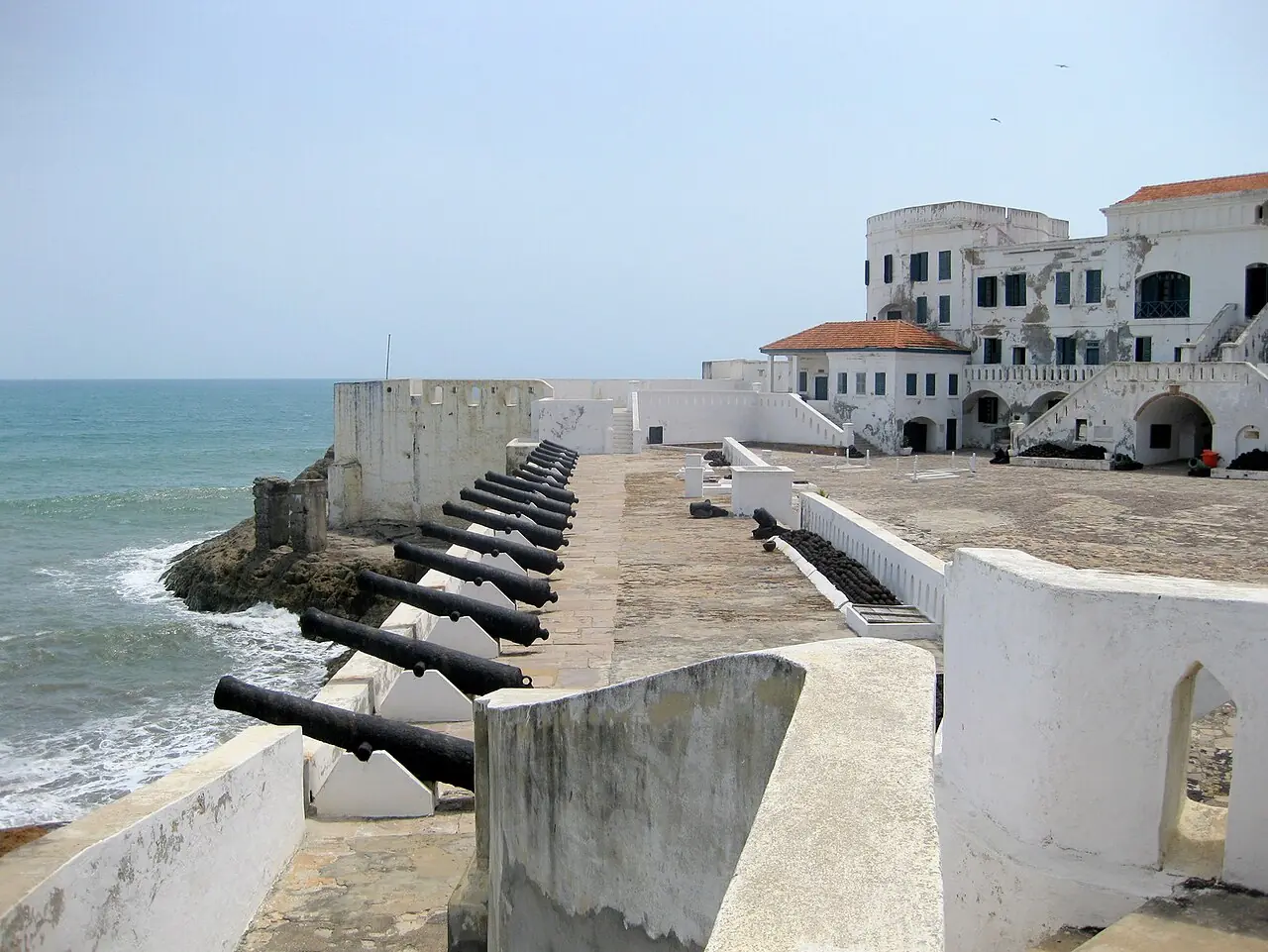 Photo: Rjruiziii · CC BY-SA 3.0
Published by Adama Doumbia, founder of Afrique Unie · updated 28 November 2026 · our method and sources
- Days 1-2
Accra, history and a creative scene
Use the first day to recover from the journey and explore Osu, a lively district of restaurants and galleries. The next day, start with Jamestown, the old fishing quarter: climb the lighthouse for the view over the rooftops and canoes, then walk past the old colonial forts and the open-air boxing gyms. Continue to the Kwame Nkrumah Memorial Park, resting place of the country's first president, then Independence Square and its monumental arch. In the afternoon, dive into the huge Makola market, or visit the W. E. B. Du Bois Centre. Finish on Labadi Beach, very lively at weekends, or in a bar in Osu.
- Day 3
Cape Coast and its castle
Allow three to four hours' drive west along the coast to Cape Coast, the former capital of the British Gold Coast. Its white castle, set on the rocks facing the ocean, is one of the UNESCO-listed forts. The guided tour, which takes you down into the dungeons where captives were crammed before being shipped out through the ‘door of no return’, is one of the most powerful and harrowing moments of the trip. Take time to visit the museum, which traces the history of the slave trade and the region. Late in the day, stroll through the town and along the beach, where fishermen haul in their nets.
- Day 4
The Kakum canopy and Elmina
Set off early for Kakum National Park, less than an hour north of Cape Coast. Its canopy walkway, a series of rope-and-plank bridges strung between the trees up to around forty metres above the ground, offers a rare view over the rainforest canopy. In the morning, the birds are more active and the heat more bearable. In the afternoon, head to Elmina, about fifteen minutes west of Cape Coast. Its castle, built by the Portuguese in the late 15th century, is one of the oldest European buildings in sub-Saharan Africa. Finish at the harbour, where hundreds of painted canoes line up in front of the fish market.
- Days 5-7
Kumasi and Ashanti country
The drive to Kumasi takes four to five hours; stop at Assin Manso, the slave river site where captives took their last bath before the coast. The next day, visit the Manhyia Palace Museum, historic residence of the Asantehene, the Ashanti king, then plunge into the vast Kejetia market. On the third day, head out to the craft villages: Bonwire for kente weaving, Ntonso for stamped adinkra symbols, Ahwiaa for woodcarving. In the afternoon, drive to Lake Bosumtwi, formed by a meteorite impact and sacred to the Ashanti. If your stay coincides with the Akwasidae festival, do not miss the royal court in full regalia.
- Day 8
The Akosombo Dam and Lake Volta
A long day on the road heading east: around five to six hours to reach Akosombo, through the hills of the Eastern Region. The hydroelectric dam, built in the 1960s, created Lake Volta, one of the largest artificial lakes in the world by surface area. In the late afternoon, enjoy the view from the shore, facing the Adomi suspension bridge, which spans the Volta at Atimpoku. French official advice warns against crossing Lake Volta, where boats regularly sink: admire it from dry land. The green, peaceful setting is a contrast with the bustle of Kumasi. Try the lake fish, served grilled with kenkey, the fermented maize dumpling.
- Day 9
Wli Falls and Mount Afadjato
Head north through the Volta Region, about three hours' drive, across hills covered in forest and cocoa plantations. Near the Togolese border, Wli Falls, among the highest in West Africa, are reached by an easy walk of about forty minutes through forest home to fruit bats. The fittest can attempt the steeper climb to the upper falls. In the afternoon, climb Mount Afadjato, often described as the country's highest point, for a superb view over the hills, or visit the Tafi Atome monkey sanctuary, protected by the villagers. Spend the night near Wli Falls or in Hohoe, and travel by day. Do not go to Alavanyo or Nkonya, near Hohoe, where French official advice reports a 6pm to 6am curfew.
- Day 10
Back to Accra and home
Allow four to five hours to drive back to Accra, leaving early to avoid the traffic jams at the entrance to the city, often heavy in the late afternoon. If your flight leaves in the evening, there is a little time for a final detour: the Accra arts centre for last-minute purchases of fabric, beads and carvings, or a final meal in a chop bar, the popular eateries serving fufu, banku and jollof. Accra International Airport (formerly Kotoka) is right in the city, close to Osu and East Legon, which makes the end of the trip easier. Still, leave a comfortable margin, as Accra's traffic is unpredictable.
Getting around
The easiest option is to hire a car with a driver for the whole trip: the main roads are paved, but traffic is heavy around Accra and Kumasi, and some stretches are in poor condition. Air-conditioned coaches link Accra, Cape Coast and Kumasi, while tro-tros, shared minibuses, cover the whole country cheaply. In town, ride-hailing apps work well in Accra and Kumasi.
When to do this trip
The dry season, from November to March, is the most pleasant, with less rain and roads in better condition. From December to February, the harmattan often veils the sky with dust and cools the nights. In the south, rains are heavier from April to June, then in September and October; the forest is then very green, but some tracks become slippery.
The travel notebook
The itinerary, practical information (entry, health, money, emergencies) and the checklist in a few pages, to print or keep offline on your phone.
Variations
- In 7 days: drop the Volta Region and return from Kumasi to Accra by road or on a domestic flight.
- In 14 days: add Mole National Park in the north, reached by flying to Tamale and then by road, to approach elephants on foot, after checking official advice for the region.
- Beach version: finish with two or three days on the western beaches, around Busua, west of Elmina.