 AfriqueUnie
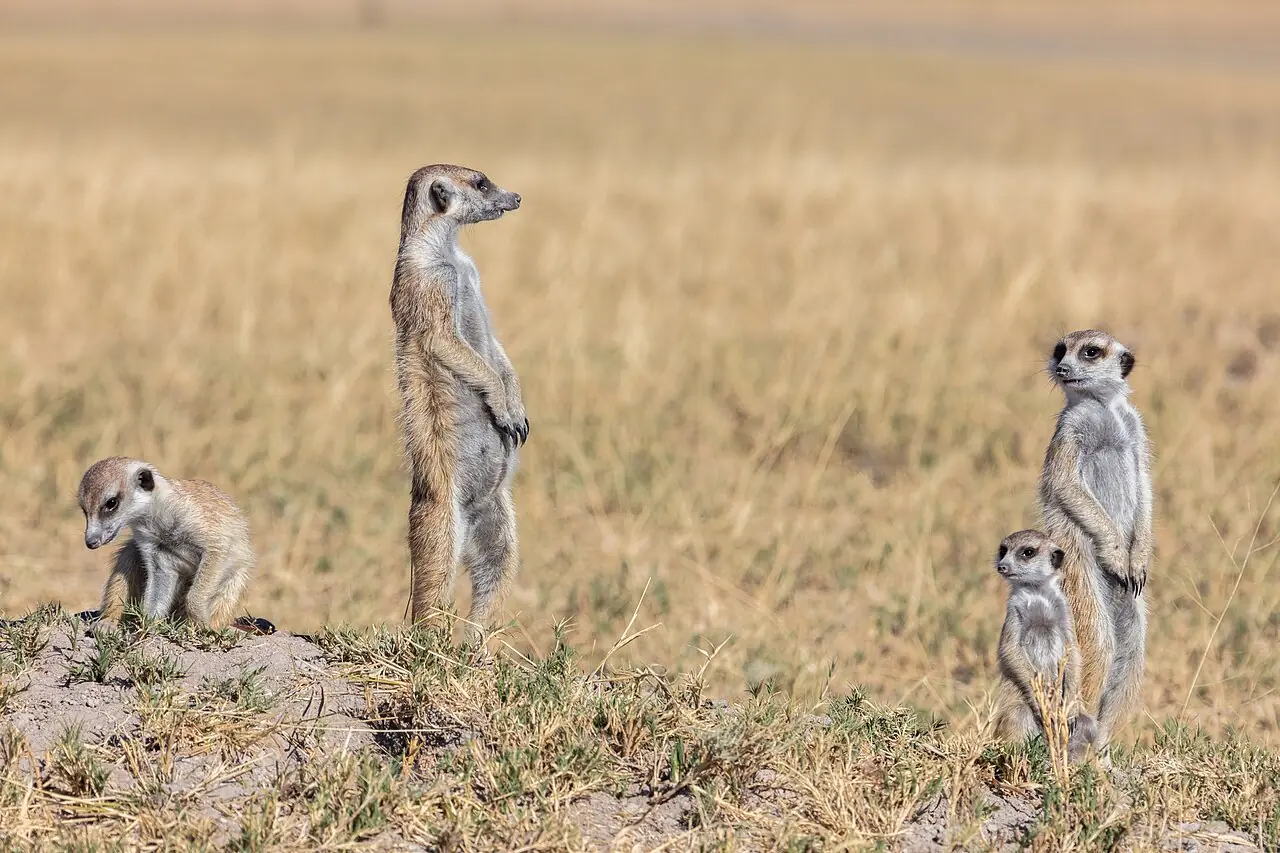 Photo: Diego Delso · CC BY-SA 4.0
Published by Adama Doumbia, founder of Afrique Unie · updated 28 November 2026 · our method and sources
Why go
The remains of a giant ancient lake that dried up thousands of years ago, the Makgadikgadi Pans form one of the largest expanses of salt in the world. In the dry season the white crust stretches as far as the eye can see, flat and bare, and the horizon dissolves into the shimmering heat. The silence is so deep you can hear your own blood pulsing. At night, beneath an unpolluted sky, the stars seem to come down to the ground.
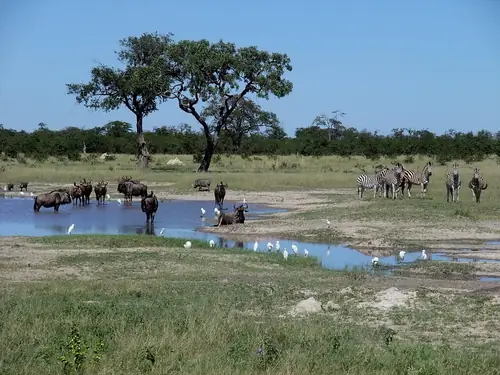
Yet this apparent desert harbours astonishing life. On its edges, families of meerkats used to people let you approach on foot. In the rainy season the scene changes: the pans are covered by a thin film of water that attracts thousands of flamingos, while zebras and wildebeest migrate towards the grasslands along the Boteti River and Nxai Pan National Park. Kubu Island, or Lekhubu, a rocky outcrop covered in baobabs in the middle of the salt, is a sacred place of unreal beauty.
Getting there
The pans lie between Maun and Nata, along the tarred road that crosses the country from east to west. Lodges on their edges organise outings by quad bike, 4x4 or on foot, as well as nights under the stars on the salt. Independent access, especially to Kubu, requires a 4x4, a GPS and solid experience: the crust can give way and trap the vehicle.
Frequently asked questions
When is the best time to visit the Makgadikgadi Pans?
It depends on what you want to see. From April to October, the salt is dry and passable: this is the season for nights under the stars and quad-bike trips. From December to March, the rains draw zebra, wildebeest and thousands of flamingos, but the pans become impassable.
Can you drive to Kubu Island independently?
Yes, but only in a 4x4, with GPS and solid off-road experience, as the salt crust can give way and trap your vehicle. Ideally travel with a second vehicle and stick to existing tracks. Kubu is a national monument with a basic campsite run for the benefit of local communities.
Can you get close to the meerkats at Makgadikgadi?
Yes, on the edges of the pans some meerkat families are used to people and can be approached on foot. These outings are run by guides from the lodges on the fringes, who know where the burrows are. Stay calm, keep low to the ground and let the animals come to you.
How do you get to the Makgadikgadi Pans?
The pans lie between Maun and Nata, along the tarred road that crosses northern Botswana from east to west. Lodges on the edge run trips onto the salt by 4x4, quad bike or on foot. For Kubu and remote areas, a well-equipped 4x4 and experience are essential.
What is there to see around the Makgadikgadi Pans?
Just north of the road, Nxai Pan National Park is home to Baines' Baobabs, painted in the 19th century by the artist Thomas Baines. In Makgadikgadi Pans National Park, zebra gather along the Boteti River in the dry season before migrating onto the pans with the rains. Two nights are enough to soak up the atmosphere of the pans.
 Namibia
 Algeria
 Chad