AfriqueUnie
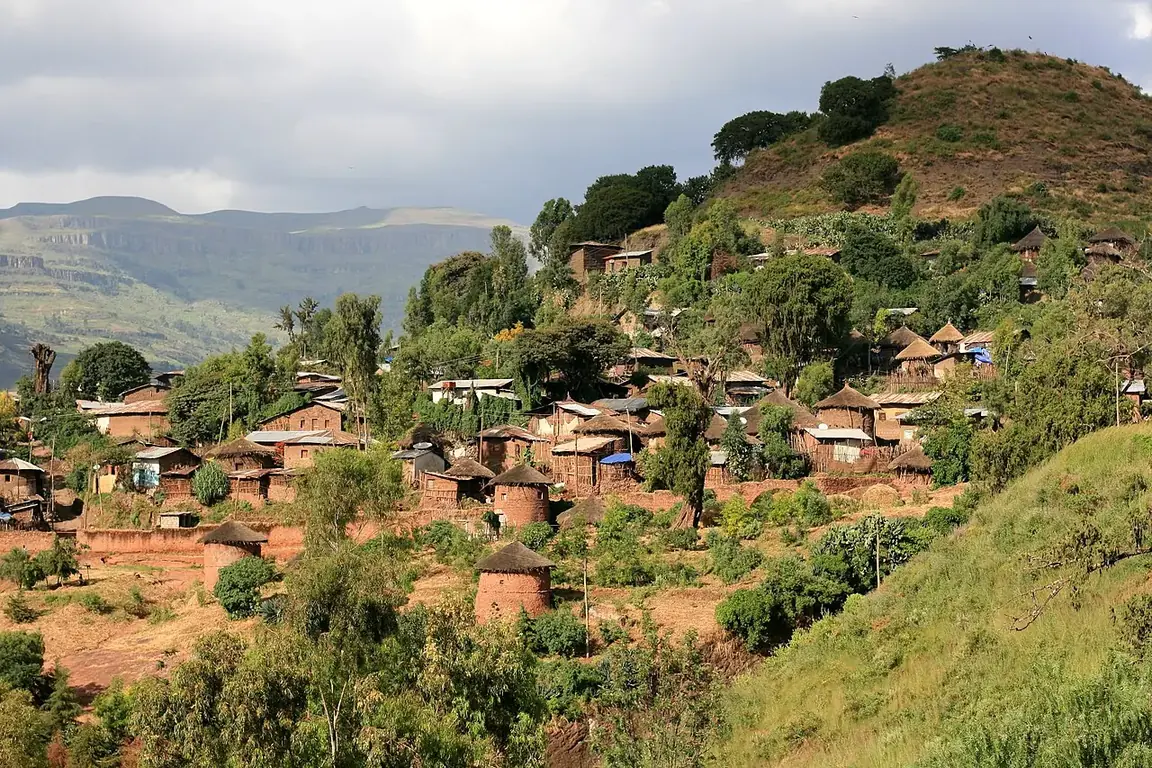 Photo: Damien Halleux Radermecker · CC BY-SA 2.0
Published by Adama Doumbia, founder of Afrique Unie · updated 28 November 2026 · our method and sources
Why visit Lalibela?
Important: Lalibela lies in the Amhara region, where armed clashes have been taking place since 2023. Many governments advise against travel there: you must check your government's official travel advice before planning a visit. The information that follows applies when the situation allows.
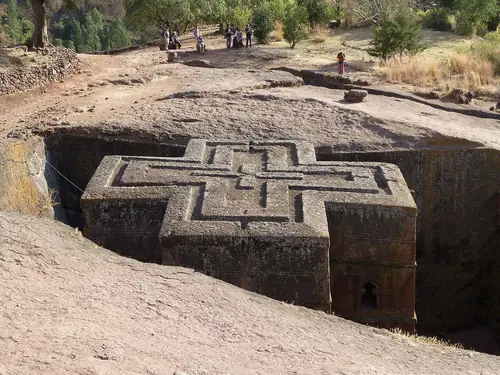
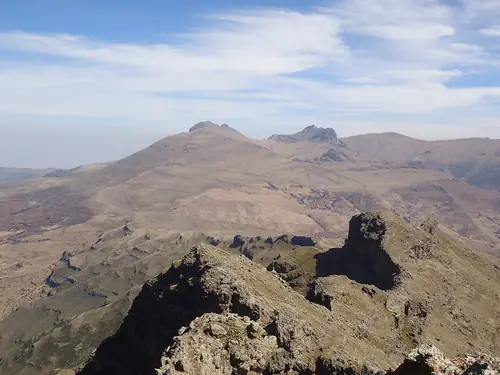
Lalibela is a small town perched at around two thousand five hundred metres above sea level in the mountains of northern Ethiopia. It takes its name from King Lalibela of the Zagwe dynasty, to whom tradition attributes the creation of a new Jerusalem after the Holy City was taken by Saladin. Eleven monolithic churches, hewn directly from the red volcanic rock, form one of the most extraordinary religious sites in the world, a UNESCO World Heritage Site and still in use.
What strikes you here is that the place remains, above all, a living sanctuary. Priests draped in embroidered cloth, deacons chanting in Ge'ez, white-shrouded pilgrims praying with their backs against the rock walls: at dawn the atmosphere is of rare intensity. Around the town, churches and monasteries perched in the mountains round off the visit.
Things to do in Lalibela: 6 ideas
- 01The northern group of churchesVisit Bete Medhane Alem, one of the largest monolithic churches in the world, and its neighbours.
- 02Bete GiyorgisDiscover the cross-shaped church carved into the rock, the most famous of them all.
- 03The tunnels of the eastern groupMake your way through the underground passages and trenches that link the churches together.
- 04Dawn massDiscreetly attend the morning prayers, when white-clad worshippers fill the courtyards.
- 05Asheton MaryamClimb on foot or by mule to this clifftop monastery, with immense views over the region.
- 06Yemrehanna KristosDiscover this church built inside a cave, older than those of Lalibela.
Where to stay in Lalibela
The town is small and you generally stay near the church complex, in simple hotels and guesthouses, often with a terrace overlooking the valley. A few ecolodges and more comfortable places to stay are found on the heights outside the centre, with panoramic mountain views. The atmosphere is rural and calm, with markets on Saturdays. During Timkat and Orthodox Christmas, on 7 January, the town is overrun with pilgrims and accommodation is fully booked.
 Ethiopia