 AfriqueUnie
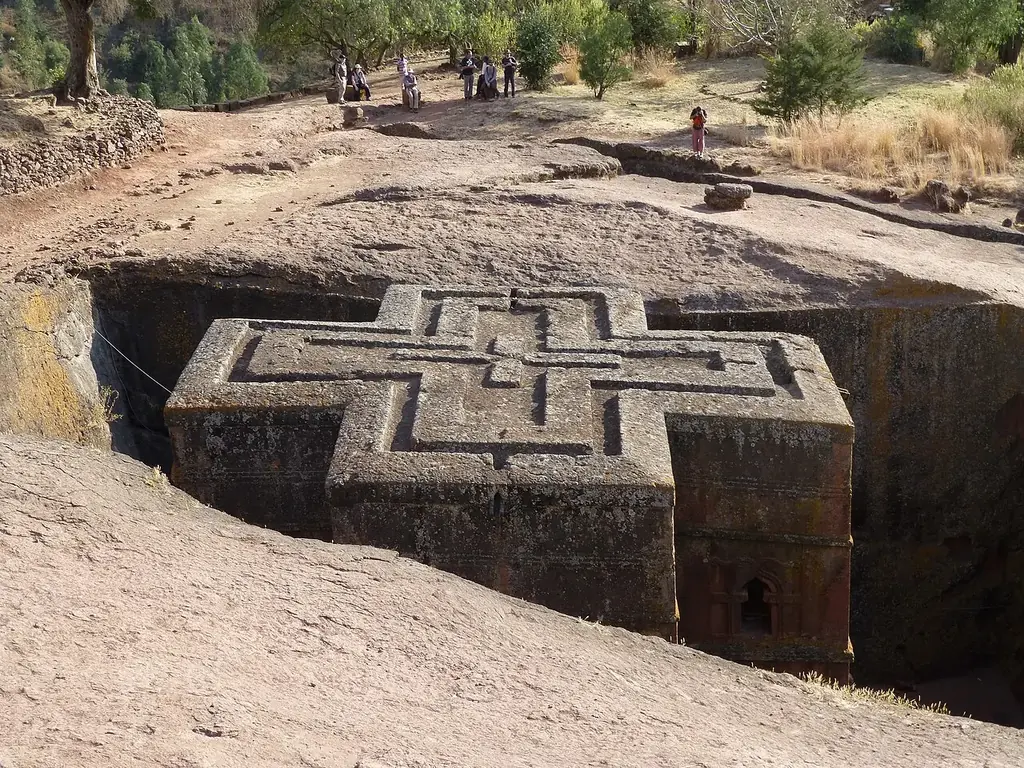 Photo: Ji-Elle · CC BY-SA 3.0
Published by Adama Doumbia, founder of Afrique Unie · updated 28 November 2026 · our method and sources
Why go
Warning: Lalibela lies in the Amhara region, where fighting since 2023 has led many governments to advise against travel. Check your government's official travel advice before making any booking. The eleven churches of Lalibela, a UNESCO World Heritage Site, were hewn from the volcanic rock, probably between the late 12th and the 13th century, under the Zagwe dynasty. The builders freed huge blocks of stone by digging all the way around them, then carved them from the inside, creating columns, windows, arches and decoration without adding any material.
The churches fall into two main groups, on either side of a symbolic channel called the Jordan, linked by trenches, tunnels and underground passages. Bete Medhane Alem impresses with its size and its forest of columns, Bete Maryam with its paintings, and the isolated Bete Giyorgis, shaped like a perfect cross, with its geometric purity. These churches are still in use: priests, deacons and pilgrims pray in them every day, and some still hold ancient frescoes and processional crosses.
Getting there
When the situation allows, the simplest option is a domestic flight from Addis Ababa, about an hour long, to Lalibela airport, some twenty kilometres from the town. The road from Gondar, Bahir Dar or Addis Ababa is long and winding, and often covered by security warnings.
Frequently asked questions
Can you travel to Lalibela at the moment?
No: the French authorities advise against all travel to the whole Amhara region, where Lalibela lies, because of regular fighting and road blockades, including in the main towns; the UK government also advises against all travel to all of the region. Travelling against this advice can also invalidate your insurance. Check your own government's travel advice, which is updated regularly, before booking anything.
How many days do you need to visit the churches of Lalibela?
When the situation allows a visit, allow at least two days to see both groups of churches and Bete Giyorgis without rushing. A third day lets you discover the churches and monasteries in the surrounding area. Visits are on foot, with many steps, tunnels and narrow passages.
When are the main religious festivals in Lalibela?
Genna, Ethiopian Orthodox Christmas, is celebrated on 7 January and draws thousands of pilgrims dressed in white. Timkat, Epiphany, falls around 19 January and features great processions. These are spectacular times but very crowded, and accommodation is scarce.
What should you wear to visit the churches of Lalibela?
Clothes covering your shoulders and legs, plus socks, as you must take your shoes off at the entrance to each church. Women may want a scarf to cover their heads, as worshippers do. A torch is useful in the dark churches and tunnels.
What makes the churches of Lalibela so special?
They were carved entirely out of the rock, from the top down, rather than built stone by stone. The builders dug trenches around massive blocks and then hollowed them out to create naves, columns and windows. They are still active places of worship, so respect services, ask before photographing priests and worshippers, and avoid using flash.

 Tanzania
 Algeria
 Benin
 Botswana