AfriqueUnie
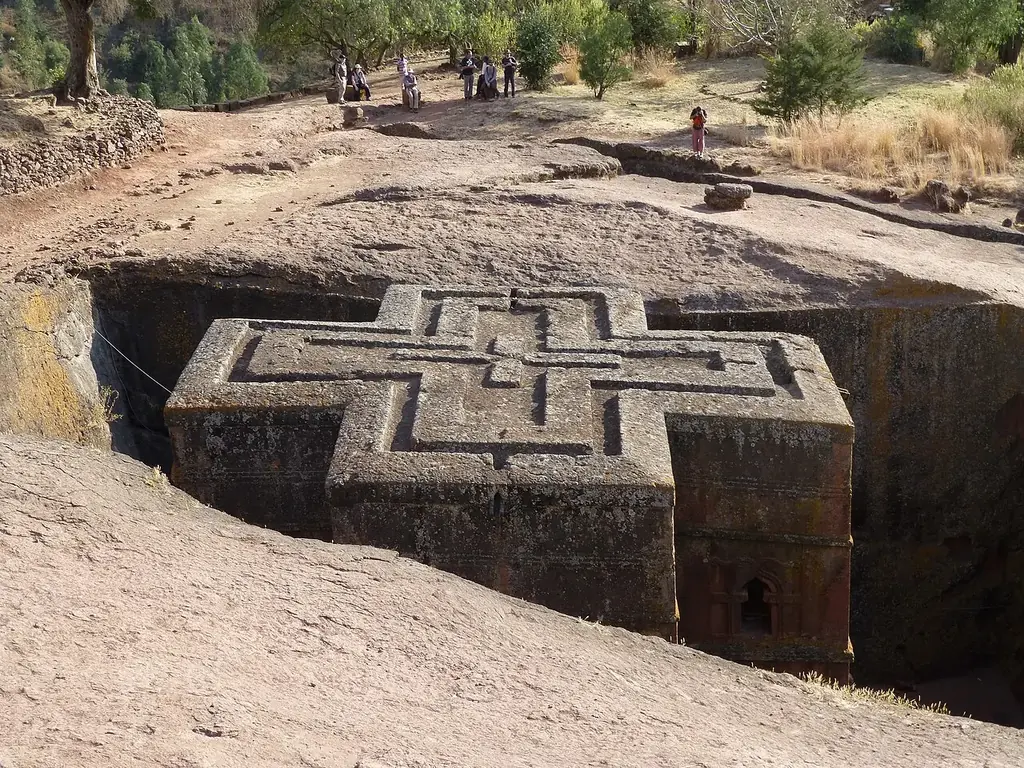 Photo: Ji-Elle · CC BY-SA 3.0
Published by Adama Doumbia, founder of Afrique Unie · updated 28 November 2026 · our method and sources
Egypt and Ethiopia are two of the continent's great lands of history, linked by the Nile, whose Blue Nile rises in the Ethiopian highlands. Egypt means five thousand years of history along the river: the pyramids of Giza, the temples of Karnak, the Valley of the Kings, Abu Simbel. Ethiopia, never lastingly colonised, has its own alphabet, its own calendar, one of the oldest Orthodox Churches in the world and the rock-hewn churches of Lalibela.
But today the comparison also depends on safety: several of Ethiopia's historic regions are formally advised against. Here is our analysis.
 Ethiopia |  Egypt | |
|---|---|---|
| Capital | Addis Ababa | Cairo |
| Best time to go | October to March | October to April |
| Budget | Budget | Budget |
| Currency | Ethiopian birr (ETB) | Egyptian pound (EGP) |
| Languages | Amharic, Oromo | Arabic |
| Dishes to try | Injera, doro wat, coffee ceremony | Koshari, ful, molokhia |
Ancient monuments
EgyptEgypt has few equals: the pyramids of Giza and the Sphinx, Saqqara and the Step Pyramid of Djoser, the temples of Karnak and Luxor, the painted tombs of the Valley of the Kings, Abu Simbel and Philae, not forgetting the Grand Egyptian Museum near Giza. Ethiopia has a unique heritage, from the stelae of Aksum to the monolithic churches of Lalibela, carved eight centuries ago, and the castles of Gondar, but for antiquity Egypt remains the benchmark.
Safety and access to the sites
EgyptThis is the deciding factor today. In Ethiopia, France Diplomatie places the regions of Tigray, home to Aksum, and Amhara, home to Lalibela, Gondar and the Simien Mountains, in its red zone; the UK also advises against all travel to these regions. The great historic route of the north is therefore out of reach. In Egypt, the Nile Valley sites are visited on the usual tourist routes, with Cairo on heightened alert; northern Sinai and the desert border areas with Libya and Sudan, however, are formally advised against.
Living culture
EthiopiaEthiopia wins: the Ge'ez alphabet, a thirteen-month calendar, the coffee ceremony, Orthodox festivals such as Timkat and Meskel, shared meals of injera and a sense of otherness unmatched on the continent. Addis Ababa, with its National Museum, where you can see a replica of Lucy, the Merkato and its cafés, already gives you a taste. Egypt holds its own with the energy of Cairo, life along the banks of the Nile and the Nubian charm of Aswan.
Budget
A drawBoth countries are rated ‘budget’ on our site, around €30–60 per person per day, excluding flights. In Egypt, entry fees for the major sites and Nile cruises can tip the balance. In Ethiopia, the distances often mean domestic flights, and the economy runs largely on cash. A draw.
Best time to go
A drawThe calendars are similar. Egypt is best visited from October to April, with mild days in the Nile Valley; from May to September, the heat is overwhelming in Luxor and Aswan. In Ethiopia, the best period is October to March, after the main rainy season from June to September. A draw.
Getting there and getting around
EgyptCairo is four and a half to five hours' flight from Paris, and Luxor and Aswan are easily reached by train, domestic flight or Nile cruise. Addis Ababa is a major air hub, and the national airline serves many towns in the country, but distances are immense, security conditions on some roads change quickly and your itinerary must follow official advice.