 AfriqueUnie
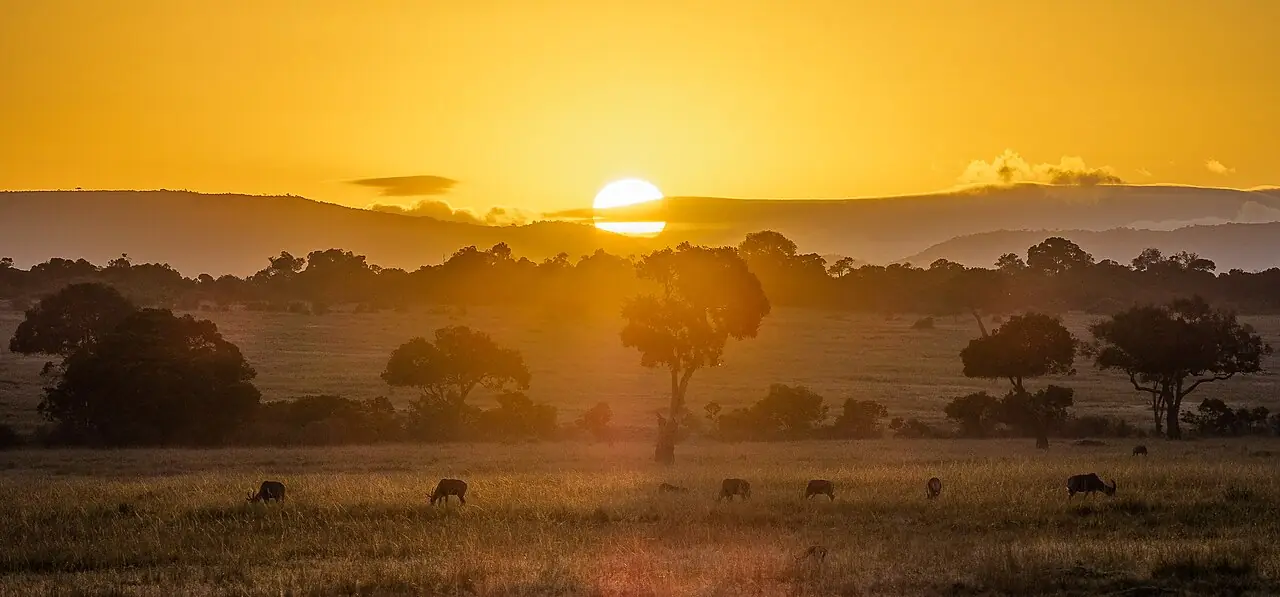 Photo: Danijel Mihajlovic · CC BY-SA 4.0
Published by Adama Doumbia, founder of Afrique Unie · updated 28 November 2026 · our method and sources
What to expect
Every year, some one and a half million wildebeest, accompanied by hundreds of thousands of zebras and gazelles, travel through the Serengeti and Masai Mara ecosystem, following the rain and fresh grass. This circular movement, with no beginning and no end, generally reaches Kenya's Masai Mara around July and stays there until October, before the herds head back south into Tanzania. During these months the plains of the Mara are covered with dark silhouettes as far as the horizon, and the continuous grunting of the wildebeest fills the air.
The most eagerly awaited moment is the crossing of the Mara River. The herds mass on the bank, sometimes hesitating for hours, then a first animal leaps and thousands of others follow in a melee of dust, bellowing and splashing, facing the crocodiles under the gaze of lions waiting further on. The spectacle is unpredictable: you can wait a whole day without a crossing, or see several in a single morning. The concentration of prey also draws an exceptional number of predators.
Frequently asked questions
When is the best time to see the Great Migration in the Masai Mara?
The herds usually reach the Masai Mara around July and stay until October; there are no fixed dates, as their progress depends on the rains. August is the most sought-after month. To maximise your chances of seeing a crossing, stay at least three or four nights.
How do I get to the Masai Mara from Nairobi?
The Masai Mara lies south-west of Nairobi: by road, allow roughly five to six hours, partly on dirt tracks. Light aircraft also link Nairobi to the airstrips in the reserve and conservancies in about an hour. Flying saves time, while the road lets you take in the Rift Valley.
Am I guaranteed to see a Mara River crossing?
No, it is unpredictable: the herds may hesitate on the bank for hours, and you can wait a whole day without a crossing or see several in one morning. A camp near the river and a patient guide greatly improve your chances. At the crossing points, respect the reserve's rules and the required distance from the animals.
How far ahead should I book for the migration?
Book your accommodation several months ahead, or even a year ahead for August. Entry fees apply to the reserve and the conservancies, so check the arrangements when you book. The neighbouring conservancies offer a quieter experience, even though the crossings mostly take place inside the reserve.
Is the Masai Mara safe?
The Masai Mara is not among the areas advised against by France or the UK, but all of Kenya is at least under heightened vigilance, and the UK says terrorist attacks are very likely in the country. Crime is high in cities, notably Nairobi, so do not walk around at night and use organised transfers. In the reserve, never get out of the vehicle without your guide's agreement, and ask a doctor about malaria prevention.
Dates vary from year to year: confirm them with the organisers before booking.
 Madagascar
 Tunisia
 Kenya