AfriqueUnie
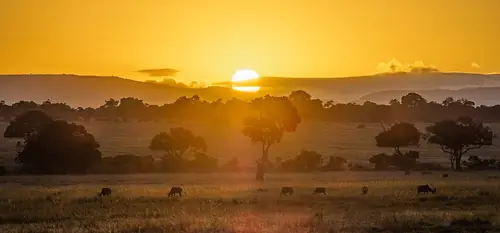
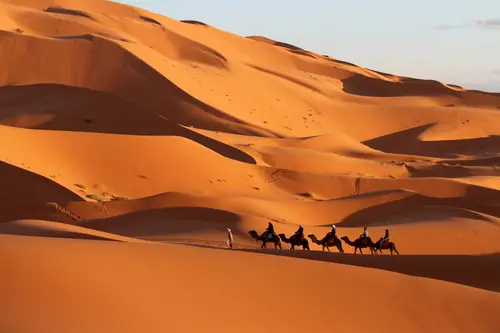
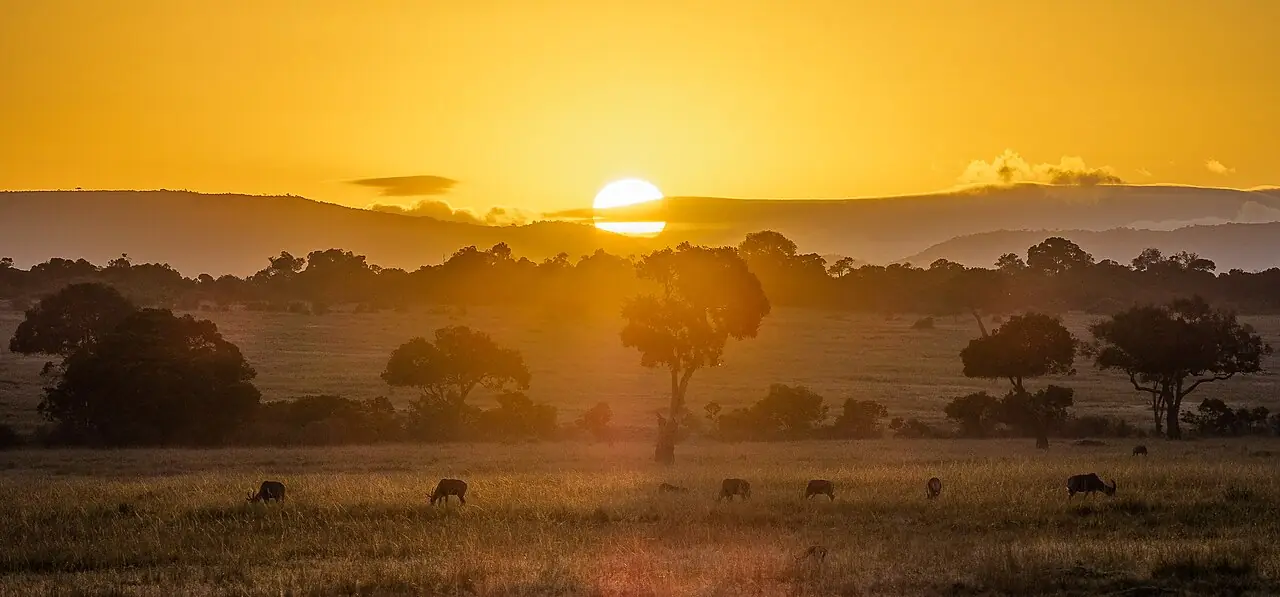 Photo: Danijel Mihajlovic · CC BY-SA 4.0
Published by Adama Doumbia, founder of Afrique Unie · updated 16 November 2026 · our method and sources
Summer in Africa: two opposite seasons
North of the equator, summer is hot; in West Africa it is the rainy season, known as hivernage in Senegal. South of the equator it is the southern winter: dry weather, cool nights, sparse vegetation and animals gathered around waterholes, the best safari conditions of the year. In between, East Africa has its long dry season.
July and August are also the most sought-after months of the year for many European travellers because of the school holidays: flights, safari camps, gorilla permits and accommodation in the best-known parks are often booked six months to a year ahead.
What is the weather like in July and August?
Averages from our climate data for each country's reference city: a trend, not a forecast.
- Kenya (Nairobi) and Tanzania: Dry season: around 24°C in the afternoon and 12°C at night in Nairobi in July, with only about ten millimetres of rain. In Dodoma, Tanzania, there is almost no rain in July and August. It is Great Migration season.
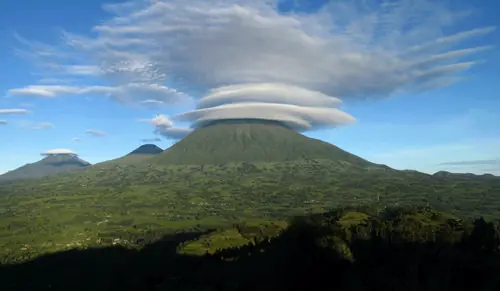
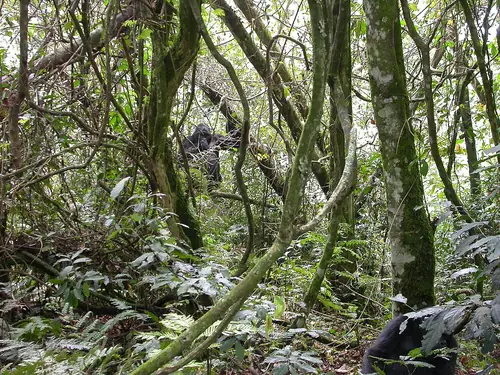
- Rwanda (Kigali) and Uganda (Kampala): Kigali stays dry in July (10 mm) at around 27°C in the afternoon: good conditions for gorillas and chimpanzees. Kampala gets a little more rain, 43 mm in July and 86 mm in August.
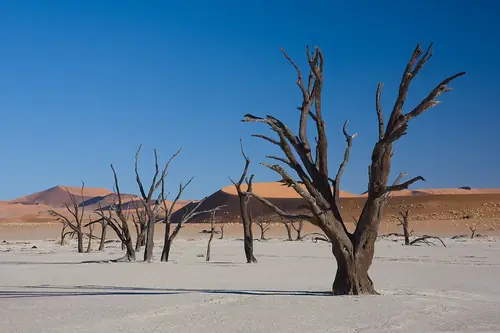
- Namibia (Windhoek) and Botswana (Gaborone): No rain, days of around 21 to 26°C and cold nights: around 6°C in Windhoek and 4°C in Gaborone in July. Bring a proper jacket for dawn game drives.
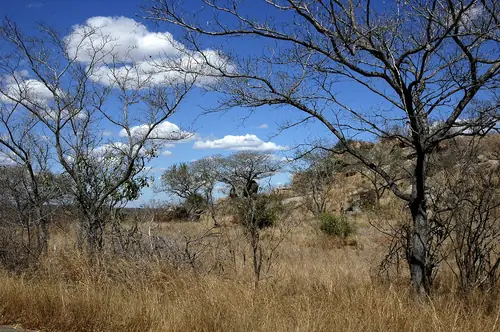
- South Africa: Winter: around 20°C in the afternoon and 5°C at night in Pretoria in July, and dry. Excellent for Kruger National Park. The Cape region, by contrast, is in its winter rainy season.
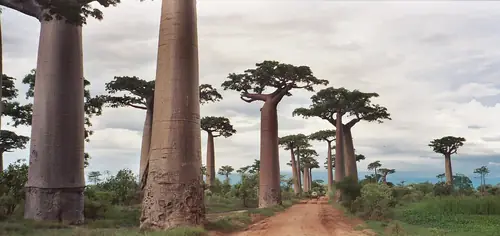
- Madagascar (Antananarivo): A dry, cool winter in the highlands: around 20°C by day and 11°C at night in July, with almost no rain. Humpback whales usually arrive in the Sainte-Marie channel between July and September.
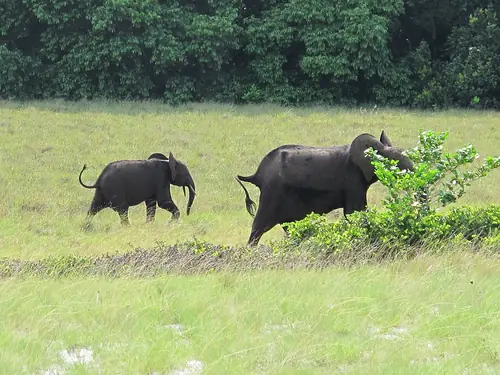
- Gabon (Port-Gentil): Dry season: 3 mm of rain in July and around 26°C in the afternoon. Congo and São Tomé and Príncipe are dry too.
- Morocco (Rabat) and North Africa: Around 27°C in the afternoon on the Atlantic coast, cooled by the ocean. The interior and the Sahara are scorching, as are Cairo (35°C) and Tunis (34°C).
- West Africa: Rainy season: Dakar goes from 53 mm in July to 166 mm in August, and Conakry exceeds 1,000 mm a month. Cape Verde stays almost dry in July (6 mm in Praia), before some rain in August.
The big events of summer 2027
We only give dates that are official or listed as such on our event pages; the others are still to be confirmed by the organisers.
- Total eclipse of 2 August 2027: On Monday 2 August 2027, totality crosses North Africa from Morocco to Egypt. Near Luxor it lasts more than six minutes. Accommodation in the path of totality, especially in Luxor, is expected to be in high demand.
- AFCON 2027 in East Africa: The Africa Cup of Nations is planned for summer 2027 in Kenya, Uganda and Tanzania. The exact dates and match schedule are published by CAF: check them before booking.
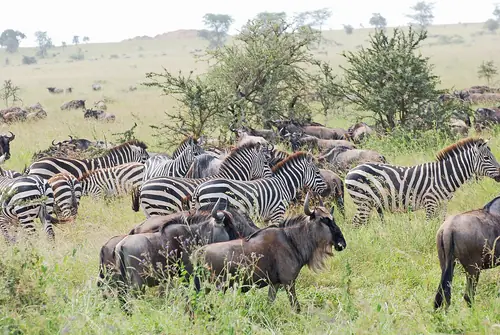
- Great Migration (Kenya, Tanzania): From July to October, the great herds of wildebeest and zebra are usually between the northern Serengeti and the Maasai Mara. The Mara River crossings have no fixed dates.
- Grand Magal of Touba (Senegal): The great Mouride pilgrimage is estimated for 23 July 2027 (18 Safar), on a date set by the sighting of the moon and announced about two weeks before. Roads and transport to Touba are then extremely busy.
- Mawlid and Gamou (Senegal): The Prophet's birthday is expected around 14 or 15 August 2027, on a date set by the sighting of the moon; the Gamou of Tivaouane then draws a huge crowd.
- Panafest (Ghana): The Pan-African festival in Cape Coast takes place in odd-numbered years, from late July to early August. The 2027 dates have not yet been officially announced.
- Summer festivals: The Carthage International Festival (mid-July to mid-August) and Dougga in Tunisia, Marrakech's popular arts festival in early July, Chale Wote and Homowo in Accra in August, Baía das Gatas in Cape Verde in August, Umhlanga in Eswatini in late August or early September: 2027 dates to be confirmed.
Where is demand highest?
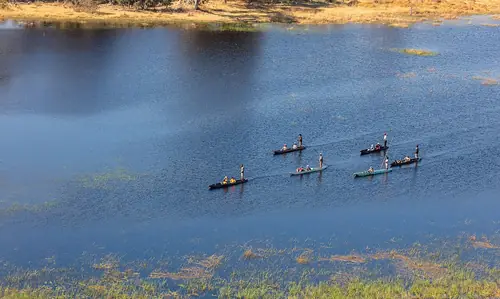
The most famous parks are often fully booked: the Maasai Mara and the northern Serengeti during the migration, the Okavango Delta, Etosha, Kruger, and gorilla permits in Rwanda and Uganda. Flights to Nairobi, Arusha, Kilimanjaro, Windhoek, Maun and Johannesburg are in high demand, as are the beaches of Morocco, Tunisia and Cape Verde.
In 2027 two extra peaks are added: AFCON in East Africa and the 2 August eclipse in North Africa, especially around Luxor. For the diaspora, summer is the main season for going home to West and Central Africa: flights from Paris, Brussels, Milan or Rome to Dakar, Abidjan, Douala, Accra and Lagos are snapped up at the start of the school holidays, and return flights at the end of August.
Booking early for the summer
- Six months to a year for a safari: Safari camps, lodges inside the parks and gorilla permits go very early for July and August. If your dates are fixed, consider lesser-known parks, often just as rich and much quieter.
- Flights at the start and end of the holidays: Departures on the first weekend of the school holidays and returns at the end of August are the most sought-after. Shifting your departure by a few days, or flying midweek, often gives you more choice: compare several dates in our flight tool.
- Eclipse and AFCON: If you are aiming for the eclipse or AFCON matches, book accommodation as soon as possible, with flexible cancellation terms while the schedule is unconfirmed.
- Paperwork and health: Visa or e-visa, passport validity, yellow fever certificate, malaria prevention: in the rainy season the risk of malaria is often higher in West Africa. See a doctor several weeks before you leave.
Diaspora: summer back home
For many diaspora families, the summer holidays are the time to go home: long stays with parents, weddings, christenings and children born in Europe discovering the country. Book tickets in the winter if you are leaving at the start of the holidays, and check the baggage allowance, as summer suitcases are often full of presents.
In West Africa, summer is the rainy season: roads to the villages are sometimes cut, the heat is humid and there are mosquitoes. Bring light clothes and mosquito protection, and allow extra time for journeys. In Senegal, if your stay coincides with the Grand Magal or the Gamou, expect very busy roads to Touba and Tivaouane, and avoid planning a trip to the airport on those days.
If your family lives in a country or region the authorities advise against travelling to, read the official advice before you go, sign up for your foreign ministry's alerts (FCDO email alerts in the UK) and follow the guidance of your family on the ground.
Further reading
- Where to go in Africa in July: every destination for the month
- Where to go in Africa in August: every destination for the month
- Safari in July: where to go in Africa?
- Total eclipse of 2 August 2027: where to see it in Africa
- AFCON 2027: the fan guide
- Kenya in July: weather and tips
- Tanzania in August: weather and tips
- Namibia in July: weather and tips
- Madagascar in August: weather and tips
- Morocco in July: weather and tips
- Cape Verde in July: weather and tips
- Great Migration: Maasai Mara, July to October
- Whale season: Île Sainte-Marie, July to September
- Panafest: Cape Coast, late July to early August
- Umhlanga: Eswatini, late August or early September
- Public holidays in Senegal in 2027: Grand Magal, Mawlid
- Flights to Africa: all our routes
- Paris-Dakar flights
- Paris-Abidjan flights
- Paris-Douala flights
- Milan/Rome-Lagos flights
- Going home for a wedding: the diaspora guide
- Taking your children to Africa: paperwork, health and preparation