 AfriqueUnie
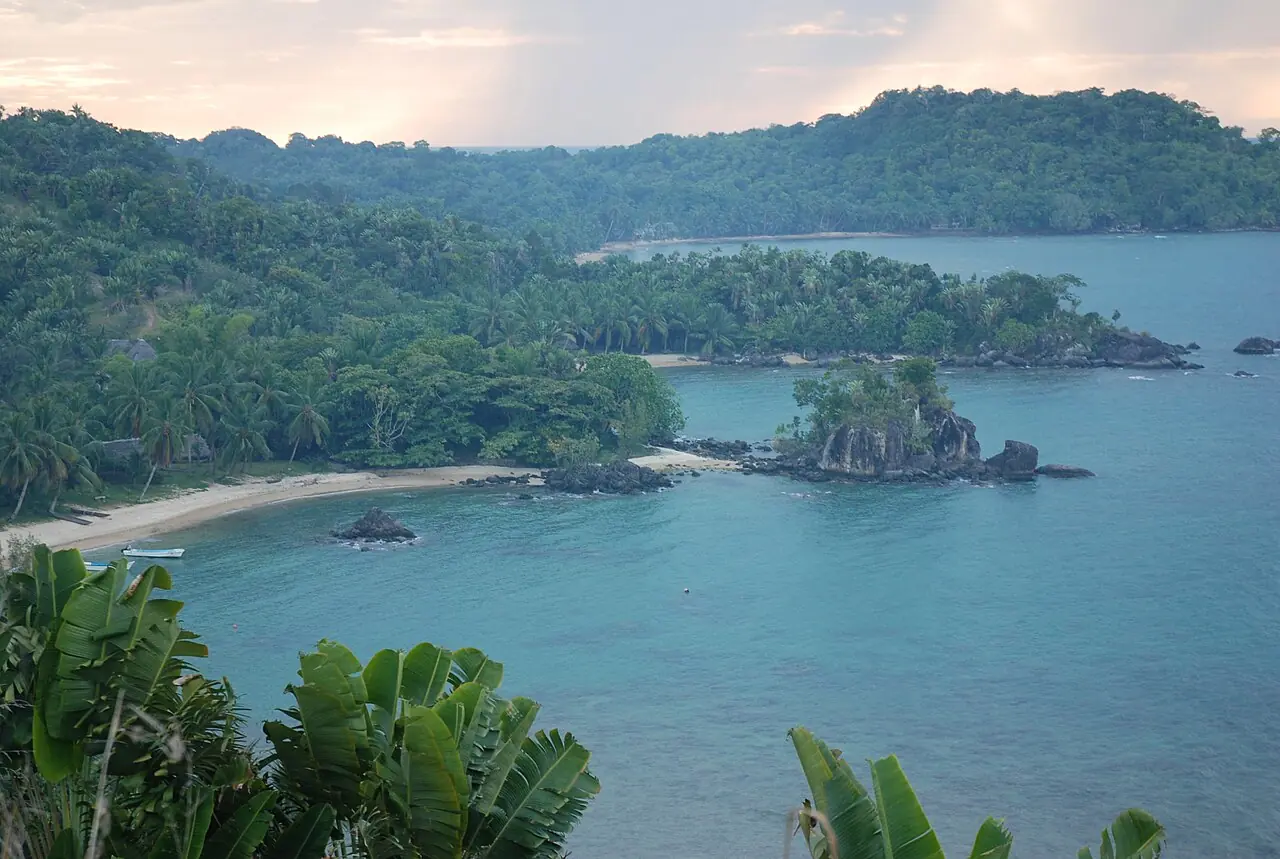 Photo: M worm · Public domain
Published by Adama Doumbia, founder of Afrique Unie · updated 28 November 2026 · our method and sources
What to expect
Every year, between July and September, hundreds of humpback whales travel up from the cold waters of the Antarctic to the warm waters of Madagascar. The channel off Île Sainte-Marie, between the island and the east coast, is one of their favourite places to mate and calve. During these months you can see their blows from the beach, sometimes hear their songs through the hull of a boat and marvel at the spectacular breaches of the adults.
Boat trips let you watch mothers with their calves, males jostling for the females' attention and fins slapping the water. The whole island then lives to the rhythm of the whales, with a festive atmosphere, and a festival is sometimes held in their honour, mixing local culture, awareness-raising and music.
Frequently asked questions
When is the best time to see whales off Île Sainte-Marie?
Humpback whales are present from July to September, with no fixed dates since it is a natural phenomenon. The best sightings are often from late July to early September. August is the busiest month, so book accommodation and boat trips several weeks ahead.
How do I get to Île Sainte-Marie?
The island has an airfield at its southern tip, served by flights from Antananarivo and Toamasina. You can also cross by fast boat from Soanierana-Ivongo on the east coast, a sea crossing of about 27 km. UK advice recommends getting local advice before taking a boat, as overcrowding, poor maintenance and sudden squalls have caused accidents: check the weather and insist on a life jacket.
Can you see the whales from the beach?
Yes, you can often spot blows and breaches from the shore, especially with binoculars in the late afternoon. To see mothers and calves up close, a boat trip with an operator that follows the whale-watching code of conduct is the best option. The code sets approach distances and limits the time spent near the animals.
How long does a whale-watching trip last?
It varies with the operator and sea conditions, so ask when you book. Trips preferably go out in the morning, when the sea is calmer. Bring a windproof jacket, sun protection and seasickness tablets.
Is Île Sainte-Marie safe for travellers?
All of Madagascar is under heightened vigilance according to French official advice, which strongly advises against walking around towns at night and driving on national roads after dark. The UK advises avoiding large gatherings and political demonstrations. On the island, keep an eye on your valuables and travel by day where possible.
Dates vary from year to year: confirm them with the organisers before booking.
 Kenya
 Tunisia
 Morocco