 AfriqueUnie
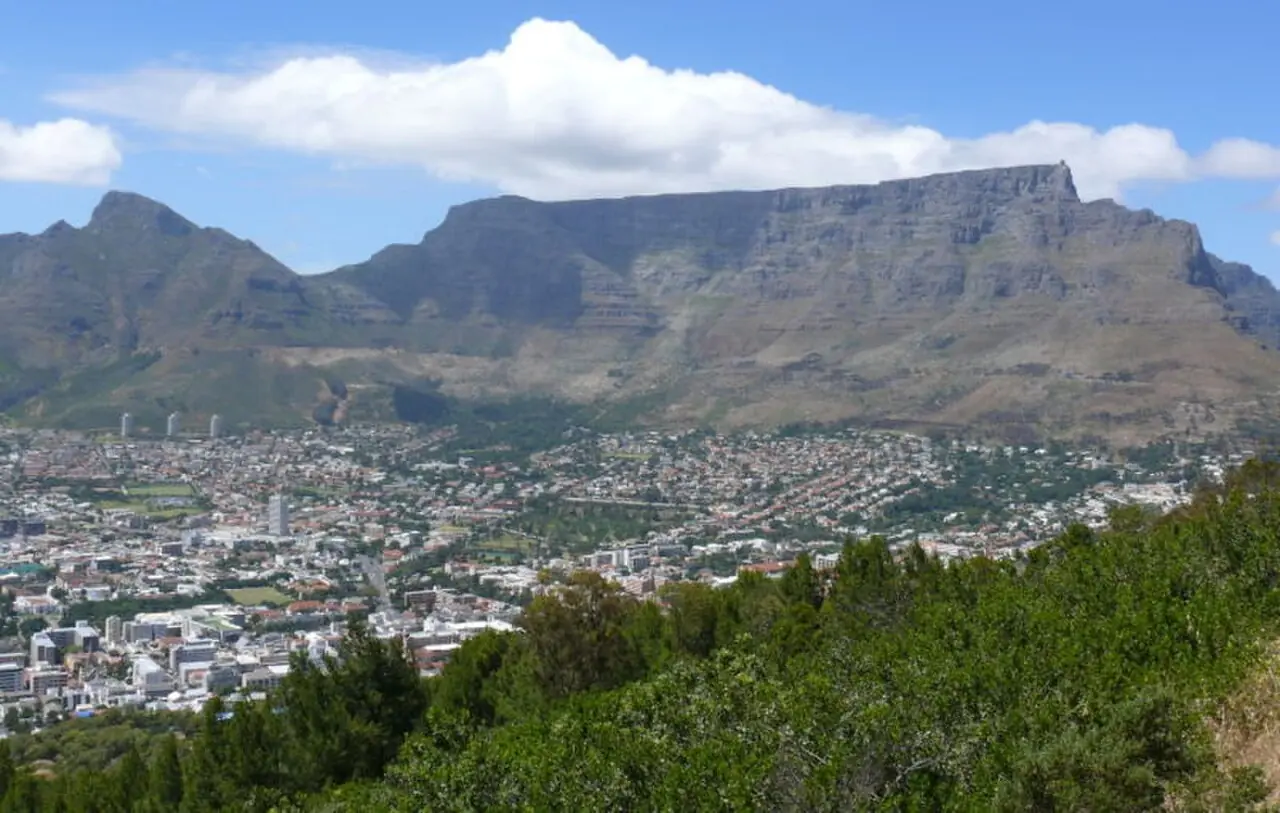 Photo: No machine-readable author provided. איתן6 assumed (based on copyright claims) · CC BY 2.5
Published by Adama Doumbia, founder of Afrique Unie · updated 28 November 2026 · our method and sources
- Days 1-3
Cape Town and Table Mountain
Three nights in Cape Town is not too many. On the first clear day, go up Table Mountain, by cable car or on foot via the Platteklip Gorge trail, a steep two- to three-hour climb: wind often closes the cable car, so seize the first fine spell. Book your crossing to Robben Island in advance, where Nelson Mandela was imprisoned for eighteen years; tours are often led by former prisoners. Stroll through the colourful streets of Bo-Kaap, along the Waterfront and around Kirstenbosch botanical garden, set against the mountain. In the evening, drive up Signal Hill for sunset over the Atlantic.
- Day 4
The peninsula and the Cape of Good Hope
Take the car for a day's loop around the peninsula. Follow the Atlantic coast via Camps Bay, then take the scenic Chapman's Peak Drive, carved into the cliff. At the tip of the peninsula, the Cape of Good Hope reserve has trails above the ocean, ostriches and baboons, which you must never feed. Walk up to the Cape Point lighthouse for the view. On the way back, along the False Bay coast, stop at Boulders Beach, near Simon's Town, home to a colony of African penguins. Finish in the little harbour of Kalk Bay with some fried fish before driving back to Cape Town.
- Day 5
The vineyards of Stellenbosch and Franschhoek
Less than an hour from Cape Town, the Winelands roll out their vines beneath spectacular mountains. Start with Stellenbosch, a university town of white Cape Dutch houses lined with oak trees. Continue over the Helshoogte Pass to Franschhoek, founded by French Huguenots whose names still appear on the wine estates. Most estates offer tastings by reservation, often with lunch among the vines. If you are tasting, arrange a driver or one of the organised tours linking the estates: breath tests do happen and the roads are winding. Stay overnight to enjoy the quiet evening.
- Day 6
Hermanus and the whales
Head to the coast over the Franschhoek Pass, then on to Hermanus, about an hour and a half's drive away. From June to November, southern right whales come to calve and raise their young in Walker Bay, often a few dozen metres from the rocks. The cliff path, which runs along the shore for several kilometres, is the best vantage point, with no need to take a boat. Out of season, the small town is still pleasant, with its beaches and the Fernkloof reserve, covered in fynbos, the Cape's unique vegetation.
- Day 7
Route 62 and Oudtshoorn
Rather than the coastal highway, take Route 62, which winds inland through the wine valleys of Robertson and Montagu, then the dry landscapes of the Little Karoo. Allow five to six hours with stops in small villages of Victorian farmhouses. Oudtshoorn, the ostrich capital, made its fortune from feathers in the early 20th century, as its grand old mansions show. Visit an ostrich farm to learn how the birds are raised, then the Cango Caves, about thirty kilometres north, where a guide leads you through the vast limestone chambers and their concretions.
- Days 8-9
The Garden Route
Over the Outeniqua Pass, you reach the coast in under two hours and the Garden Route, a ribbon of forests, lagoons and beaches between Wilderness and Storms River. Base yourself for two nights in Knysna or Plettenberg Bay. In Knysna, drive up to the Heads, the headlands guarding the entrance to the lagoon. In Plettenberg Bay, Robberg Nature Reserve offers a fine hike on a peninsula home to fur seals. Spend the second day in the Tsitsikamma section: a trail leads to the suspension bridge at the Storms River Mouth, between cliffs and breaking waves. In season, dolphins and whales often pass offshore.
- Days 10-11
Fly north to Blyde River Canyon
Drop the car at Gqeberha airport, about three hours from Plettenberg Bay, and fly to Kruger Mpumalanga International Airport, near Mbombela, connecting in Johannesburg. Pick up another car and stay near Graskop or Hazyview. The next day, follow the Panorama Route through Mpumalanga: the view from God's Window, the river-carved potholes of Bourke's Luck, then the Three Rondavels viewpoint overlooking Blyde River Canyon and its lake. Stop at the Lisbon and Berlin waterfalls too, then at Pilgrim's Rest, an old gold-rush village whose main street has kept its period buildings.
- Days 12-14
Safari in Kruger National Park
Enter Kruger National Park in the south, where wildlife is most concentrated. Kruger is perfect for a self-drive safari: tarred roads or well-kept gravel tracks, boards of recent sightings in the camps and gates that close at sunset, which you must respect. Set off as soon as the gates open: elephants, giraffes, buffalo and lions are common, while leopards and rhinos reward the most patient. Book at least one guided drive in an open vehicle, at dawn or after dark. Stay in a rest camp inside the park or in a neighbouring private reserve. On the last day, take a morning drive, then fly home via Johannesburg.
Getting around
A hire car is the best way to travel: you drive on the left, and roads are good and well signposted. Avoid driving at night. The flight from Gqeberha to Kruger, connecting in Johannesburg, saves two days on the road.
When to do this trip
It is a compromise: the southern summer, from November to March, is ideal for Cape Town and the coast, while the dry winter, from May to September, is the best time in Kruger, when sparse vegetation makes wildlife easier to spot. September to November combines the two well, with whales in Hermanus. Cape Town is wet and windy in June and July; Christmas and New Year are very busy.
The travel notebook
The itinerary, practical information (entry, health, money, emergencies) and the checklist in a few pages, to print or keep offline on your phone.
Variations
- In 10 days: drop Route 62 and Hermanus, and drive straight from Cape Town to the Garden Route on the coastal highway.
- In 18 days: add two days in Johannesburg and Soweto, including the Apartheid Museum, then a stop in the Drakensberg or Durban.
- Safari version: shorten the Garden Route and spend two more nights in a private reserve bordering Kruger.