AfriqueUnie
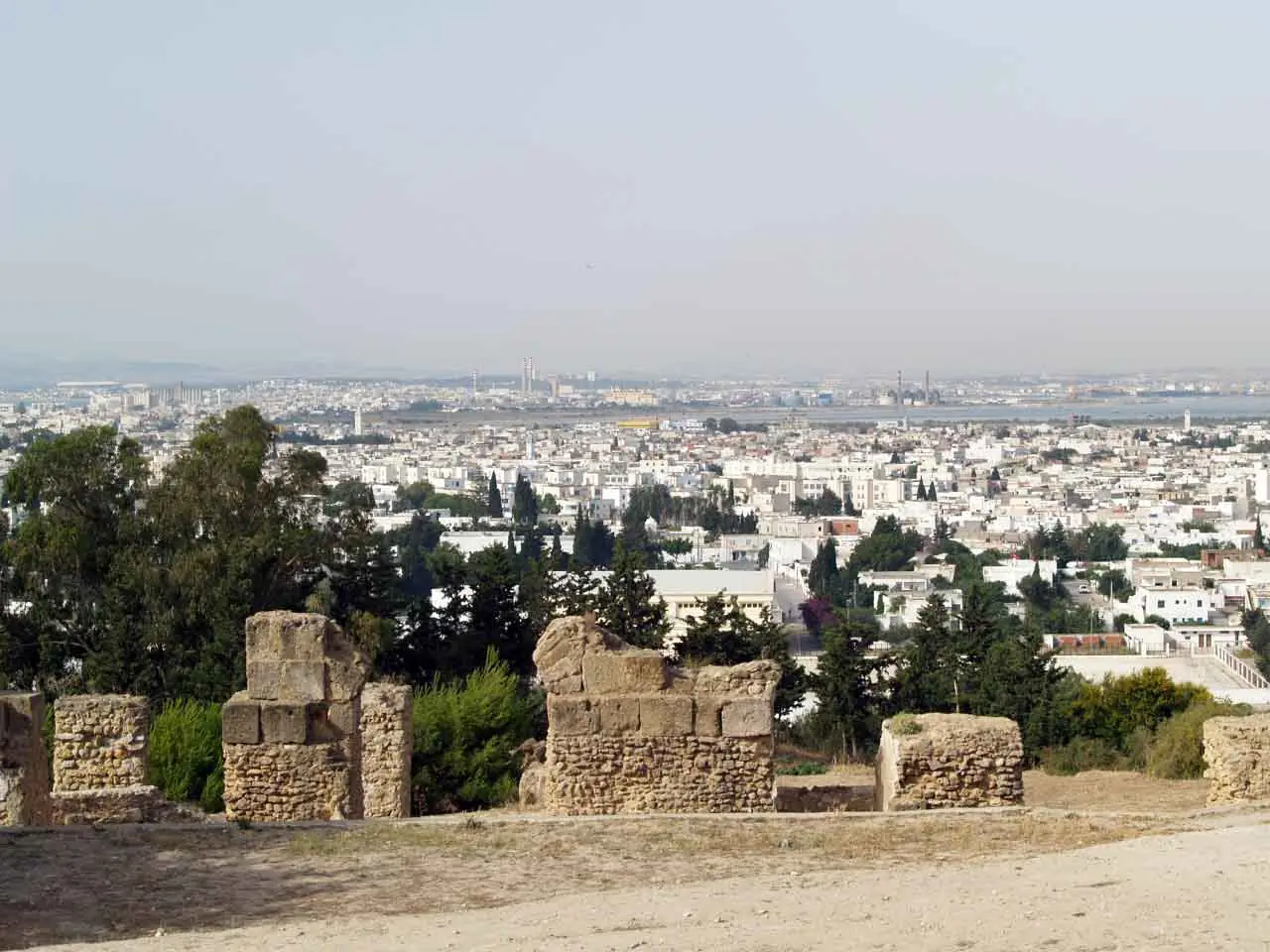 Photo: Profburp · Public domain
Published by Adama Doumbia, founder of Afrique Unie · updated 28 November 2026 · our method and sources
Why go
On the hills overlooking the Gulf of Tunis, some fifteen kilometres from the city centre, Carthage was one of the greatest cities of the ancient world. Founded by the Phoenicians, it dominated the western Mediterranean before being razed by Rome in 146 BC, then rebuilt to become the capital of Roman Africa. The site, listed by UNESCO in 1979, is not a compact whole but a series of remains scattered through an elegant residential district.
The main sites are Byrsa Hill, heart of the Punic city, with its view over both gulfs (the National Museum of Carthage there has been closed for renovation since 2018); the Antonine Baths, among the largest in the Empire, right by the sea; the Punic ports, where you can still make out the circular shape of the military harbour; the tophet, a sanctuary filled with funerary stelae; and the Roman villas and the theatre, where the Carthage International Festival is held every summer. Together they tell the story of two civilisations layered one on top of the other.
Getting there
The TGM train links central Tunis with Carthage in about twenty minutes, with several stations serving the different remains, including Carthage-Hannibal for Byrsa. A single ticket generally covers all the sites. You can walk from one to the next, but the distances are real: a taxi for half a day lets you see everything without wearing yourself out.
Frequently asked questions
How long does it take to visit Carthage?
Allow half a day for the main sites: Byrsa Hill, the Antonine Baths, the Punic ports, the Tophet and the Roman villas. A full day lets you add the theatre, the Malga cisterns and nearby Sidi Bou Said. As the remains are scattered, plan on walking or taking taxis between them.
Is there a single ticket for the Carthage sites?
Yes, a combined ticket generally covers all the archaeological sites of Carthage. Keep it with you all day, as it is checked at every entrance. The Carthage National Museum on Byrsa Hill has been closed for a major renovation since 2018, and some sites may also be closed for works, so check locally.
What is left of Punic Carthage?
Very little, as Rome razed the city in 146 BC before building its own on top. The most telling Punic remains are the residential quarter on Byrsa Hill, the Punic ports, including the circular military harbour, and the Tophet, a sanctuary with funerary stelae. Most of the ruins visible today are Roman.
When should you visit Carthage?
Spring and autumn are ideal, with mild temperatures and lovely light over the gulf. In summer, go early in the morning or late in the day, as there is little shade on the sites. In July and August, the Carthage International Festival stages concerts and shows in the Roman theatre.
How do you get to Carthage from central Tunis?
The TGM suburban train leaves from Tunis Marine station and reaches the Carthage stations in around twenty minutes. Get off at Carthage Hannibal for Byrsa Hill, or at the neighbouring stations for the other sites. Taxis are plentiful and handy for hopping between the ruins.
 Algeria
 Egypt