 AfriqueUnie
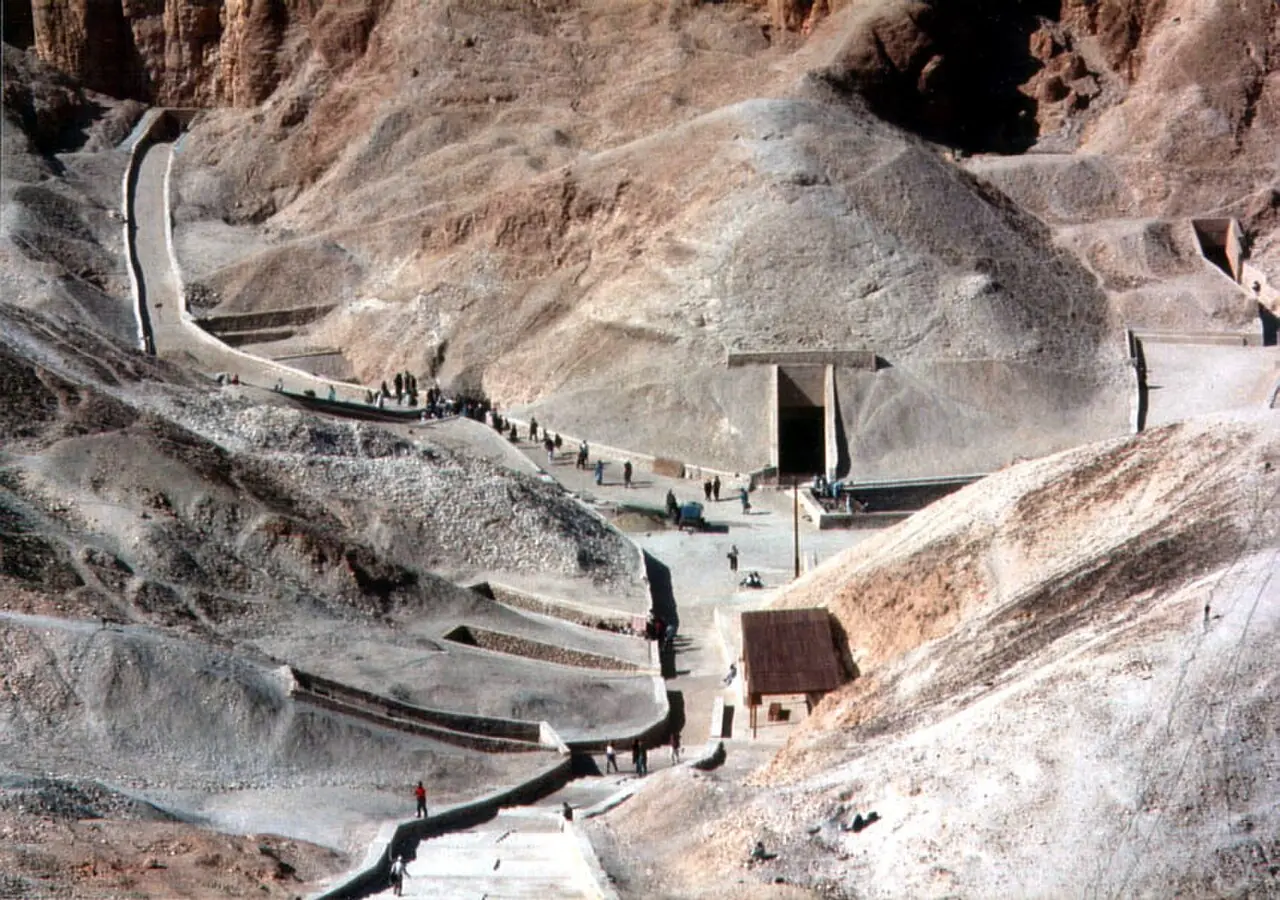 Photo: Fotograf/Photographer: Peter J. Bubenik (1995) · CC BY-SA 2.0
Published by Adama Doumbia, founder of Afrique Unie · updated 28 November 2026 · our method and sources
Why go
On the west bank at Luxor, in an arid valley overlooked by a mountain shaped like a natural pyramid, the pharaohs of the New Kingdom had their tombs dug over almost five centuries. More than sixty tombs have been found here, from simple shafts to long, deep corridors decorated with religious texts, scenes of the sun's night-time journey and gods in brilliant colours. The site is part of ancient Thebes, listed by UNESCO.
The most famous is the tomb of Tutankhamun, discovered almost intact by Howard Carter in 1922; small as it is, it still holds the mummy of the young king. Other tombs are more impressive for their decoration, such as those of Seti I, Ramesses VI and Thutmose III. The tombs open to visitors change on a rotating basis to protect the paintings.
Getting there
The Valley of the Kings is on Luxor's west bank, about half an hour's drive from town. You cross the Nile by ferry or boat, then reach the site by taxi, car with driver or, for the bravest, by bike. A small electric train links the visitor centre with the entrance to the valley. The general admission ticket covers several tombs, while others require an extra ticket.
Frequently asked questions
How many tombs can you visit in the Valley of the Kings?
The general admission ticket covers a limited number of tombs, usually three, chosen from those open that day. The tombs open to the public rotate to limit wear. Some, such as those of Tutankhamun and Seti I, require an additional ticket.
Is Tutankhamun's tomb worth the extra ticket?
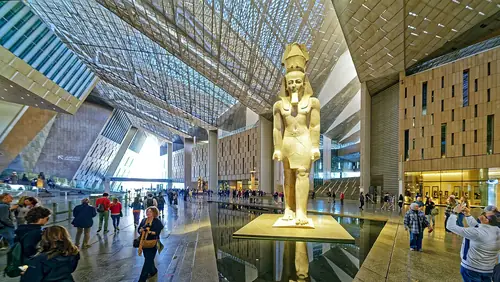
It is mainly worth it for its history and because the young king's mummy is still there. The tomb itself is small and only the burial chamber is decorated; its treasure is on display at the Grand Egyptian Museum near Cairo. If you only pay for one extra tomb, Seti I's is often considered more spectacular for its decoration.
When should you visit the Valley of the Kings to avoid the heat?
Arrive at opening time early in the morning, especially from May to September, when the valley becomes an oven by late morning. Winter, from October to March, is the most pleasant season but also the busiest. Inside the tombs the air can be hot and humid.
Can you take photos inside the tombs?
The rules have changed several times: using a camera or phone may require a dedicated photography ticket. Flash is forbidden everywhere to protect the paintings. Check at the entrance on the day of your visit, as the rules keep changing.
What else is there to see on the West Bank of Luxor?
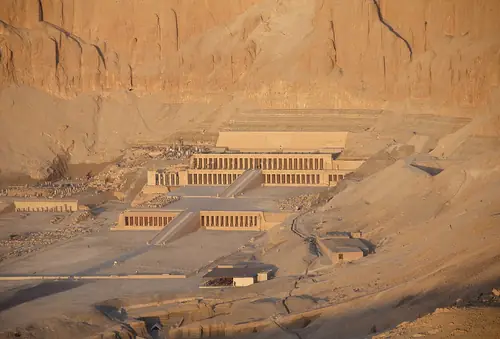
Hatshepsut's mortuary temple at Deir el-Bahari, the Colossi of Memnon, the temple of Medinet Habu and the Valley of the Queens are all close by. The workers' village of Deir el-Medina has small tombs with wonderfully lively paintings. You need at least a full day to see the highlights of the West Bank.


 Algeria
 Morocco
 Tunisia