AfriqueUnie
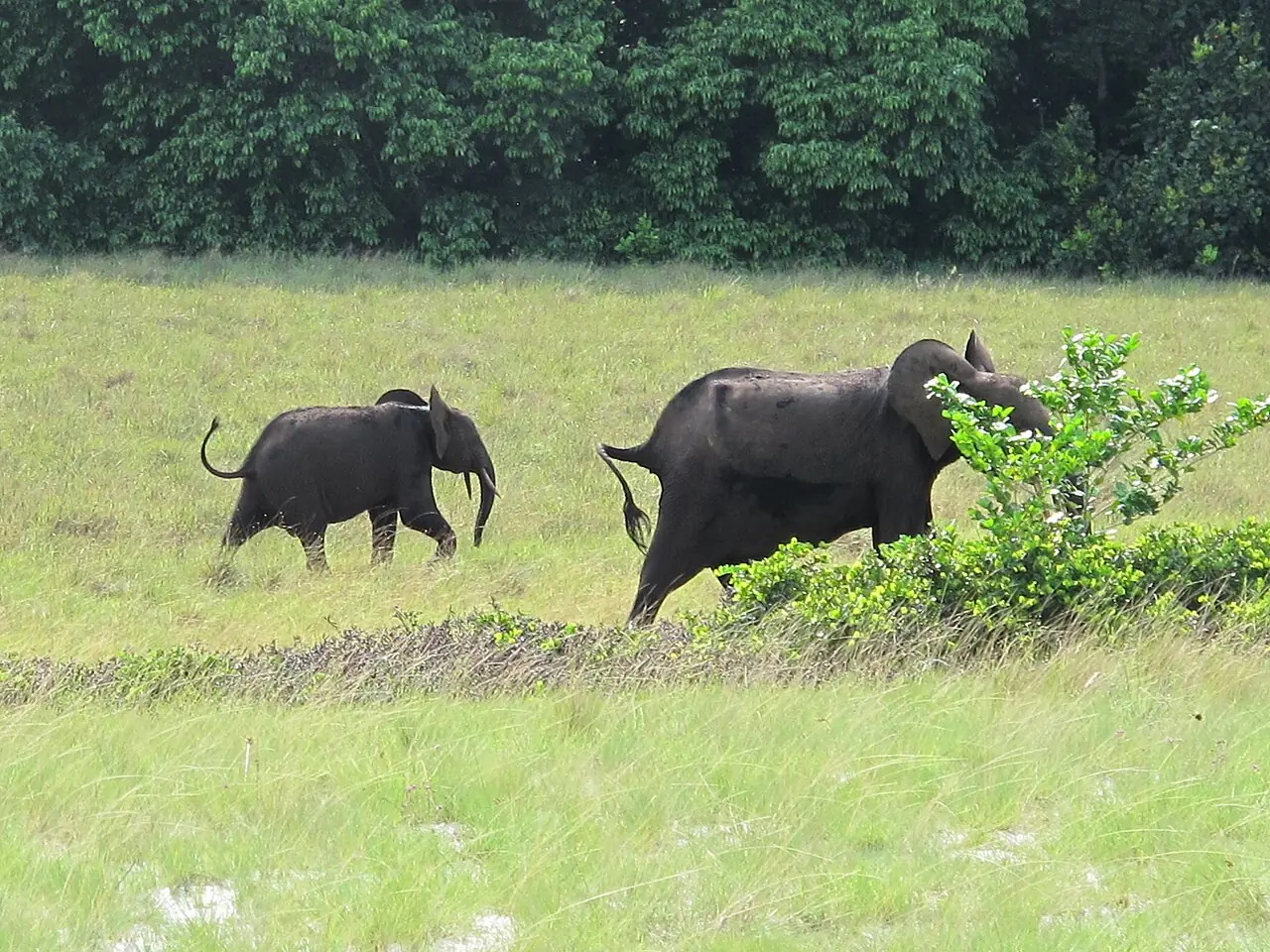 Photo: Kurt Dundy at English Wikipedia · CC BY 3.0
Published by Adama Doumbia, founder of Afrique Unie · updated 28 November 2026 · our method and sources
Before you go: how Gabon's parks work
Gabon's national parks are managed by the National Agency for National Parks (ANPN). In most of them you visit with a guide or eco-guide, and access is arranged in advance by an operator or a lodge in or next to the park. Stays are often sold as packages including transport, because reaching a park on your own is difficult.
Allow several days per park: forest animals are shyer than savannah wildlife, and sightings depend on patience, weather and the trackers' skill. A two-week trip lets you combine two or three parks with Libreville.
Loango: the wild coast
Loango is the country's best-known park, on the Atlantic coast south of Port-Gentil. Lagoons, forest, coastal savannah and empty beaches follow one another, and wildlife moves freely between them: forest elephants and buffalo on the sand, hippos in the lagoons and sometimes in the surf, crocodiles, monkeys and hundreds of bird species.
Offshore, from July to September, humpback whales come close to the coast to breed. Since 2005, the Max Planck Institute for Evolutionary Anthropology has run a project in Loango to habituate western lowland gorillas, for both research and tourism: visits, in very small numbers, are arranged with the park.
Getting there: most travellers fly from Libreville to Port-Gentil, then reach the park by boat and 4x4, often via Omboué; light aircraft also serve some airstrips near the park. Book the transfer with your accommodation.
Lopé: savannah, mandrills and rock engravings
In the centre of the country, Lopé combines savannah, hills and gallery forest, a rare landscape in Central Africa. The park is a UNESCO World Heritage Site for its ecosystems and its traces of very ancient human settlement, including rock engravings. It is famous for its hordes of mandrills, among the largest ever recorded, which you track with local trackers, and you can also see forest elephants, buffalo and many birds.
Getting there: this is the easiest park to reach independently, thanks to the Transgabonais, the railway from Owendo, near Libreville, to Franceville, which stops at Lopé station. Expect delays and book your guide or accommodation before you leave.
Ivindo: Kongou Falls and Langoué Bai
In the east, Ivindo is the park of deep forest and rivers, and also a World Heritage Site. Kongou Falls, among the most powerful in Central Africa, are reached by dugout canoe and then on foot. Langoué Bai, a marshy clearing in the heart of the forest, attracts elephants, gorillas and buffalo, which you watch from a viewing platform.
Getting there: this is the most demanding park, from Makokou or Booué, with long hours by dirt road, canoe or on foot. It suits travellers with time to spare who are happy with simple comforts.
Near Libreville: Pongara, Akanda and Pointe-Denis
You do not need to go far to discover Gabon's wildlife. Across the Komo estuary from Libreville, Pongara National Park is reached by boat. Its beaches, including Pointe-Denis, are one of the great nesting sites of the leatherback turtle; the season runs roughly from November to February, with a peak that varies from year to year. Gabon is one of the world's most important nesting countries for this species.
North of the capital, Akanda National Park protects mangroves and mudflats where large numbers of birds gather, including migrants. Both parks are ideal for a day trip or a weekend at the start or end of your trip.
- Watching turtles: Only at night with a guide, without white torches or flash, keeping your distance from the females and nests.
- Combining with Libreville: One or two nights at Pointe-Denis or Pongara are enough for the beach and, in season, the turtles.
When to go: the right season for what you want to see
- June to September: The long dry season: cooler temperatures, often grey skies but no rain, passable tracks and humpback whales offshore from July to September. The best time for a first trip.
- December to February: The short dry season, when leatherback turtles nest on the beaches of Pongara and Pointe-Denis.
- March to May, October and November: The rainy seasons: heavy showers, some access routes difficult and more mosquitoes. The parks stay open, but the trip needs more flexibility.
Getting around between the parks
Libreville is the gateway, with direct flights from Paris and several African capitals. Inland, the Transgabonais railway serves Lopé and the east of the country; Port-Gentil, the starting point for Loango, has no permanent road link to Libreville and is reached by plane or boat. Main roads are improving, but journeys remain long, especially in the rainy season.
In practice, book transfers with the park lodges, avoid driving at night and leave a day's margin between a park and your international flight, as delays are common.
Safety and health
Information checked in November 2026. Neither the French foreign ministry nor the UK government advises against travel to any region of Gabon. The French foreign ministry recommends extra vigilance on isolated beaches around Libreville and in Ogooué-Maritime province, where Loango is located, as well as in several districts of the capital, and particular vigilance at night throughout the country.
In the parks, the first rule is to follow your guides' instructions: forest elephants can charge, and buffalo and hippos are dangerous. With gorillas, respect the distances and hygiene rules, which protect the animals from human diseases.
Yellow fever vaccination is compulsory and checked on arrival, and malaria is present all year round throughout the country: see a doctor several weeks before you leave. Visa, budget and money are covered in our budget and entry requirements guide.
Further reading
- Gabon: our country guide, with its cities, culture and food
- Gabon: budget and paperwork: visa, yellow fever, malaria, money
- When to go to Gabon: the weather month by month
- Gabon in 12 days: a day-by-day itinerary
- Loango National Park
- Lopé National Park
- Ivindo National Park
- Pointe-Denis
- Libreville
- Port-Gentil
- The safari guide: choosing your country and season