AfriqueUnie
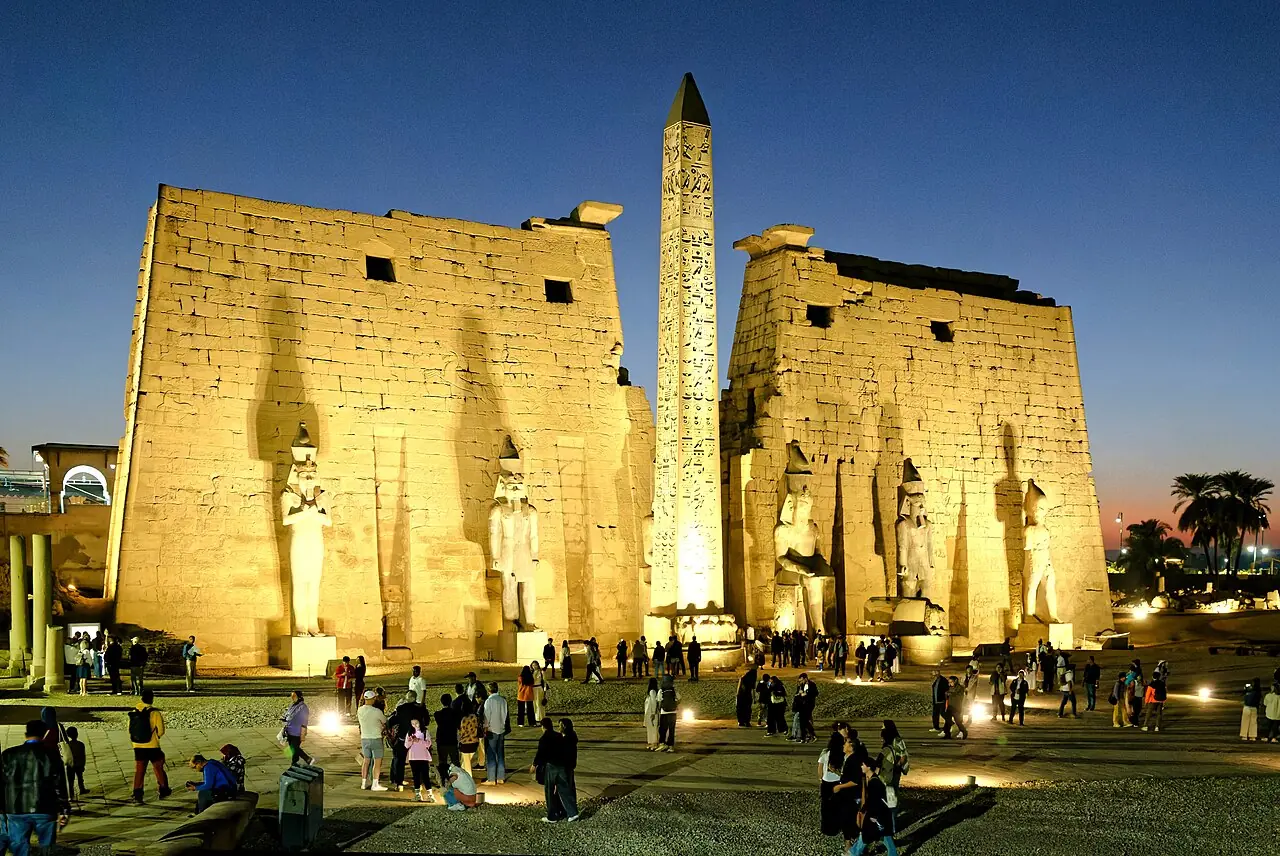 Photo: Holger Uwe Schmitt · CC BY-SA 4.0
Published by Adama Doumbia, founder of Afrique Unie · updated 28 November 2026 · our method and sources
Why visit Luxor?
Luxor is built on the ruins of Thebes, capital of Egypt during the New Kingdom, and it is probably the place on earth with the greatest concentration of ancient monuments per square kilometre. The city is split in two by the Nile: on the east bank, the side of the rising sun, stand the temples of the living; on the west bank, the side of the setting sun, the necropolises and mortuary temples.
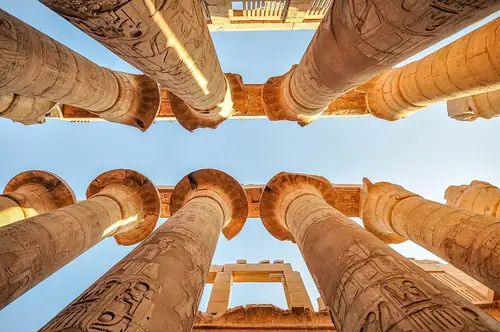
On the east bank, the Karnak complex is the largest religious site of antiquity, built and reworked over almost two thousand years; its hypostyle hall with 134 giant columns leaves you speechless. Luxor Temple, in the heart of the city, is linked to Karnak by an avenue of sphinxes recently uncovered over some three kilometres. It is especially beautiful at nightfall, when it is lit up.
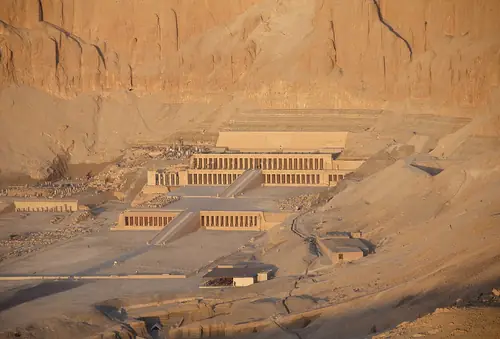
On the west bank, the Colossi of Memnon greet visitors on the way to the Valley of the Kings, the Valley of the Queens with its tombs of queens and princes, Hatshepsut's terraced temple at Deir el-Bahari, the Ramesseum, the temple of Medinet Habu and the craftsmen's village of Deir el-Medina, whose painted tombs are exquisitely fine. Between the sites, sugar-cane fields and villages remind you that life goes on around the stones.
Things to do in Luxor: 6 ideas
- 01Karnak early in the morningArrive at opening time to walk through the hypostyle hall in the cool and the low-angled light.
- 02The Valley of the KingsThe ticket gives access to several tombs; extra tickets are needed for the most famous ones.
- 03The Temple of HatshepsutThis terraced temple set against the cliff is strikingly modern.
- 04Medinet HabuThe mortuary temple of Ramesses III, with remarkably well-preserved coloured reliefs, is often less crowded.
- 05A hot-air balloon at dawnFloating over the west bank at sunrise is one of the most popular experiences in the city.
- 06Luxor Temple by nightThe illuminated colonnades and statues of Ramesses II create a unique atmosphere.
Where to stay in Luxor
The east bank is home to the big hotels, often on the Nile, as well as the station, the restaurants and the souk: convenient and lively. The more rural west bank offers guesthouses among the fields, with views of the Theban hills, and lets you reach the funerary sites early. A public ferry and motorboats link the two banks in a few minutes.
Frequently asked questions
How do you get from Luxor airport to the city?
The airport lies east of the city, about twenty minutes' drive from the East Bank hotels. A taxi is the usual option: agree the fare before getting in, or have your accommodation arrange the transfer, especially if you are staying on the West Bank.
How do you cross from the East Bank to the West Bank?
The public ferry and motor boats cross the Nile in a few minutes from the corniche. You can also use the road bridge south of the city, handy by taxi for linking the West Bank sites, which are quite far apart.
Is Luxor a safe destination?
Luxor and the Valley of the Kings are not among the areas France and the United Kingdom advise against, and both sites and hotels have security checks. Vigilance is still needed given a terrorist threat described as diffuse; also avoid night journeys on roads outside towns and tourist sites.
Is a hot-air balloon flight in Luxor safe?
It is a very popular activity, but the UK authorities advise speaking to your tour company before booking, as some UK operators have stopped selling balloon flights because they could not verify safety standards. Flights leave before dawn and are cancelled in windy weather, so keep a spare morning.
When should you visit Luxor?
The best time is from October to April, with warm days and cool nights. From May to September temperatures often exceed 40°C: visit the sites as soon as they open and rest in the afternoon.
 Egypt