 AfriqueUnie
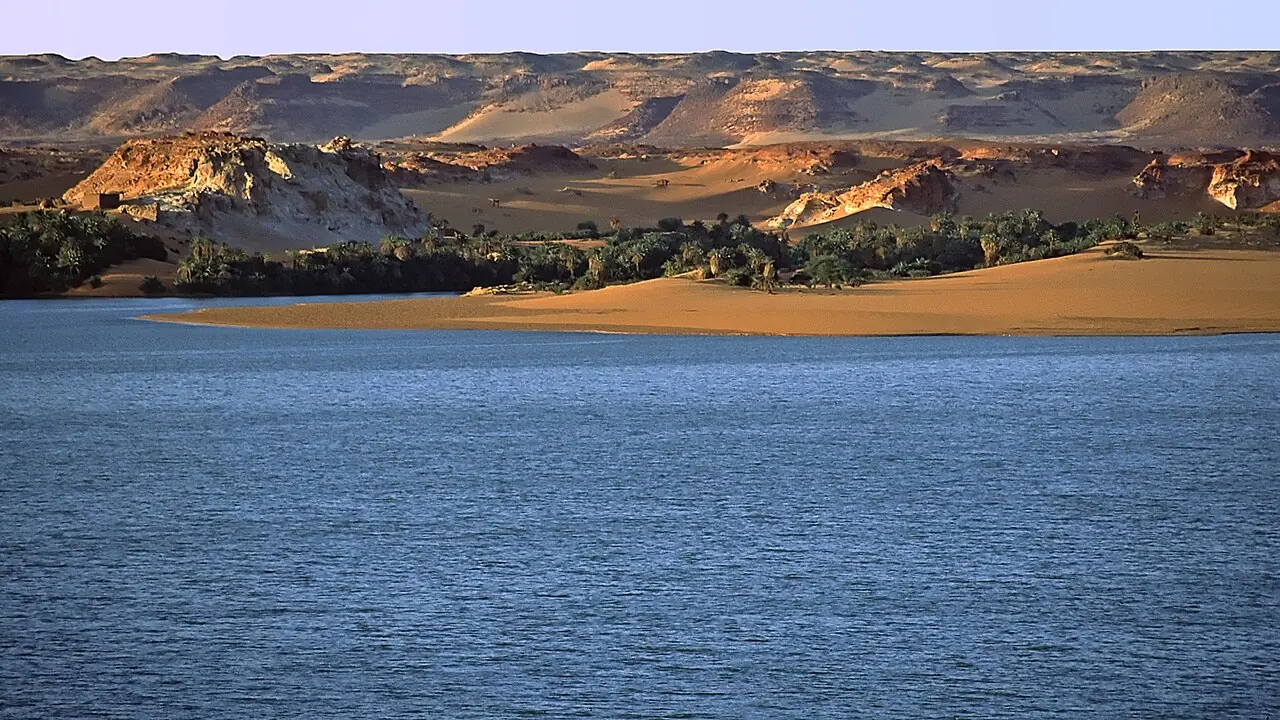 Photo: Jacques Taberlet · CC BY-SA 3.0
Published by Adama Doumbia, founder of Afrique Unie · updated 28 November 2026 · our method and sources
Why go
In the depths of the Sahara, in north-eastern Chad, the Lakes of Ounianga form a group of eighteen lakes fed by a fossil aquifer, in one of the most arid regions in the world. A UNESCO World Heritage Site, they fall into two main groups, Ounianga Kebir and Ounianga Serir, and offer an astonishing display of colour: blue, green, red or pink, depending on the salinity and the presence of algae.
Some lakes are very salty, such as Lake Yoa, the largest, while others are almost fresh, fringed with reeds and palms. The contrast between the water, the ochre dunes and the sandstone cliffs creates an unreal landscape. Local people live from salt extraction and dates, in small villages by the water. The ever-blowing wind pushes the sand towards the lakes, and the dunes advance slowly to meet them, without ever managing to fill them in.
Getting there
The lakes lie several days' drive north of N'Djamena on desert tracks, and are usually reached as part of an expedition combined with the Ennedi. Access is exclusively by four-wheel drive, with a specialist agency.
 Algeria
 Botswana
 Egypt