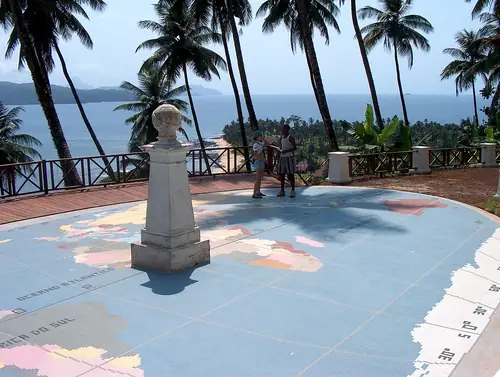
São Tomé and Príncipe is one of the smallest countries in Africa, and that is precisely its charm. Two volcanic islands sitting on the equator in the Gulf of Guinea, covered in a jungle so dense it seems intent on reclaiming everything: roads, villages, old plantations. Here life follows “leve-leve”, the take-it-easy philosophy that islanders proudly embrace with a smile. You don't come here to rush from one sight to the next, but to slow down.
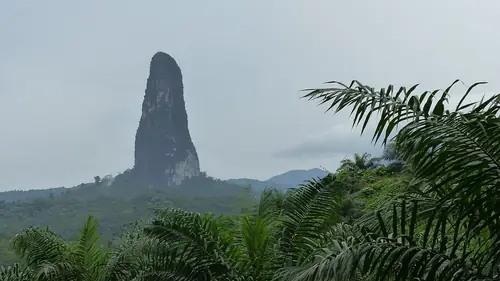
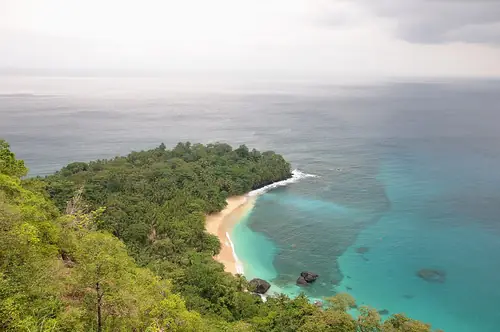
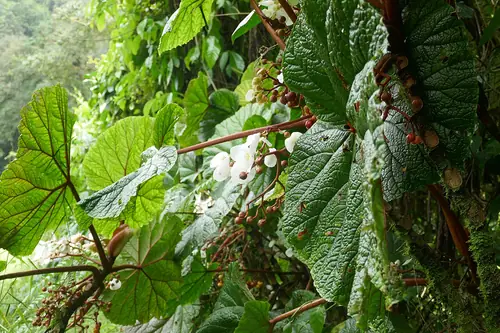
You also come for astonishingly rich nature. Isolated for millions of years, the islands are home to many species of birds, plants and reptiles found nowhere else, which sometimes earns them the nickname “the Galápagos of Africa”. Obô Natural Park protects much of the mountain forest, from which volcanic peaks such as Pico Cão Grande shoot up. Along the coasts, coves of golden or black sand, waterfalls and fishing villages with colourful pirogues make a picture-postcard setting that still sees very few visitors.
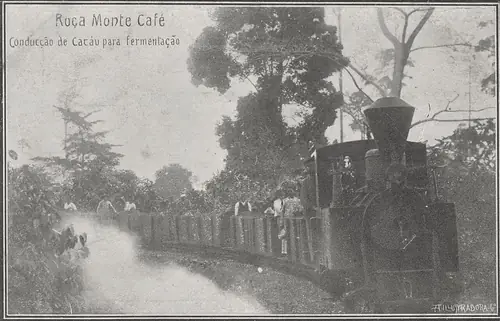
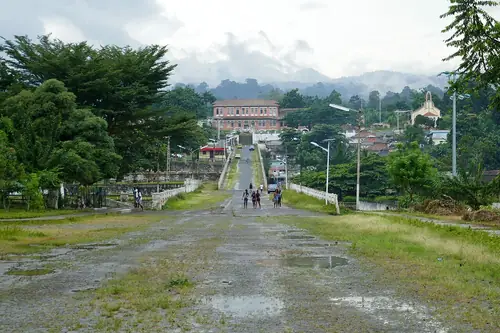
Finally, São Tomé and Príncipe is a country steeped in history. Its roças, old cocoa and coffee plantations, tell of a time when the archipelago was one of the world's leading cocoa producers, at the cost of the forced labour of thousands of workers brought from other Portuguese colonies. Some are in ruins, others are home to the descendants of those workers, and others still have been turned into guesthouses. Today, small producers are reviving exceptional cocoa and chocolate there. Add the kindness of the São Toméans, the Forro creole that sings through conversations and a reassuring level of safety, and you have an ideal destination for slow, thoughtful travel.
History and culture
The islands were uninhabited when Portuguese navigators reached them around 1470. They were settled by colonists and above all by captives brought from the mainland, and from the sixteenth century became a major centre of sugar production as well as an important stop on the Atlantic slave trade. In the nineteenth century, coffee and then cocoa revived the economy, with roças spreading across the islands. In the early twentieth century, São Tomé was for a time the world's leading cocoa producer, thanks to the contract labour, often forced, of serviçais brought from Angola, Cape Verde and Mozambique.
In 1953, the Batepá massacre, in which hundreds of São Toméans were killed by the colonial authorities, left a lasting mark on people's minds and fuelled nationalism. Independence was proclaimed on 12 July 1975. After a one-party period, the country adopted multi-party politics in the early 1990s and has since enjoyed relatively stable democratic life.
8 experiences not to miss in São Tomé and Príncipe
Photo : Ji-Elle · CC BY-SA 4.001Sleep in a roçaSpend a night in a restored former plantation, among the manor house, colonial hospital and cocoa trees.
Photo : Ji-Elle · CC BY-SA 4.006Hike in Obô Natural ParkSet off with a guide to Lagoa Amélia, an old crater carpeted in vegetation, through the cloud forest.
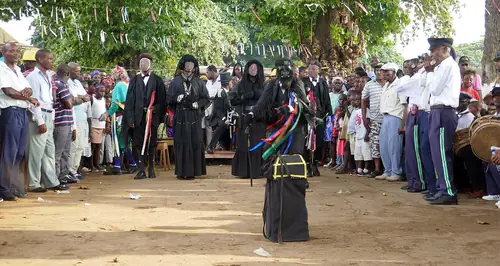
Photo : Ji-Elle · CC BY-SA 4.007Watch tchiloliSee this popular theatre, the heir to a medieval European play reinterpreted with masks, costumes and music.
08See sea turtlesOn certain beaches, watch turtles nesting or hatching in season, with the conservation programmes.
When to go to São Tomé and Príncipe
The climate is equatorial, hot and humid, with fairly steady temperatures all year round, around 25 to 30 degrees on the coasts. The main dry season, known as gravana, runs from June to September: skies are often hazy, but rain is rare, which makes hiking and getting around easier. A short, drier spell also appears from December to February. The rest of the year it rains more, especially in the south-west of São Tomé island and in the highlands, where rainfall can be very heavy. The turtle nesting season falls roughly between November and February.
Getting around
The archipelago is reached by air, mainly via Lisbon or certain African capitals. Small planes link São Tomé and Príncipe in about forty minutes; boats exist but are irregular and uncomfortable. On São Tomé island, a road runs almost all the way round, except along part of the west coast. Hiring a car with a driver is the most practical way to explore, as the mountain roads are narrow and winding. Shared taxis link the villages with the capital, but on flexible timetables. On Príncipe, roads are few and often unsurfaced: a four-wheel drive is preferable.
Etiquette and customs
“Leve-leve” is not just a slogan: São Toméans take their time, and it would be rude to try to hurry everything. Greet people in Portuguese, with a “bom dia” or “boa tarde”, and take time to exchange a few words. The country has a reputation for safety, but keep your valuables out of sight. Always ask before photographing anyone, especially in the roças, where families sometimes live in precarious conditions: visiting these places calls for respect and tact. A small contribution or buying a local product is often appreciated. Dress modestly in churches and villages. Lastly, bear in mind that electricity and water can sometimes run short.
Food and drink in São Tomé and Príncipe
São Toméan cooking is built on fish, banana, breadfruit, cassava and palm oil. Calulu, the national dish, combines smoked fish or chicken, vegetables and local herbs in a long-simmered sauce served with banana or rice. Grilled fish, fresh that day, is everywhere, accompanied by plantain or breadfruit. Also try izaquente, made from the seeds of a tree related to the breadfruit, and the banana fritters sold by the roadside. Tropical fruit abounds: jackfruit, safou, pineapple, mango, papaya. And of course the local chocolate and coffee, as well as palm wine, known as vinho de palma, are well worth trying.
When is the best time to visit São Tomé and Príncipe?
The best time to visit São Tomé and Príncipe: June to September, December to February.
What should I see first in São Tomé and Príncipe?
The must-sees: Pico Cão Grande, Roças (plantation estates), Praia Banana (Príncipe), Ilhéu das Rolas.
Which cities should I visit in São Tomé and Príncipe?
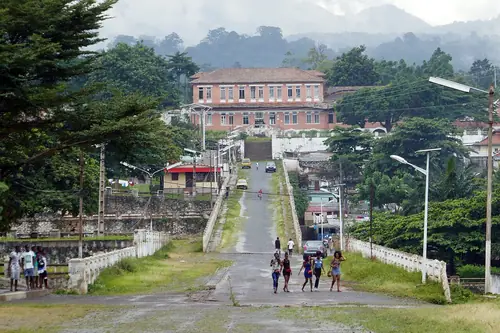
São Tomé, Santo António, São João dos Angolares. The capital is São Tomé.
How much should I budget for a trip to São Tomé and Príncipe?
Mid-range: around €60–120 per person per day, excluding flights. This is only a guide and depends above all on the accommodation and activities you choose.
What currency and languages are used in São Tomé and Príncipe?
Currency: São Tomé and Príncipe dobra (STN). Languages: Portuguese.
How do I get to São Tomé and Príncipe?
The main international airport has the code TMS. Compare flights with the ‘Flights’ button on this page.
Do I need a visa to visit São Tomé and Príncipe?
Entry requirements depend on your nationality and change regularly. Check them on the country's official website or with your foreign ministry before booking, and make sure your passport is valid.
What should I eat in São Tomé and Príncipe?
Dishes to try while you're there: Calulu, grilled fish, chocolate.
Short flights (about 40 minutes) link São Tomé with Príncipe island, operated notably by STP Airways and Afrijet; boat services exist but are irregular. On São Tomé, shared taxis and minibuses run from the capital to the main towns. To explore the roças and the south of the island, renting a car or a 4x4 with driver is the most practical choice, as some tracks are difficult after rain. Traffic drives on the right.
Health and safety
Yellow fever
Certificate required only if you arrive from, or transited through, a country with a risk of yellow fever (from 1 year, incl. airport transits over 12 h); vaccine generally not recommended.
Malaria
Present throughout the country: ask a doctor about preventive medication and protect yourself from mosquitoes.
Water and food
Unless your accommodation says otherwise, drink sealed bottled or filtered water, and wash your hands often.
Affiliate cookiesWe would like to load a script from our partner Travelpayouts. It may set cookies so that we receive a commission when you book through our links, at no extra cost to you. If you decline, the site works in exactly the same way. Find out more
 AfriqueUnie
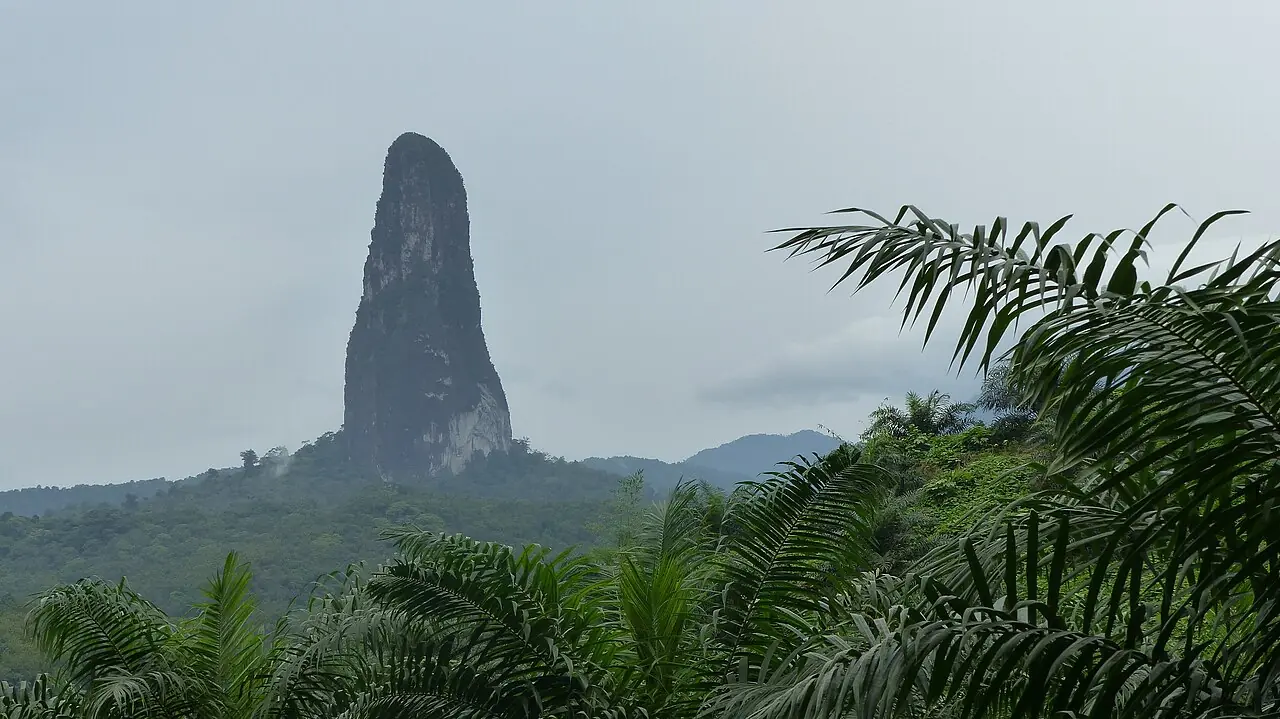 Photo: Philippe Bourachot · CC BY-SA 3.0
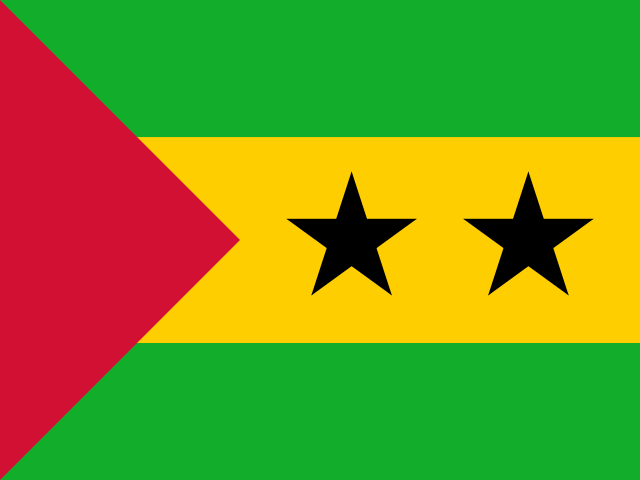 São Tomé and Príncipe
 Angola
 Cameroon
 Central African Republic
 Chad
 DR Congo
 Equatorial Guinea
 Gabon
 Republic of the Congo