AfriqueUnie
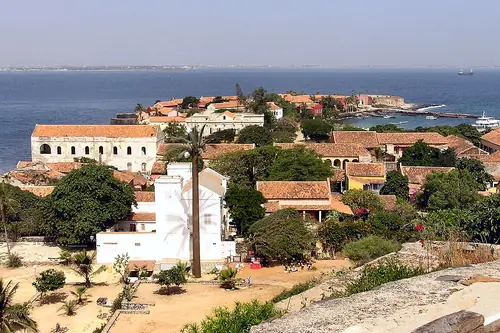
 Photo: Cayambe · CC BY-SA 3.0
Published by Adama Doumbia, founder of Afrique Unie · updated 28 November 2026 · our method and sources
Why Africa appeals to remote workers
For employees working remotely or freelancers with clients in Europe, Africa has one advantage that Asia and the Americas cannot match: the time zone. From Dakar to Nairobi, the difference with London, Paris, Brussels or Geneva ranges from zero to just two or three hours, depending on the season. You can join team meetings during normal office hours without working through the night.
Add familiar languages (English across much of East and Southern Africa, French in much of West Africa and Morocco), direct flights from several European capitals and a lively start-up scene in cities such as Lagos, Nairobi, Kigali, Accra and Cape Town.
Bear in mind, though, that every country has its own entry and residence rules, and working for a foreign employer on a tourist status is not always allowed. The information below is a starting point: always check the current requirements with the authorities of the country concerned and read your government's travel advice before you go.
Digital nomad visas in Africa
- Cape Verde: Remote Working Cabo Verde: According to information published by the Cape Verdean authorities, this programme aims to attract remote workers to the archipelago. Length of stay, eligible nationalities, supporting documents and procedure: check the current requirements on the programme's official website before you go. Note that without this programme, visa-free tourist stays are limited to 30 days for many European travellers.
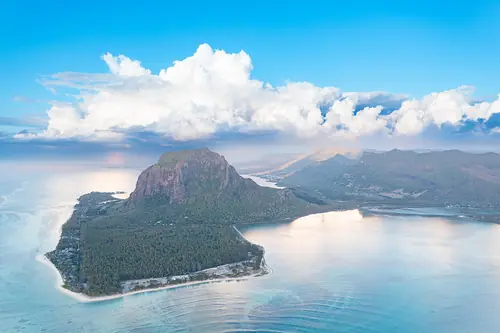
- Mauritius: Premium Visa: Created in October 2020, the Premium Travel Visa lets you stay on the island for up to a year while working for an employer or clients based outside Mauritius. It does not allow you to take a job in the Mauritian labour market. You must show that you have sufficient financial resources to support yourself during your stay. For documents, procedure and renewal, check the current requirements on the Mauritian authorities' official website (Passport and Immigration Office).
- Namibia: Digital Nomad Visa: According to information published by the Namibian authorities, this visa lets you live in Namibia while working remotely for an employer or clients outside the country. For duration, requirements, the agency in charge and renewal, check the current requirements on the official website before making plans. Remember that a tourist visa does not allow you to work in Namibia, even as a volunteer.
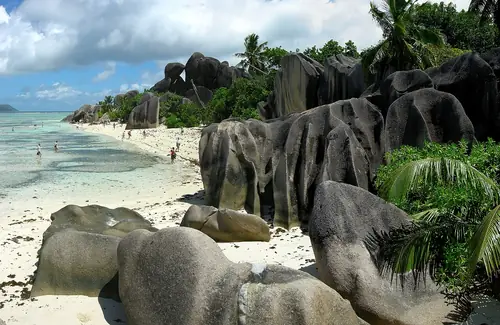
- Seychelles: Workcation Retreat Program: According to information published by the Seychelles authorities, this programme is aimed at remote workers employed or based abroad. For duration, supporting documents and procedure, check the current requirements on the Seychelles authorities' official portal before you travel.
- South Africa: remote work visa: Announced in March 2022, the remote work visa framework was finalised from October 2024, alongside the reform of work visas. It is aimed at remote workers employed by a foreign company who wish to stay for more than 90 days. Practical details (duration, documents, procedure) are handled by the Department of Home Affairs: check its website and that of the South African embassy or high commission in your country.
- Kenya: Class N work permit (Digital Nomad): Among Kenya's work permits, the Class N (Digital Nomad) permit allows you to work remotely from Kenya for a company registered abroad. For French nationals, the procedure requires a letter of no objection from the French embassy in Kenya. For duration, documents and renewal, check the current requirements on Kenya's official immigration portal.
What about other countries?
At the time of writing, we have found no reliable source confirming a dedicated digital nomad visa in Morocco, Egypt, Senegal, Ghana or Rwanda. Plans are regularly mentioned in the press, but an announcement is not an open programme: be wary of websites presenting visas that do not yet exist as a done deal.
In these countries, many European and North American travellers enter visa-free or on a tourist visa for short stays (for example up to 90 days in Morocco for many nationalities). A tourist status does not necessarily cover work, even remote work, and long stays generally require a residence permit. Check with the country's embassy or consulate before you go, especially if you plan to stay several months or make repeated trips. These schemes change quickly: the official government website of the country concerned is the only authoritative source.
Choosing a base: time zone and connectivity
- Dakar (Senegal): Same time as London in winter, one to two hours behind Paris depending on the season. A French-speaking city on the ocean, with an intense cultural life and a growing coworking scene.
- Abidjan (Côte d'Ivoire) and Accra (Ghana): Two major Gulf of Guinea cities, on Greenwich Mean Time all year round. French-speaking Abidjan is one of West Africa's leading business hubs; English-speaking Accra attracts many members of the diaspora and tech entrepreneurs.
- Lagos (Nigeria): Nigeria's commercial capital, one hour ahead of GMT, is one of the continent's major tech hubs.
- Marrakech and Casablanca (Morocco): A few hours' flight from most European capitals. Since 20 September 2026, Morocco has been on GMT all year round (ending GMT+1 and the Ramadan clock change). Casablanca is a business city; Marrakech is a more touristy and quieter base for freelancers.
- Cape Town (South Africa): Two hours ahead of London in the UK winter, one hour ahead in summer. Spectacular scenery, plenty of cafés and workspaces, but plan a back-up for power cuts.
- Nairobi (Kenya) and Kigali (Rwanda): Nairobi, three hours ahead of London in the UK winter, is an East African tech hub and famous for mobile money. Kigali, two hours ahead of London in the UK winter, is known for being clean, calm and easy to get around.
- Cape Verde, Mauritius and the Seychelles: Cape Verde is one hour behind GMT; Mauritius and the Seychelles are four hours ahead of London in the UK winter. Island life and a relaxed pace make them popular for stays of several months, as long as you check the connection at your accommodation.
Staying connected: eSIMs, local SIM cards and power cuts
In the big cities, 4G is widely available and fibre is spreading to many neighbourhoods, but quality varies greatly from one property to another and sometimes from one street to the next. Before booking a long stay, ask the owner what type of connection there is and, if possible, for a screenshot of a recent speed test.
For the first few days, a travel eSIM gets you online as soon as you land, if your phone is compatible. For a stay of several weeks, a local SIM card is usually the better option: buy it at an operator's shop with your passport, as SIM registration is compulsory in most countries. Keep two different networks (for instance a local SIM and an eSIM) so you can switch if one goes down.
Power cuts are common in several countries, sometimes scheduled, like the load shedding South Africa has experienced in recent years. Bring a high-capacity power bank and, for a long stay, consider a small uninterruptible power supply (UPS) to keep your router running during outages. Many properties and coworking spaces have a generator or batteries: ask before you sign.
Think about security too: use a VPN on public Wi-Fi, turn on two-factor authentication for your work accounts and keep a cloud backup of your files.
Coworking and places to work
Coworking spaces now exist in all the major cities mentioned in this guide: Dakar, Abidjan, Lagos, Accra, Nairobi, Kigali, Cape Town, Marrakech and Casablanca, as well as in many other capitals. Most offer daily, weekly or monthly passes, with back-up internet, meeting rooms and, often, back-up power.
Before committing, book a trial day: test the speed at peak times and check the air conditioning, the noise level and whether there are booths for video calls. Recent reviews from other remote workers and each city's online groups are the best way to find the right place for you.
Cafés and hotel lounges will do at a pinch, but their connection is rarely up to a full day of video calls.
Tax, insurance and paperwork
Tax is the trickiest part of being a digital nomad. Depending on the length of your stay, your status and the tax treaties between countries, you may remain taxable in your home country, become taxable in your host country, or both. Some programmes advertise tax advantages, but the rules vary and change: we cannot give a general rule. Before leaving, check with your home country's tax authority and, ideally, a specialist adviser.
If you are an employee, your employer must know and agree: working from abroad can affect your contract, your social security cover and the employer's own obligations.
Health insurance is essential and often required for a digital nomad visa. Choose a policy that covers long stays, repatriation and the activities you will do, and check that it remains valid if you move between countries. Finally, see a doctor or travel clinic: some countries require a yellow fever vaccination certificate, and malaria prevention is recommended in many regions.
Everyday life and community
For accommodation, furnished monthly rentals are the most common option. View the property before signing if you can, and check the connection, hot water, air conditioning or fans and whether there is a generator.
Mobile money is widespread in several countries, notably Kenya, Senegal and Ghana, and cash remains important in many places. Carry at least two bank cards on different networks and let your bank know about your trip.
As for community, the big cities have active groups of remote workers, expats and members of the diaspora, both online and at regular meet-ups. They are the best way to find a flat, a good coworking space or practical advice. Take time to step outside the expat bubble too: learning a few words of Wolof, Swahili or Darija, shopping at local markets and going to cultural events will make your stay far richer.
Finally, read your government's travel advice for each country and region, and register with your embassy if your government offers this and you are staying for a long time.