 AfriqueUnie
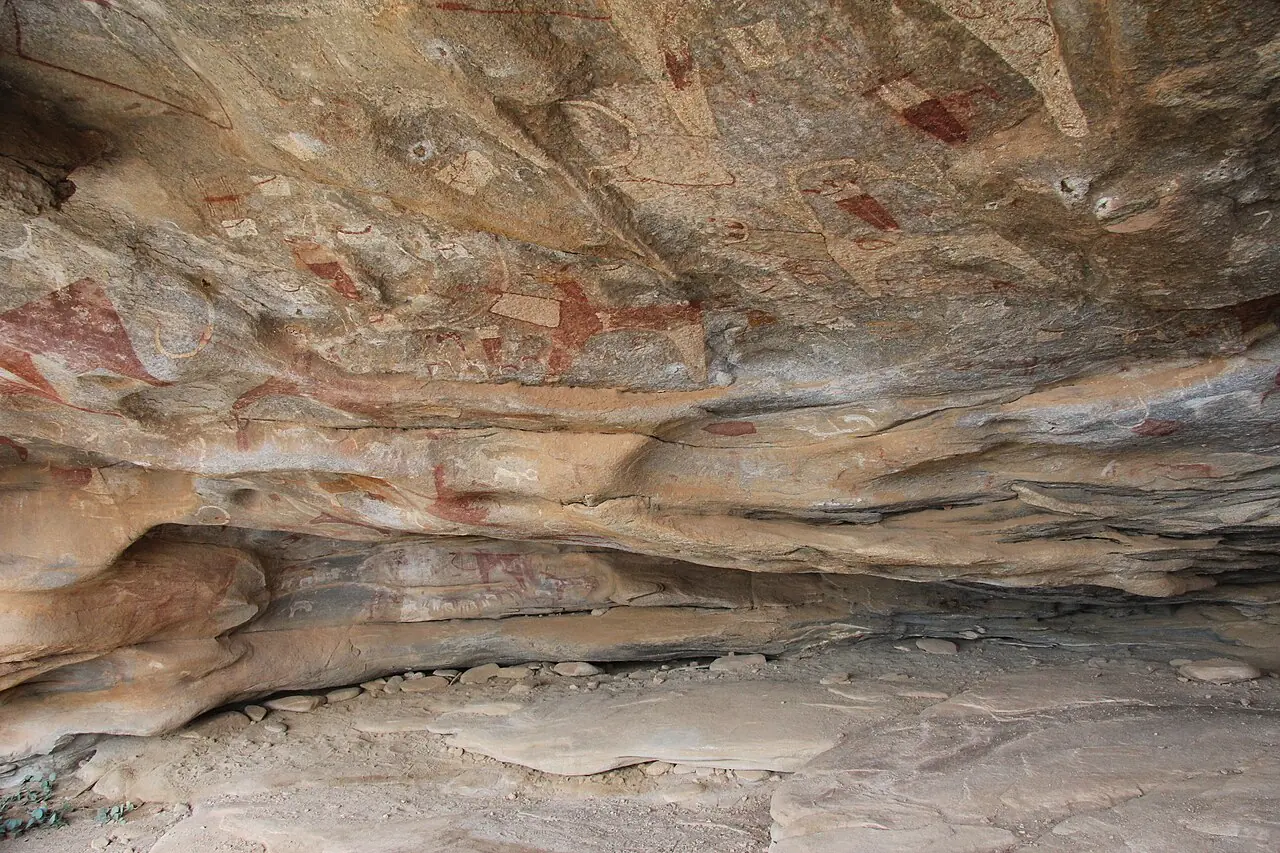 Photo: joepyrek · CC BY-SA 2.0
 Somalia
Published by Adama Doumbia, founder of Afrique Unie · updated 28 November 2026 · our method and sources
Why go to Somalia
First and foremost, a clear warning: Somalia is today a destination that most governments formally advise against visiting, because of armed conflict, terrorism and a high risk of kidnapping. Consult your government's official travel advice, which is authoritative, and do not go without a compelling reason. Somaliland, in the north-west, which declared itself independent in 1991 without international recognition, is more stable, but it too is classed as an area requiring heightened vigilance, or advised against, depending on the region. What follows aims to shed light on a remarkable heritage and culture, until travel becomes possible once more.
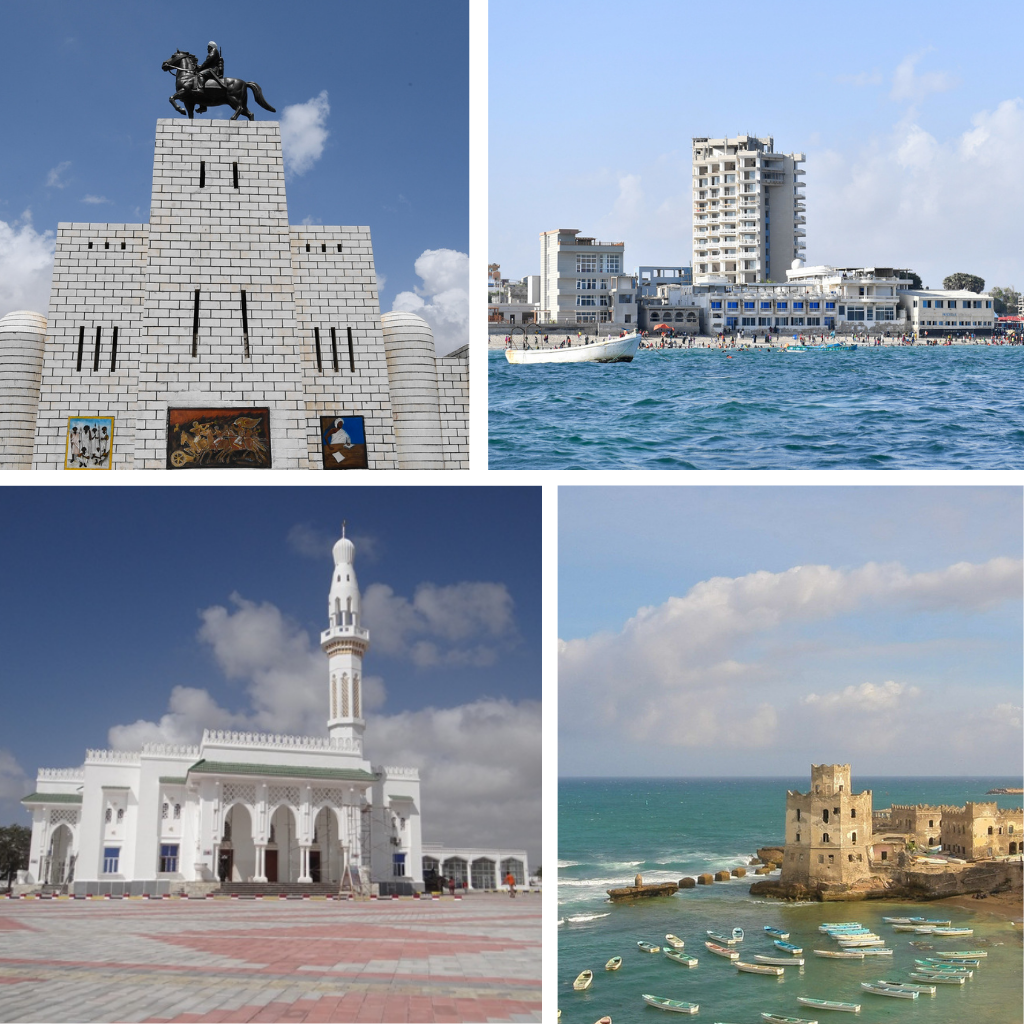
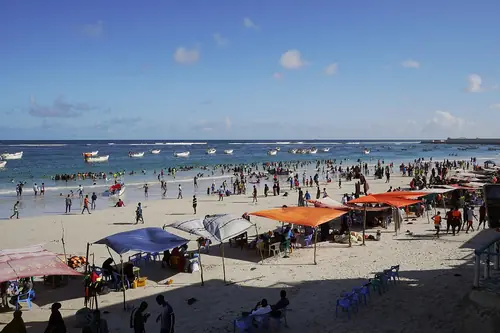
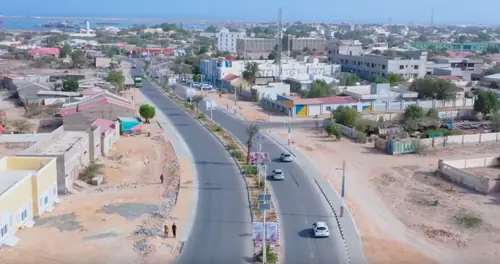
For Somalia has a great deal to show. It has the longest coastline in mainland Africa, more than 3,000 kilometres of shore between the Gulf of Aden and the Indian Ocean, fringed by vast beaches and ancient port towns. Mogadishu, Merca, Brava and Berbera were for centuries trading posts on the Swahili coast and in the incense trade, in contact with Arabia, Persia, India and even China. Their old quarters of coral stone, their medieval mosques and their carved doors recall this past prosperity.
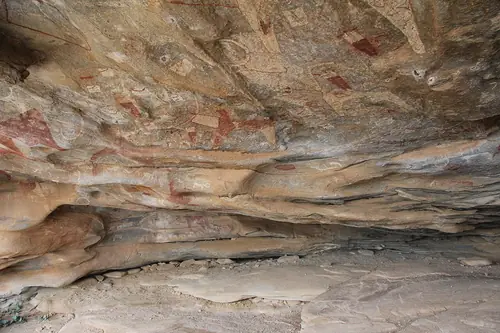
Inland, the rock shelters of Laas Geel, near Hargeisa, preserve rock paintings of exceptional freshness, among the finest in Africa. And everywhere, a culture of great richness finds expression: that of a people of nomadic herders and traders, devoted to their camels, their Islam and above all their poetry, to the point that Somalia has often been called a nation of poets. When the situation allows, this country will deserve to be rediscovered with caution, relying on trustworthy local contacts.
History and culture
The Somali coast is often linked to the Land of Punt, with which the pharaohs traded incense, myrrh and precious woods. In the Middle Ages Islam arrived very early by sea, and city-states such as Mogadishu prospered on Indian Ocean trade; the traveller Ibn Battuta stopped there in the 14th century. Inland, sultanates such as Adal and Ajuran controlled the caravan routes and water resources.
At the end of the 19th century the territory was divided between the British in the north, the Italians in the south and the French in Djibouti. In 1960 British Somaliland and Italian Somalia united to form the Somali Republic. The military regime of Siad Barre, which came to power in 1969, collapsed in 1991, plunging the country into a prolonged civil war. Somaliland then declared its independence, while the south endured decades of instability despite the gradual rebuilding of federal institutions.
8 experiences not to miss in Somalia
- 01Gaze at Laas GeelWhen conditions allow, discover with a guide the shelters decorated with painted cattle near Hargeisa.
- 02Hargeisa camel marketWatch the early-morning haggling between herders, surrounded by hundreds of dromedaries.
- 03Old town of Hamar WeyneOne day, with an escort, walk the lanes of Mogadishu's oldest quarter and its carved doors.
- 04Ottoman port of BerberaWander among the coral-stone houses of the old town, witnesses to a former Ottoman presence.
- 05Beaches of the Gulf of AdenSwim from the deserted beaches of Batalaale, near Berbera, provided the situation is safe.
- 06Poetry and musicListen to Somali poems being recited, a major oral art form that still sets the rhythm of celebrations and debates.
- 07Tea and camel's milkShare a spiced tea or a glass of camel's milk at a stall, the social ritual par excellence.
- 08Hargeisa's money changersSee the stacks of banknotes piled high on the street money changers' stalls, an iconic scene in the city.
When to go to Somalia
Somalia's climate is hot and largely arid, punctuated by two dry seasons and two rainy seasons, often irregular. The main dry season, known as jilaal, runs roughly from December to March: temperatures on the coast are a little more bearable then, and it is the period generally cited as the most favourable. The gu rains fall from April to June, the deyr rains from October to November. The north coast, around Berbera, becomes extremely hot from June to September, while the Hargeisa highlands stay more temperate. That said, the question of season is secondary as long as the security situation remains so poor: only official advice should guide any decision to travel.
Getting around
In the current context, all travel in Somalia is advised against and should be considered, if at all, only with professional security support. People who go to Mogadishu for compelling reasons, often humanitarian or diplomatic, generally stay within protected zones around the airport. In Somaliland, the authorities have long required foreigners travelling outside Hargeisa to be accompanied by an armed escort, notably to Laas Geel or Berbera; these rules may change. Roads are often in poor condition and checkpoints numerous. When the situation allows, the best solution will be to go through a recognised local operator, kept informed of conditions in real time.
Etiquette and customs
Somali society is deeply Muslim and structured by clans, which play an essential role in social relations and in resolving disputes under customary law, the xeer. Very covering dress is expected, and women travellers would wear a headscarf. You greet people with “Assalamu alaikum”, eat and hand things over with your right hand, and avoid photographing people without their explicit consent. Hospitality is very strong: refusing the tea you are offered would be discourteous. Alcohol is forbidden. During Ramadan, you should not eat, drink or smoke in public during the day. Avoid any comment on politics and clans.
Food and drink in Somalia
Somali cuisine reflects centuries of exchange with Arabia, India and Italy. Bariis iskukaris, rice spiced with cardamom, cumin and cloves, is served with goat, lamb or camel meat, often alongside a banana eaten at the same time, a curious and delicious habit. Sambusas, fried triangles stuffed with minced meat, are a must during Ramadan. At breakfast you will find canjeero, a thin, slightly sour pancake. The Italian legacy shows in the pasta, known as baasto. Fresh camel's milk, black tea fragrant with spices and dates see you through the day.
 Burundi
 Djibouti
 Eritrea
 Ethiopia
 Kenya
 Rwanda
 South Sudan
 Tanzania
 Uganda