 AfriqueUnie
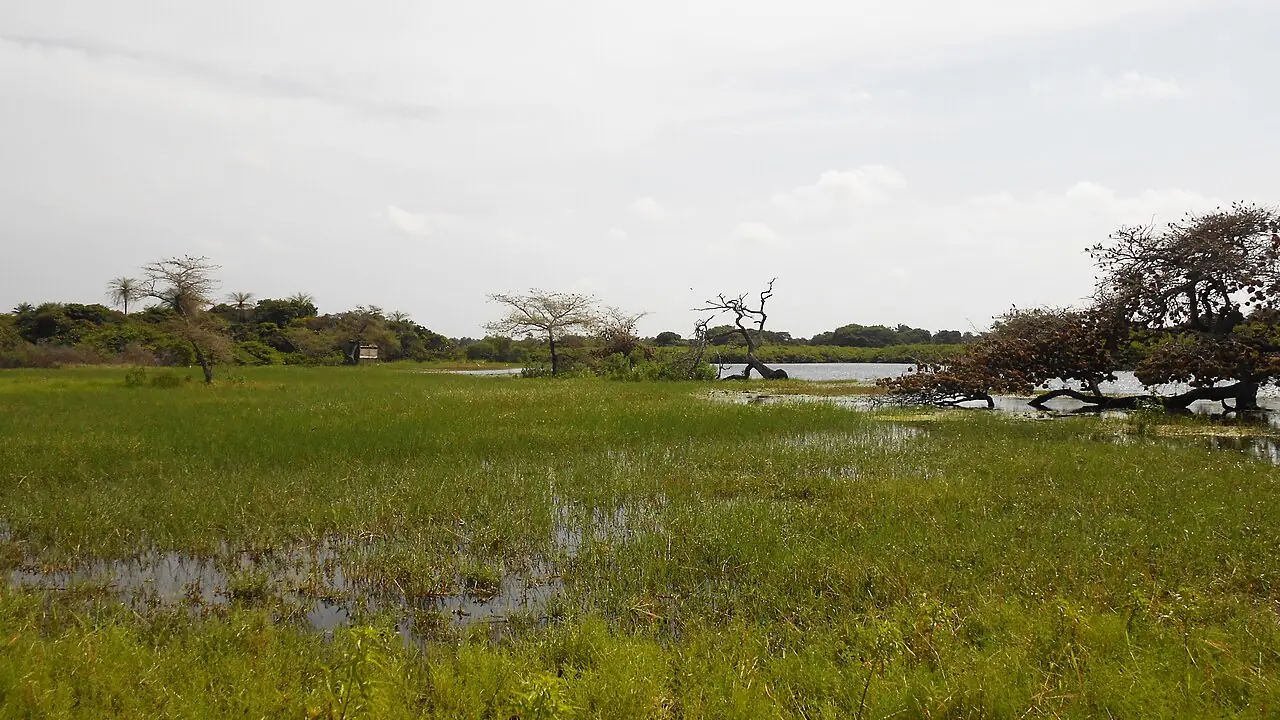 Photo: Joehawkins · CC BY-SA 4.0
Published by Adama Doumbia, founder of Afrique Unie · updated 28 November 2026 · our method and sources
Why go
Orango National Park, in the south-west of the Bijagós archipelago, takes in the island of Orango and several neighbouring islands. It is famous for one astonishing animal: the hippo that lives in freshwater lagoons and ventures into the ocean, sometimes swimming from island to island. This extremely rare behaviour draws naturalists and photographers, but sightings call for patience and discretion.
Orango is also a landmark of Bijagó history. The island is linked to Queen Okinka Pampa, whose tomb remains a respected place of remembrance. Villages such as Eticoga live from fishing, rice and oil palms, and the islanders take part in managing the park. You walk between palm groves, grassy savannah and mangroves, with crocodiles in the lagoons and turtles on the beaches.
Getting there
Orango is reached by motorised pirogue from Bubaque or directly from Bissau, a crossing of several hours depending on the tides. It's best to go through accommodation based on the island, which will arrange the transfer, or to share a boat with other travellers.
Frequently asked questions
Can you really see hippos in the sea at Orango?
These hippos live mainly in the island's freshwater lagoons, but they venture into the sea and sometimes swim from one island to another. The lagoons, visited with a guide, give you the best chance of seeing them. Nothing is guaranteed: you need patience and to keep very quiet.
How do I get to Orango National Park?
By motorised pirogue from Bubaque or directly from Bissau, a crossing of several hours that depends on the tides and weather. The easiest option is to go through accommodation on the island, which arranges the transfer. Insist on life jackets and do not travel by boat at night.
Do you need a guide to visit Orango?
Yes, always go with a guide from the village or the park: the hippos are dangerous and some places are sacred to the Bijagó people. The park, created in 2000, is part of the Bijagós Archipelago, a biosphere reserve since 1996 and a UNESCO World Heritage Site since 2025. Ask permission before visiting the tomb of Queen Okinka Pampa.
When is the best time to visit Orango?
The dry season, from December to April, makes it easier to reach the lagoons and to travel between islands. In the rainy season, crossings and getting around the island become harder. Allow two or three nights to improve your chances of sightings.
Is Guinea-Bissau safe for visiting the Bijagós?
The French government rates the country as a heightened-vigilance area, except for the border zone with Senegal, which should be avoided unless essential. Since late 2025 a military-backed transitional government has run the country, demonstrations are banned and you should keep away from any gathering. The French embassy's ability to help is limited, so take out insurance that covers repatriation and avoid travelling at night.
 Côte d'Ivoire
 Ghana
 Guinea