 AfriqueUnie
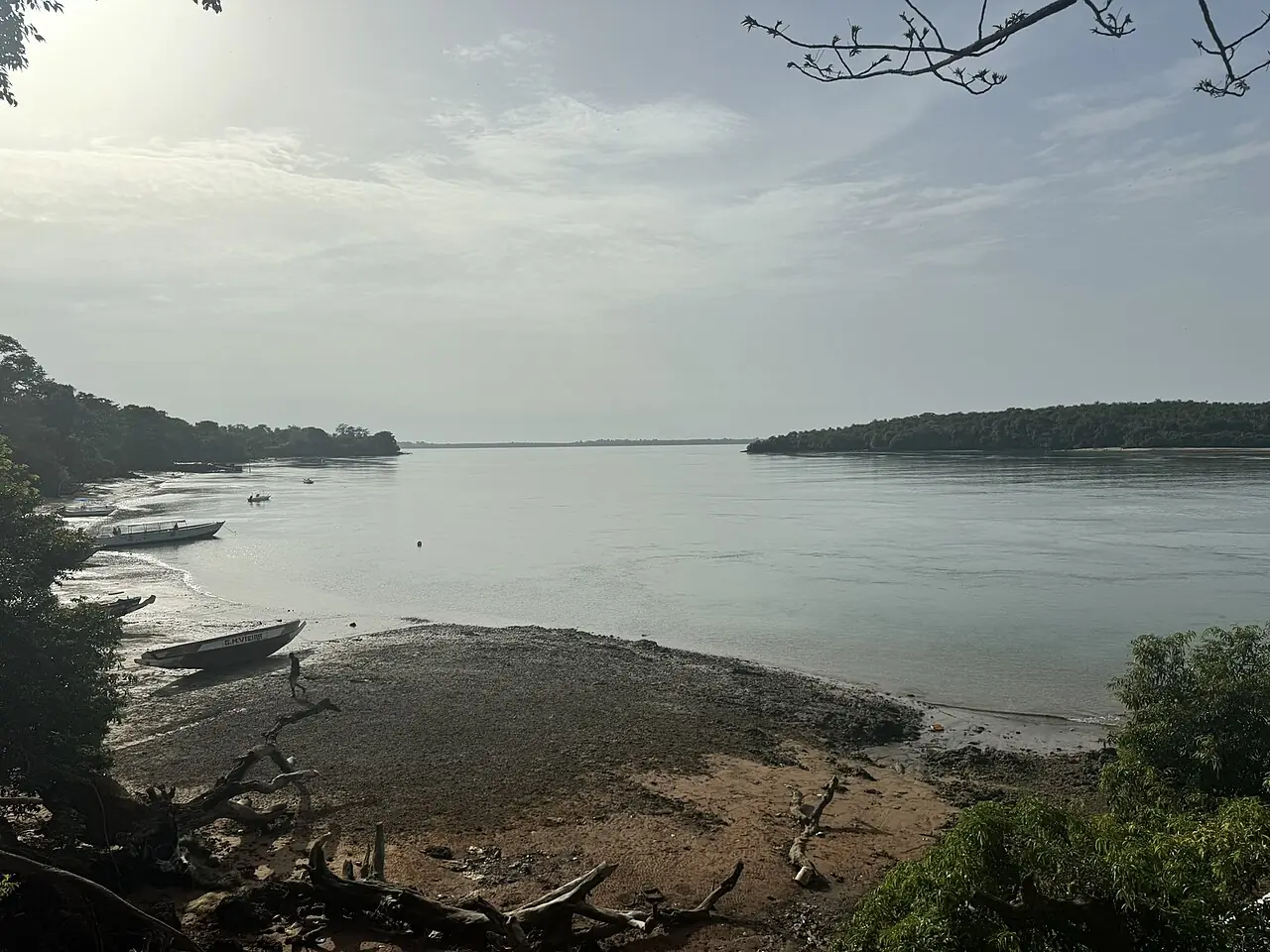 Photo: Mooonswimmer · CC BY-SA 4.0
Published by Adama Doumbia, founder of Afrique Unie · updated 28 November 2026 · our method and sources
- Days 1-2
Bissau, a capital on the Geba
Bissau is easy to explore on foot during the day. Start with Bissau Velho, the old town with its Portuguese colonial façades, often crumbling but full of charm, then walk down to the port of Pidjiguiti, where a memorial recalls the dockworkers' strike crushed in 1959, a founding moment in the struggle for independence. The next day, dive into the bustle of Bandim market, the largest in the city, then pass by the cathedral. Use these two days to organise the rest of the trip too: connections to the islands depend on the tides and change often. Avoid any gatherings, which are banned by the authorities, and do not travel at night.
- Day 3
Crossing to Bubaque
Board a boat for Bubaque, the most accessible island in the Bissagos archipelago. A public ferry links it with Bissau, but it does not run every day, often only once or twice a week, at times that vary with the tides, and the crossing takes several hours. Another option is to share a chartered speedboat, which is faster. Either way, check the condition of the boat and make sure there are life jackets. On arrival, explore the small town of Bubaque, with its low houses and fishing harbour. The island, around fourteen kilometres long, can be explored on foot or by motorbike. In the evening, enjoy the calm: life here follows the rhythm of the tides.
- Days 4-5
Orango National Park and its hippos
Travel to Orango Island by boat from Bubaque; the length of the crossing depends on the sea and the tides. The national park, created in 2000, covers the south of the archipelago, with islands, mangroves and shallow waters. Orango is famous for its hippos, which live in the lagoons and venture into salt water, a rare behaviour. Look for them on foot with a park guide, keeping a safe distance, as the animals are dangerous. In the village of Eticoga, learn about Bijagó culture and the memory of Queen Okinka Pampa, who ruled there until her death in 1930. Respect sacred sites, which outsiders may not enter without permission.
- Day 6
Beaches and villages of Bubaque
Return to Bubaque for a quieter day. Hire a bicycle or take a motorbike ride to Bruce Beach, in the south of the island, a long stretch of sand lined with palm trees. On the way, pass through Bijagó villages surrounded by rice paddies and palm groves. Watch birds in the mangroves at low tide, when the mudflats attract waders by the thousand. The archipelago is also home to sea turtles that nest on some beaches; never approach them with a torch. In the evening, prepare for the return to the mainland by confirming the boat time, which can change at the last minute.
- Day 7
Back to Bissau
Take the boat back to Bissau, leaving yourself some margin: in rough seas or if the timetable changes, it is better to have a spare day before your flight. If the crossing is early, spend the afternoon revisiting the lanes of Bissau Velho or strolling along the avenue leading to the presidential palace. This is also the time to prepare the trip south: book a four-wheel-drive vehicle with a driver and check the state of the road to Cantanhez with your local contacts. Nights in Bissau are generally quiet, but avoid walking around after dark.
- Days 8-9
The forests of Cantanhez National Park
Leave early for the south via Buba: the road, partly in poor condition, takes a long day, sometimes five to six hours or more. Cantanhez National Park, in the Tombali region, protects one of the last blocks of dense forest in the country, among rice fields, mangroves and villages. Base yourself in Jemberem, where village guides lead dawn walks in search of chimpanzees, which you are more likely to hear than to see. You can also spot colobus monkeys, hornbills and many other birds. The forest is looked after by local communities, which protect certain sacred groves, so follow your guide's instructions.
- Day 10
Back to Bissau and departure
Leave Jemberem at sunrise to reach Bissau by early afternoon, then the airport, on the outskirts of the city. Allow as much time as on the way down, or more if the road has been damaged by the rains. If your flight leaves in the morning or early afternoon, it is safer to return to Bissau the day before and spend a final night in the city, even if that shortens your stay in Cantanhez. Use your last hours to buy fabrics, basketwork or cashew nuts, the country's main agricultural product, in the capital's markets.
Getting around
On the mainland, hire a four-wheel-drive vehicle with a driver: roads are often in poor condition, and you should never drive at night. For the Bissagos Islands, a public ferry links Bissau with Bubaque usually once or twice a week, and speedboats can be chartered; always check the boat's condition and that life jackets are on board. Between the islands, you travel by motorised canoe, depending on the tides. Allow a spare day before your flight home in case of rough seas.
When to do this trip
The best time to go is from November to April, during the dry season: calmer seas for the crossings, passable roads and many migratory birds in the archipelago. From December to February, the harmattan can haze the sky. From June to October, the rains are heavy, the southern tracks become difficult and boat connections less regular. Sea turtles nest on some islands mainly towards the end of the rainy season.
The travel notebook
The itinerary, practical information (entry, health, money, emergencies) and the checklist in a few pages, to print or keep offline on your phone.
Variations
- In 7 days: focus on Bissau and the Bissagos, with three nights between Bubaque and Orango, and skip Cantanhez.
- In 14 days: add a stop in Bolama, the colonial capital until 1941, and a trip to the more remote islands of the archipelago by chartered boat.
- Nature version: extend your stay in Cantanhez and add a few days in Orango National Park for birdwatching and hippos.