Guinea-Bissau is one of those countries you discover almost on your own, with no queues and no scenery dressed up for visitors. Here, travel is measured by the rhythm of the tides: along a coast cut by rias and bolongs, the ocean pushes far inland twice a day, flooding the mangroves and then laying bare mudflats where herons, ibises and shellfish gatherers pick their way across. That ebb and flow governs everything, from the pirogue timetables to the hour at which you can land on an island. Accepting that slowness is already a first step towards understanding the country.
The great reason to come is the Bijagós, an archipelago of low-lying islands, palm groves and pale sandy beaches where communities still hold fast to their initiation rites, their sacred forests and a social order in which women play a remarkable role. You may come across hippos bathing in salt water, green turtles hauling themselves ashore to lay their eggs, and clouds of migratory birds that have flown down from Europe to spend the winter on the mudflats. Few places on the West African coast have kept nature and such a singular island culture this well preserved.
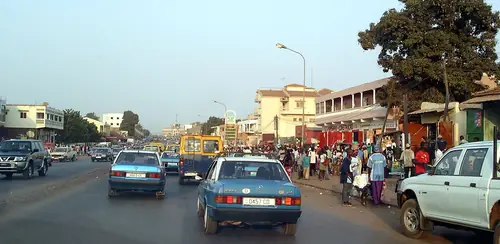
The mainland holds its own. Bissau, a small Portuguese-speaking capital with a faded charm, is best explored on foot, between colonial façades, a noisy market and terraces where you sip a coffee to the sound of gumbe. Further south, the Cantanhez forest shelters chimpanzees and villages that have staked their future on community tourism. Everywhere, the gentleness of the people is striking: you'll be greeted in Creole and, during the harvest season, you may well be offered a glass of cashew wine. The country asks for a little flexibility and patience, not least because its political life goes through regular upheavals: check your government's official travel advice before you leave. But it richly rewards those who take their time.
History and culture
Before the Portuguese arrived in the 15th century, the region lay within the orbit of the Mali Empire and then of the Kingdom of Kaabu, a Mandinka power that long controlled the interior. The Portuguese trading posts of Cacheu and Bissau became stops on the Atlantic slave trade, often linked to the Cape Verde islands, while the Bijagós, renowned for their warriors and their canoes, held out against any conquest for a long time. The colony of Portuguese Guinea was only truly subdued at the beginning of the 20th century.
In 1959, the bloody suppression of a dockworkers' strike at the port of Pidjiguiti marked a turning point. Amílcar Cabral's PAIGC, led by one of the great thinkers and strategists of Africa's liberation struggles, then waged one of the most successful independence wars on the continent. Cabral was assassinated in Conakry in January 1973, a few months before the unilateral declaration of independence, which Lisbon recognised in 1974 after the Carnation Revolution. Since then the country has had a turbulent political life, marked by coups and successive crises, yet it has never lost its warm sociability.
8 experiences not to miss in Guinea-Bissau
Photo : Mooonswimmer · CC BY-SA 4.001Sail to the BijagósTake the boat from Bissau to Bubaque and watch the mangroves slide past, then continue by pirogue to more remote islands such as Orango, Canhabaque or João Vieira.
Photo : Joehawkins · CC BY-SA 4.002Look out for saltwater hipposOn Orango, follow a local tracker to the lagoons where hippos move between fresh water and the sea, an extremely rare behaviour.
03Wander through Bissau VelhoLose yourself in the old colonial quarter, between the Amura fortress, the port of Pidjiguiti and the washed-out façades that tell a century of history.
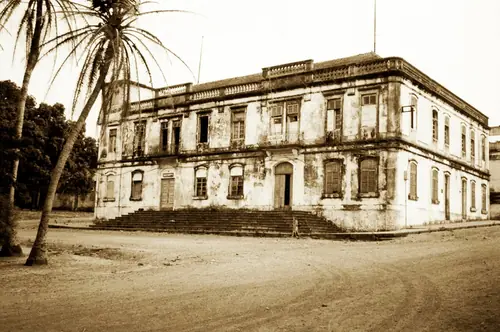
Photo : MCdeMtl · CC BY-SA 2.004Explore the ruins of BolamaStep ashore in the former capital, where palaces and government buildings are slowly being swallowed by kapok trees and strangler figs.
05Walk with the chimpanzees of CantanhezSet off at dawn from a village in the park with a community guide to hear, and sometimes glimpse, chimpanzees in the canopy.
06Join the Bissau carnivalIn February, watch the parades of masks and troupes from every region, a festival where each ethnic group shows off its dances and costumes.
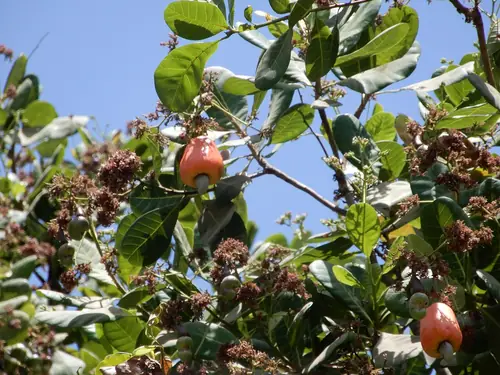
Photo : Helena Maria Pestana · CC BY-SA 4.007Taste the cashew seasonIn spring, when the cashew nuts ripen, share the fermented juice of the fruit and discover the economy that keeps much of the country going.
08Watch birds on the mudflatsAt low tide, the foreshore of the Bijagós hosts hundreds of thousands of migratory waders: bring binoculars and plenty of patience.
When to go to Guinea-Bissau
The best time to visit is from November to April, during the dry season. The dirt roads are passable, the sea is generally calm for crossings to the Bijagós and the mosquitoes are less insistent. December and January bring pleasant mornings and cooler nights; from March the heat builds and the harmattan can veil the sky with dust. From May or June to October, the rainy season transforms the country: violent downpours, roads cut off and less regular boat services. The green is dazzling, but getting around becomes complicated. Sea turtles nest mainly between August and November on some of the archipelago's islands, which may justify arriving at the tail end of the wet season.
Getting around
Bissau has flights to Lisbon, Dakar and a handful of regional capitals; from neighbouring Senegal you can also come in by road via Ziguinchor. Locally, shared taxis and toca-toca, the city minibuses, serve the capital, while seven-seater bush taxis and pick-ups head to provincial towns on uneven roads. For the archipelago, a scheduled boat links Bissau to Bubaque, with departure times that depend on the tides and change often; ask at the port the day before. To go further you'll need to charter a motorised pirogue, which quickly gets expensive: team up with other travellers or book through your accommodation. For safety's sake, choose boats that carry life jackets.
Etiquette and customs
Greetings matter: take the time to ask after people before asking anything, in Creole if you can, with a simple “Kuma ku bu sta?”. In the Bijagós, many places are sacred, notably certain forests and islets reserved for initiations: never go there without the elders' consent, and follow your guide's instructions to the letter. Always ask before photographing anyone, especially during ceremonies. Covered-up clothing is appreciated in town and in the Muslim villages of the interior. When a village chief receives you, it is customary to bring a small gift, often a few drinks or some kola nuts. Finally, punctuality is elastic: best to smile about it.
Food and drink in Guinea-Bissau
Bissau-Guinean cooking marries Portuguese influences with the produce of the coast. Caldo de mancarra, a peanut-paste stew served with rice, is the comfort food par excellence, made with chicken or fish. Grilled fish, often a red snapper or a barracuda caught that morning, comes with a lemony onion sauce. Mangrove oysters, gathered from the roots of the mangrove trees, are eaten grilled over a wood fire. In the neighbourhoods you'll find caldo de chabéu, made with palm oil, and fritters sold on street corners. As for drinks, palm wine and fermented cashew juice do the rounds in the villages; in town, local beer and Portuguese-style coffee set the pace of the afternoons.
The best time to visit Guinea-Bissau: November to April.
What should I see first in Guinea-Bissau?
The must-sees: Bissagos Islands, Orango National Park, Cantanhez National Park.
Which cities should I visit in Guinea-Bissau?
Bissau, Bolama, Bafatá. The capital is Bissau.
How much should I budget for a trip to Guinea-Bissau?
Budget: around €30–60 per person per day, excluding flights. This is only a guide and depends above all on the accommodation and activities you choose.
What currency and languages are used in Guinea-Bissau?
Currency: West African CFA franc (XOF). Languages: Portuguese, Creole.
How do I get to Guinea-Bissau?
The main international airport has the code OXB. Compare flights with the ‘Flights’ button on this page.
Do I need a visa to visit Guinea-Bissau?
Entry requirements depend on your nationality and change regularly. Check them on the country's official website or with your foreign ministry before booking, and make sure your passport is valid.
What should I eat in Guinea-Bissau?
Dishes to try while you're there: Caldo de mancarra, grilled fish.
Map
Guinea-Bissau on the map
Cities Places to see · Approximate positions
On the ground
Getting around and staying healthy
Getting around
There are no scheduled domestic flights or trains; on the mainland, travel is by road in shared taxis or minibuses. For the Bijagós archipelago, a public boat links Bissau with Bubaque, usually once a week, supplemented by private speedboats and lodge boats; check timetables, which depend on the tides. In Bissau, toca-toca minibuses and blue-and-white taxis are enough to get around. To leave the capital, a car with driver is the easiest option; driving is on the right.
Health and safety
Yellow fever
Vaccination certificate required on entry for all travellers (from 1 year); vaccine recommended for the whole country (from 9 months).
Malaria
Present throughout the country: ask a doctor about preventive medication and protect yourself from mosquitoes.
Water and food
Unless your accommodation says otherwise, drink sealed bottled or filtered water, and wash your hands often.
Source: US CDC, November 2026. Rules change: see a travel health clinic before you leave, and the UK Foreign Office travel advice for safety.
Useful numbers
Local emergency numbers
Police: 117 Ambulance: 1313 or 119 Fire: 1313 or 118 FCDO: ambulance and fire brigade 1313; Viaggiare Sicuri: fire brigade 118, ambulance 119. Police 117 according to both sources; criminal investigation police, 24 hours a day: +245 955 75 63 63 (Viaggiare Sicuri).
Affiliate cookiesWe would like to load a script from our partner Travelpayouts. It may set cookies so that we receive a commission when you book through our links, at no extra cost to you. If you decline, the site works in exactly the same way. Find out more
 AfriqueUnie
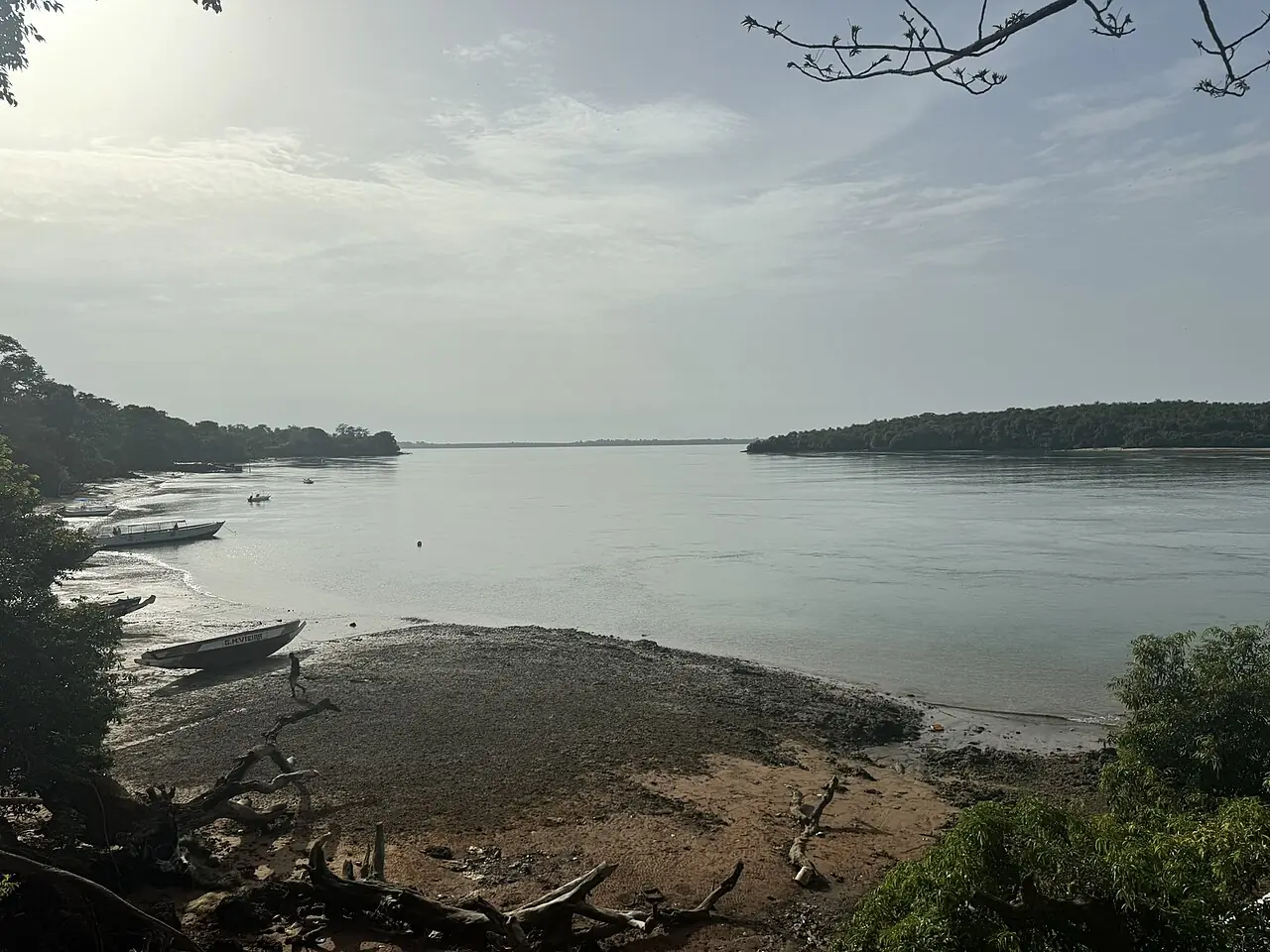 Photo: Mooonswimmer · CC BY-SA 4.0
 Guinea-Bissau
 Benin
 Burkina Faso
 Cape Verde
 Côte d'Ivoire
 Ghana
 Guinea
 Liberia
 Mali
 Mauritania
 Niger
 Nigeria
 Senegal
 Sierra Leone
 The Gambia
 Togo