 AfriqueUnie
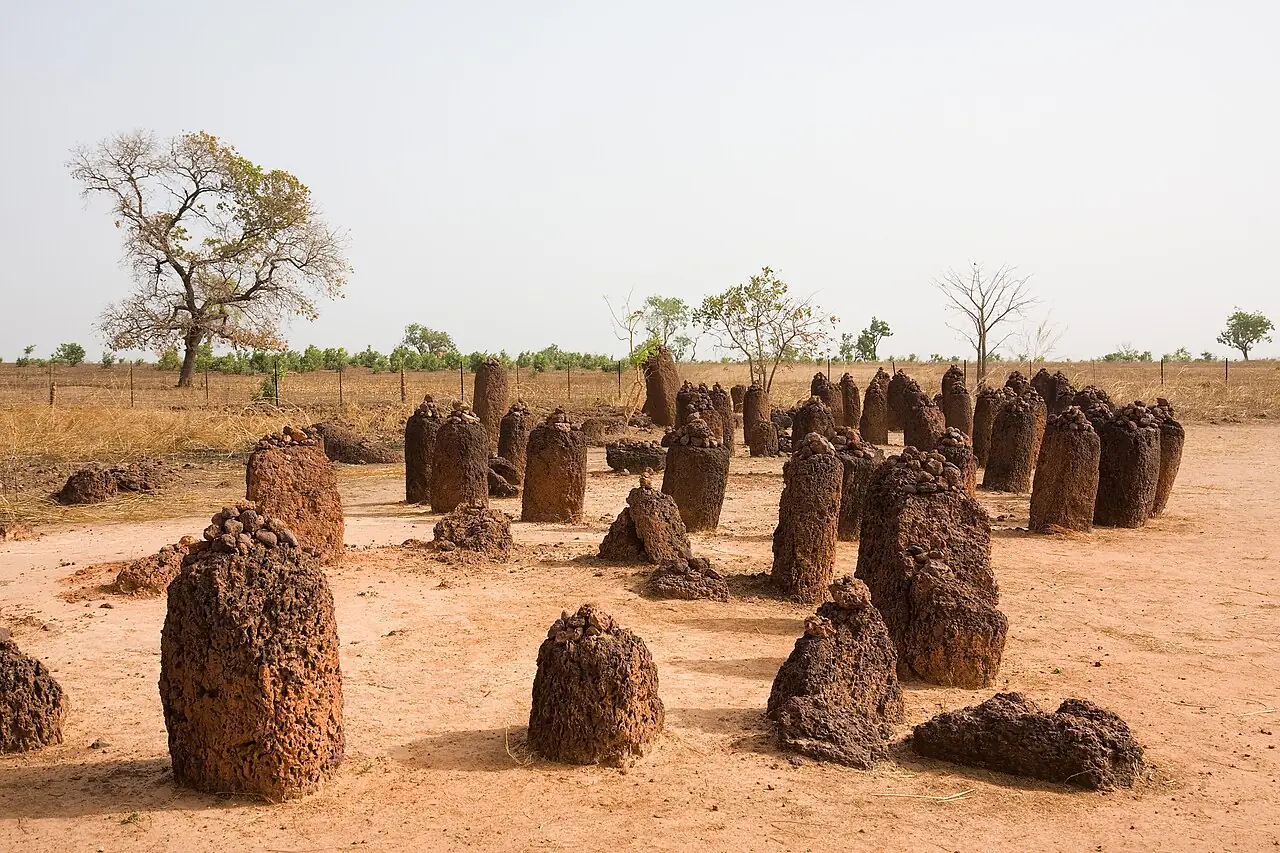 Photo: Ikiwaner · CC BY-SA 3.0
Published by Adama Doumbia, founder of Afrique Unie · updated 28 November 2026 · our method and sources
Why go
In the centre of the Gambia, not far from Janjanbureh, circles of standing stones rise out of the savannah. The Wassu stone circles are part of the Senegambian megaliths, an exceptional group of more than a thousand monuments spread along the Gambia River, between Senegal and the Gambia, inscribed as a World Heritage Site in 2006. Cut from laterite with iron tools, the stones, cylindrical or polygonal, sometimes stand more than two metres tall.
These monuments are generally associated with burials and are thought to have been raised over a long period spanning more than a millennium. Their exact meaning remains partly a mystery, which feeds local legends. Some lyre-shaped stones are particularly striking, and local people sometimes leave small pebbles on them as a wish. A small on-site museum presents the excavations and the archaeologists' theories.
Getting there
Wassu lies several hours' drive from the coast, on the north bank of the river near Kuntaur. You get there by car with a driver, often on a two- or three-day upcountry circuit that includes Janjanbureh, or by boat on a river cruise.
Frequently asked questions
How long does it take to visit the Wassu stone circles?
One to two hours is enough for the site and its small museum. Come early in the morning or late in the afternoon, when the low light brings out the shape of the stones and the heat eases. Start with the museum to understand what you are about to see.
Who built the Wassu stone circles, and when?
Nobody knows for certain: archaeologists date the Senegambian megaliths as a whole to between the 3rd century BC and the 16th century AD, and burial mounds near Wassu have been dated to between the 10th and early 14th centuries. The stones, cut from laterite with iron tools, point to an organised and prosperous society. They are linked to graves, but their exact meaning is still debated.
How do I get to Wassu from the Gambian coast?
Allow a long day's drive; most travellers include Wassu in a two- or three-day trip upcountry to Janjanbureh, or stop there on a river cruise. Do not drive at night, as the French authorities advise. During the rainy season, from June to October, flooding can damage the roads.
Can you touch or climb on the stones?
Do not climb on the stones or move anything: they are funerary monuments and have been a UNESCO World Heritage Site since 2006. The small pebbles placed on top of some stones are offerings left by local people when making a wish, so leave them where they are. Photos, on the other hand, are welcome.
Can you see the chimpanzees of River Gambia National Park from Wassu?
Yes, but only from a boat: landing on the islands is forbidden, because the chimpanzees, reintroduced there since 1979, can be aggressive towards people. Trips leave from Kuntaur, close to Wassu, among other places. Insist on life jackets on board.
 Benin
 Cape Verde
 Ghana
 Mauritania