 AfriqueUnie
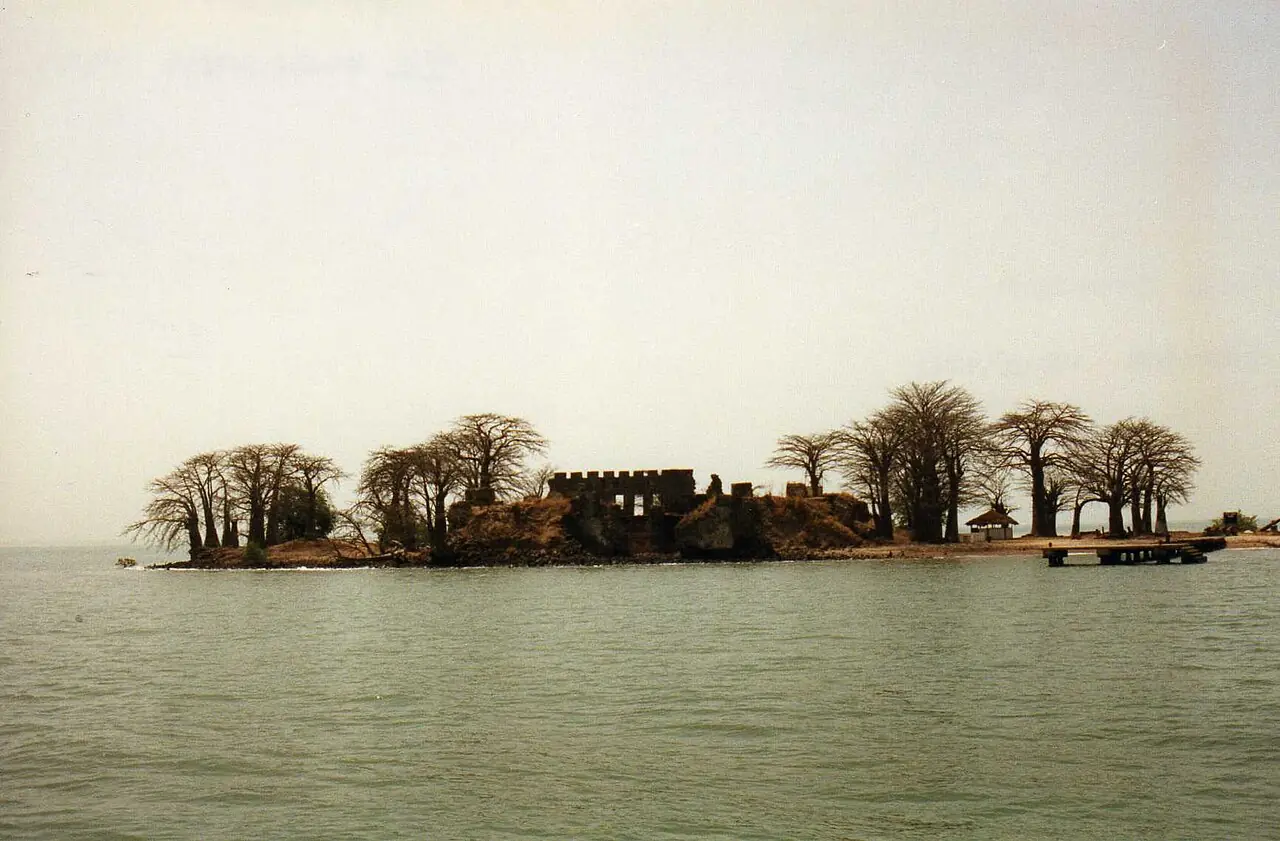 Photo: Leonora (Ellie) Enking from East Preston, United Kingdom · CC BY-SA 2.0
Published by Adama Doumbia, founder of Afrique Unie · updated 28 November 2026 · our method and sources
Why go
In the middle of the Gambia River estuary, a small island covered in ruins and baobabs bears the name of Kunta Kinteh, the figure made famous by Alex Haley's novel “Roots”, which traced the origins of his ancestor to the neighbouring village of Juffureh. Long known as James Island, it was home to a fort built in the 17th century and fought over for decades by the English, French, Dutch and even the Courlanders, for control of trade on the river, including the trade in captives.
Inscribed as a World Heritage Site in 2003 together with several nearby sites, the island is today a place of remembrance of the Atlantic slave trade. Erosion has greatly reduced its size, and only fragments of walls and cannons remain. A visit is often combined with Juffureh and Albreda, on the north bank, where a museum traces the history of the slave trade and where you can meet descendants of the Kinteh family.
Getting there
From the coast, you reach Juffureh by crossing the river on the Banjul–Barra ferry and then driving east, or more comfortably by boat, on a day trip from Banjul or the coastal hotels. A short pirogue crossing then takes you from Juffureh to the island. The UK government warns that the Banjul–Barra ferry is often overcrowded and lacks life-saving equipment, so get out of your vehicle quickly once parked, and insist on life jackets for the pirogue.
Frequently asked questions
How do I get to Kunta Kinteh Island from Banjul?
The most comfortable option is a day trip by boat up the river. By road, take the Banjul-Barra ferry and drive on to Juffureh, where a pirogue takes you to the island in a few minutes. The UK government warns that this ferry is often overcrowded and lacks life-saving equipment, so get out of your vehicle quickly once parked, and insist on life jackets for the pirogue.
Why is James Island now called Kunta Kinteh Island?
It was renamed in February 2011 to give it a Gambian name, in tribute to Kunta Kinteh, the character made famous by Alex Haley's novel 'Roots'. It was previously known as James Island, and before that as St Andrew's Island. The site has been a UNESCO World Heritage Site since 2003.
What is left of the fort on Kunta Kinteh Island?
Only sections of wall, a few cannons and the ruins of former buildings remain, among the baobab trees. Erosion has greatly reduced the island's size, making the site fragile. Stick to the paths and do not climb on the ruins.
How much time should you allow for the visit?
Allow a full day, including Juffureh and Albreda on the north bank. The dry season, from November to May, is the most pleasant; from June to October, rain can make the roads difficult. Bring a hat, water and sun cream, as there is almost no shade on the island apart from the baobabs.
What is there to see in Juffureh and Albreda?
In these two neighbouring villages on the north bank, a museum tells the story of the Atlantic slave trade, and in Juffureh you can meet descendants of the Kinteh family. Several remains are listed together with the island, including the ruins of a Portuguese chapel and an old colonial warehouse. Visit the museum before the island to understand its history better.
 Benin
 Cape Verde
 Ghana
 Mauritania