 AfriqueUnie
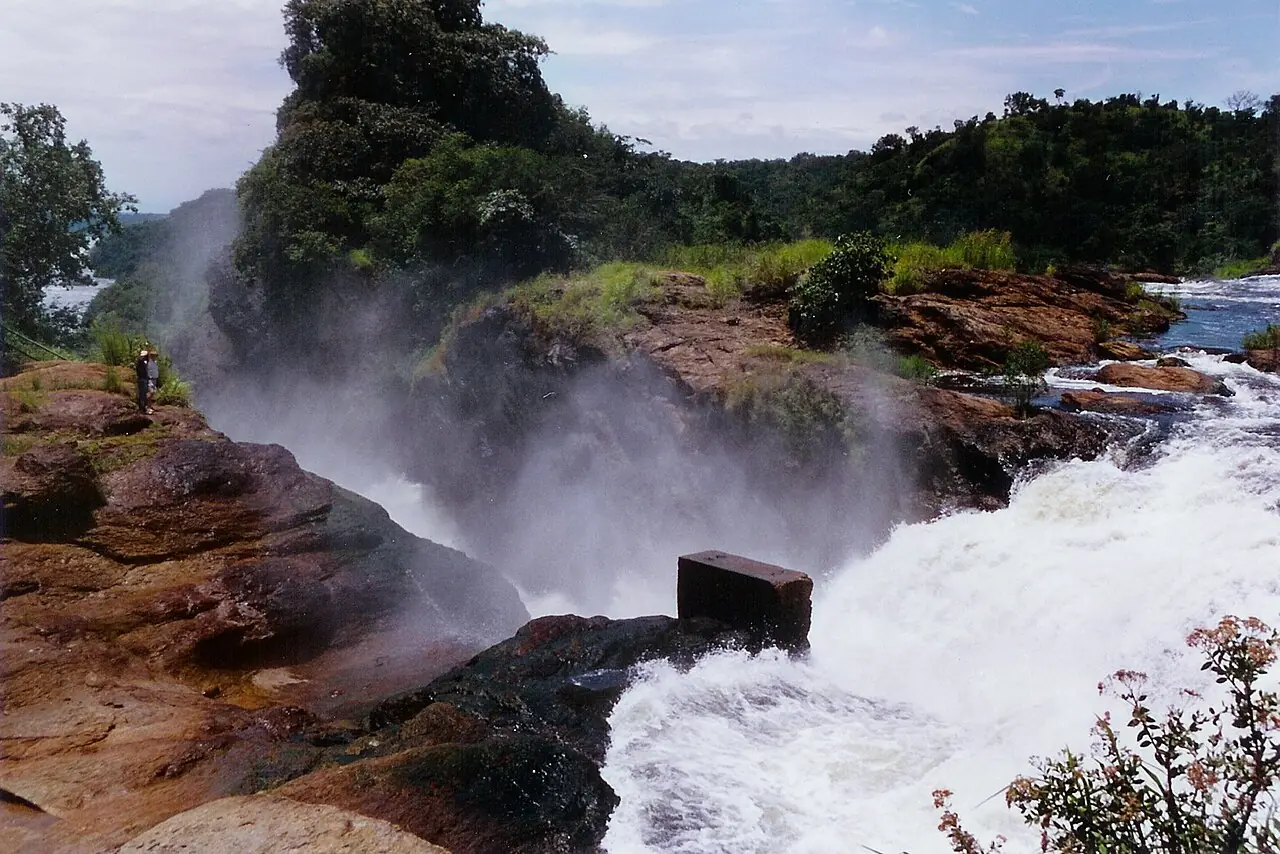 Photo: Oliver Sedlacek · Public domain
Published by Adama Doumbia, founder of Afrique Unie · updated 28 November 2026 · our method and sources
- Day 1
Arrival in Entebbe, on Lake Victoria
The international airport is in Entebbe, a small green town on the shores of Lake Victoria and far more restful than Kampala for a first night. If your flight arrives early, stroll through the botanical garden, planted in the early twentieth century, where you will see monkeys and hornbills, or visit the wildlife education centre, which cares for injured animals. Birdwatchers can book a pirogue trip into Mabamba swamp for the next morning, before heading north: it is one of the best places to see the shoebill, a prehistoric-looking bird. Have grilled tilapia for dinner facing the lake.
- Days 2-4
The rhinos of Ziwa and Murchison Falls
Take the road north, three to four hours skirting Kampala, to Ziwa sanctuary, where you can approach the country's only wild white rhinos on foot with a ranger. Another two to three hours bring you to Murchison Falls National Park, the largest in the country. The next day, cross the Nile by ferry for a game drive on the north bank, among Rothschild's giraffes, elephants, buffalo and lions, then board the afternoon cruise up the river to the foot of the falls. On the third day, climb to the top of the falls, where the Nile forces its way through a gorge seven metres wide with a deafening roar.
- Days 5-6
Fort Portal and the chimpanzees of Kibale
The road to Fort Portal, via Hoima, is long: six to seven hours with stops. You arrive in a region of hills covered with tea plantations and crater lakes. The next morning, go chimpanzee tracking in Kibale National Park, which has one of the highest densities of primates in Africa: an encounter is very likely, and you will also see colobus and other monkeys. The UK issued specific advice in 2026 for the park's southern sector: check it before booking. In the afternoon, walk through Bigodi swamp, managed by the local community, then tour the crater lakes at sunset.
- Days 7-8
Queen Elizabeth National Park and the Kazinga Channel
Two to three hours' drive south is enough to reach Queen Elizabeth National Park, at the foot of the Rwenzori Mountains. In the morning, go on a game drive on the Kasenyi plains, home to lions and Uganda kob. In the afternoon, the boat trip on the Kazinga Channel, which links lakes George and Edward, is one of the highlights of the trip: hundreds of hippos, elephants coming to drink, crocodiles and birds. The next day, head down to the Ishasha sector in the south, where lions have taken to resting in the branches of fig trees. The park lies close to the Congolese border: check official travel advice before you go.
- Days 9-10
The gorillas of Bwindi Impenetrable Forest
From Ishasha, two to three hours of dirt road take you to Buhoma, the northern entrance to Bwindi Forest; other sectors, such as Ruhija or Rushaga, are reached depending on the permit you get. On trekking day, report early to the ranger post: the walk may be short or last several hours on steep, slippery slopes, before an hour spent close to a gorilla family. Permits are limited, must be booked well ahead, and the minimum age is fifteen. On the second day, take a forest walk to the waterfalls or an organised visit with members of the Batwa community, the forest's first inhabitants.
- Days 11-12
Rest on the shores of Lake Bunyonyi
Depending on the Bwindi sector, allow an hour and a half to four hours' drive to Lake Bunyonyi, near Kabale. This calm highland lake, dotted with small islands and surrounded by terraced hills, is the perfect place to unwind after the treks. Tour the islands by pirogue, walk up to a viewpoint, or simply watch the mist rise in the morning. Swimming is common here, but ask locally for advice, as bilharzia is present in many of the country's lakes and rivers. The lake's crayfish feature on many restaurant menus.
- Day 13
Back to Entebbe
The drive back to Entebbe is a very long day, seven to nine hours depending on traffic approaching Kampala. Stop at the equator at Kayabwa, where a monument marks the line. To save time, domestic flights link the small airstrips of Kisoro and Kihihi, near Bwindi, with Entebbe in roughly an hour and a half to two hours, with limited luggage. Either way, leave a comfortable margin before your international flight, or add a night in Entebbe if you leave the next morning.
Getting around
The most common option is a 4x4 trip with a driver-guide: distances are long, some tracks are difficult in the rainy season, and the driver knows the parks. Traffic drives on the left. Self-drive hire is possible but not recommended for a first trip. Do not drive at night. Domestic flights link Entebbe with the parks to shorten journeys. The areas near the border with the DR Congo and some other zones are subject to official warnings, and in 2026 the UK advised against all but essential travel to Jinja: check your government's travel advice before you leave.
When to do this trip
The dry seasons, from June to September and from December to February, are ideal: passable roads, animals gathered around water and less slippery treks. The rainy seasons, from March to May and from October to November, make some roads difficult, but the scenery is superb and permits easier to obtain. Temperatures stay mild all year round, and nights are cool in Bwindi and at Lake Bunyonyi.
The travel notebook
The itinerary, practical information (entry, health, money, emergencies) and the checklist in a few pages, to print or keep offline on your phone.
Variations
- In 9 days: drop Murchison and Ziwa, and go straight from Entebbe to Fort Portal for the loop of Kibale, Queen Elizabeth, Bwindi and Bunyonyi.
- In 16 days: add hiking in the Rwenzori Mountains, for one or several days, or Lake Mburo National Park and its zebras on the way back.
- Gorillas and Rwanda version: from Lake Bunyonyi, cross into Rwanda at Katuna to finish in Kigali, after checking formalities and that the border is open.