 AfriqueUnie
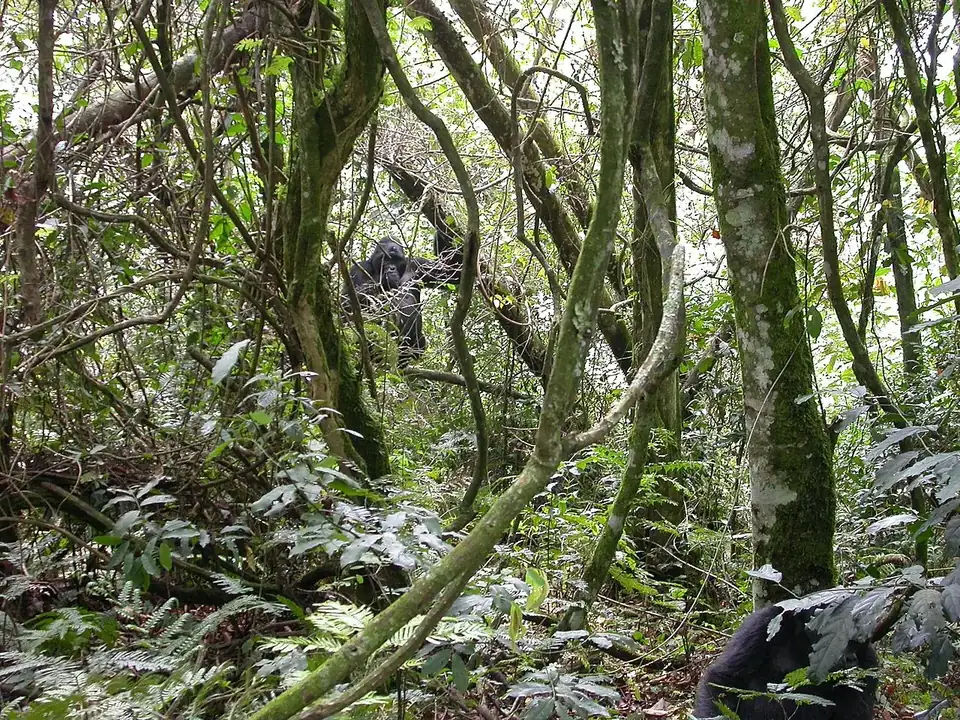 Photo: Auteur inconnu · CC BY-SA 3.0
Published by Adama Doumbia, founder of Afrique Unie · updated 28 November 2026 · our method and sources
Why go
A UNESCO World Heritage Site, Bwindi Impenetrable Forest covers steep hills in south-western Uganda, close to the borders with the Democratic Republic of the Congo and Rwanda. Its name is well deserved: the slopes are steep, the vegetation dense, and the creepers and tree ferns form a tangle that trackers hack open with machetes. This ancient forest, one of the most biodiverse in East Africa, is home to nearly half the world's mountain gorillas.
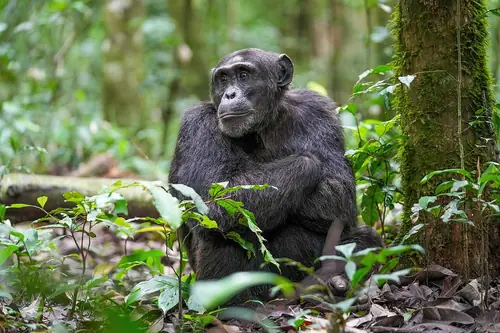
Several dozen gorilla families have been habituated to human presence here, spread across four sectors: Buhoma in the north, Ruhija in the east, Rushaga and Nkuringo in the south. Once the family has been found, after a walk that can last anywhere from forty-five minutes to several hours, visitors spend an hour with the gorillas: a silverback placidly chewing leaves, youngsters wrestling, a mother grooming her baby. Bwindi is also home to chimpanzees, many monkeys and birds endemic to the Albertine Rift. The Batwa, the forest's former inhabitants, tell its story.
Getting there
From Kampala, allow eight to ten hours by road depending on the sector, or take a domestic flight to the airstrips at Kihihi for the north or Kisoro for the south, followed by a transfer. From Kigali, in Rwanda, the southern sectors are only about four to five hours' drive away, which is a practical option.
Frequently asked questions
What is the minimum age for gorilla trekking in Bwindi?
The minimum age set by the Uganda Wildlife Authority is 15. The rule is partly there to protect the gorillas from disease, to which they are highly vulnerable. For the same reason, visitors who are unwell may be refused.
How long do you spend with the gorillas in Bwindi?
Once the family is found, the encounter is limited to one hour, with a maximum of eight visitors per family per day. The walk in, however, can take anything from under an hour to most of the day. There is also a longer habituation experience with a family that is still being habituated.
Which sector of Bwindi should you choose?
Permits are issued for a specific sector: Buhoma, Ruhija, Rushaga or Nkuringo. Buhoma in the north is easily reached via the Kihihi airstrip, while Rushaga and Nkuringo in the south are closer to Kisoro and Kigali. Book your accommodation in the same sector as your permit, as journeys between sectors are long.
When is the best time for gorilla trekking in Bwindi?
Treks run all year, but the drier seasons, June to August and December to February, make the trails less slippery. Rain can fall at any time in this mountain forest, so always bring a waterproof. Permits sell out fast in high season.
Is Bwindi safe for travellers?
Caution is needed, but treks are tightly supervised: France's foreign ministry places Bwindi under heightened vigilance and asks visitors to stay on the trails, always with a guide or ranger, which is how treks led by armed Uganda Wildlife Authority rangers work. Outside the parks, France advises against all travel near the border with the Democratic Republic of the Congo, and the UK government notes that terrorist attacks have occurred in western Uganda near that border, including in national parks. Check official travel advice just before you go, including on the Ebola outbreak in the neighbouring DRC, and never cross into the DRC.
 Kenya
 Rwanda