 AfriqueUnie
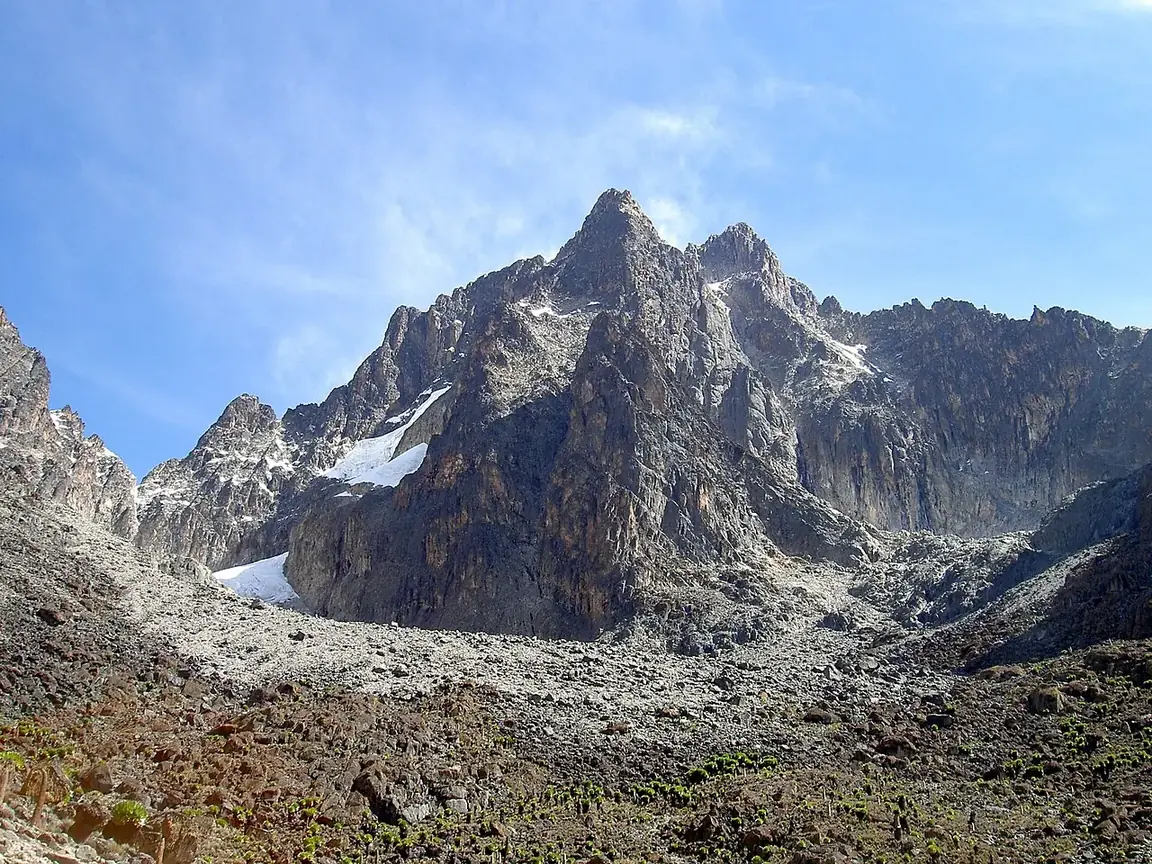 Photo: Chris 73 · CC BY-SA 3.0
Published by Adama Doumbia, founder of Afrique Unie · updated 28 November 2026 · our method and sources
Why go
Straddling the equator about 150 kilometres north of Nairobi, Mount Kenya is an eroded former volcano whose jagged peaks make it Africa's second-highest mountain after Kilimanjaro. Its highest point, Batian, reaches 5,199 metres, closely followed by Nelion; these two summits are reserved for experienced climbers. The national park and surrounding forest have been a UNESCO World Heritage Site since 1997, and the mountain is sacred to the Kikuyu, who saw it as the home of their god Ngai.
For walkers, the goal is Point Lenana, at 4,985 metres, which can be reached without climbing skills. The ascent crosses spectacular bands of vegetation: montane forest where elephants and buffalo live, a belt of bamboo, moorland of giant heather, then high valleys full of giant lobelias and groundsels, strange plants found only on the high mountains of East Africa. Glacial lakes and shrinking glaciers complete a setting far less crowded than Kilimanjaro.
Getting there
The main routes start near Nanyuki, Naro Moru and Chogoria, about three to four hours by road from Nairobi. Three routes take most walkers: Sirimon in the north-west, Naro Moru in the west, the most direct, and Chogoria in the east, considered the most beautiful. Allow four to six days in general, often going up one route and down another. A licensed guide is essential, with porters and a cook, nights in huts or under canvas.
Frequently asked questions
Do you need to be a mountaineer to climb Mount Kenya?
No, if your goal is Point Lenana at 4,985 metres, which can be reached without technical climbing. The two highest peaks, Batian (5,199 metres) and Nelion (5,188 metres), do require real mountaineering experience. Good fitness is still essential for Lenana.
How many days does it take to reach Point Lenana?
Generally four to six days, often going up one route and down another. The three most used routes are Sirimon, Naro Moru and Chogoria. An extra acclimatisation day greatly improves your chances of reaching the top.
Do you need a guide to hike on Mount Kenya?
In practice a licensed guide is essential, with porters and a cook for nights in huts or tents. Hikers must sign in at the park gate and sign out on leaving, and gates normally open from 6 am to 6 pm. Check the current rules with the Kenya Wildlife Service before you go.
Is altitude sickness a risk on Mount Kenya?
Yes, acute mountain sickness is common, especially on short itineraries that climb too fast above 4,000 metres. Ascend gradually, drink plenty and descend at the first serious symptoms, such as a severe headache, vomiting or confusion. Make sure your insurance covers high-altitude trekking.
Is Mount Kenya safe for hikers?
According to France Diplomatie, the Mount Kenya area is under increased vigilance, like most of the country. However, France Diplomatie reports police operations and curfews in parts of Laikipia County, where it recommends limiting travel, and the UK government reports security operations in parts of Laikipia and Meru counties, where some trailheads lie, so check before you set off. Do not drive outside towns at night and avoid matatu minibuses.

 Ethiopia
 Tanzania
 Algeria
 Angola