AfriqueUnie
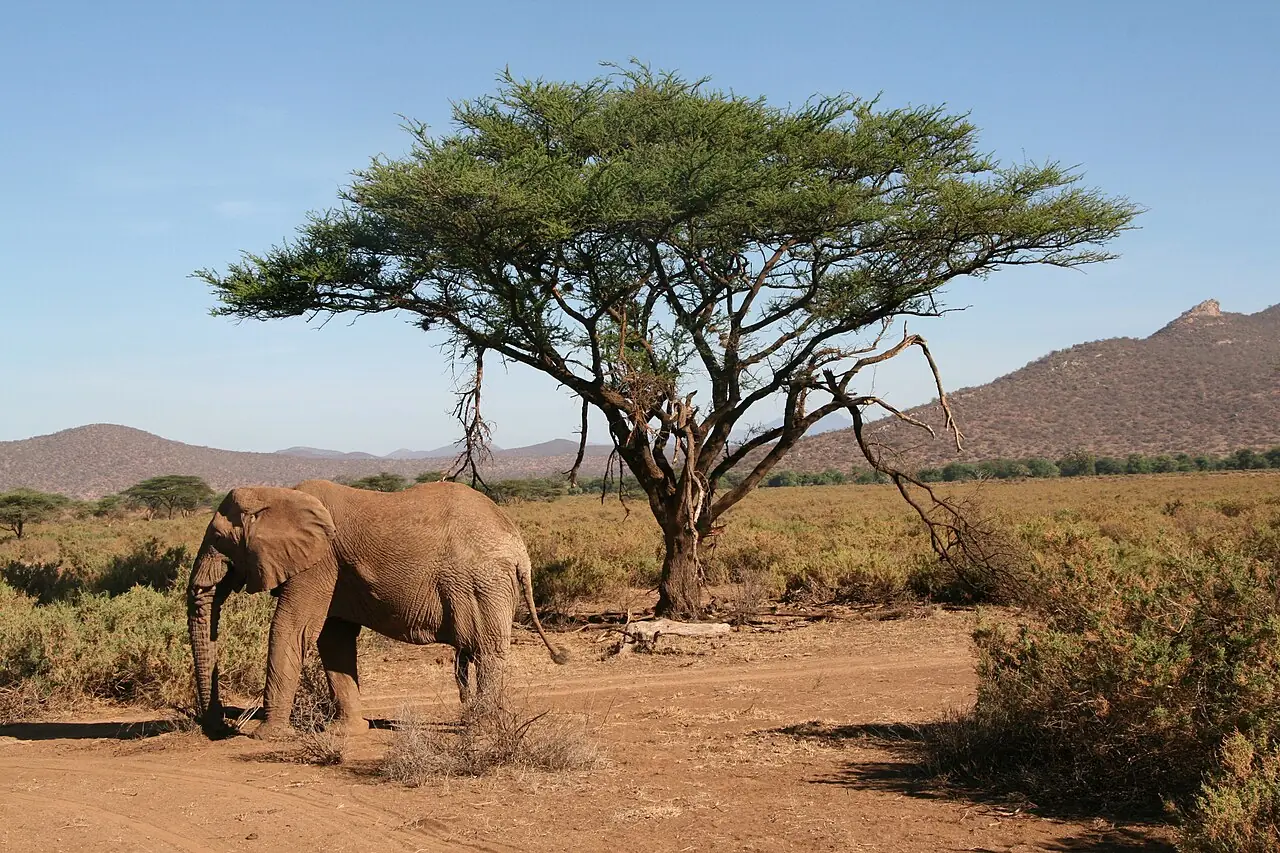 Photo: Daniel Fafard (Dreamdan) · CC BY-SA 3.0
Published by Adama Doumbia, founder of Afrique Unie · updated 28 November 2026 · our method and sources
Why go
North of Mount Kenya, where the highlands give way to dry red earth bristling with acacias and doum palms, Samburu National Reserve borders the Ewaso Ng'iro river. This green ribbon in an arid landscape draws wildlife all year round, especially in the dry season, when elephants, buffalo and antelope come down to drink at the water's edge. Together with the neighbouring Buffalo Springs and Shaba reserves, it forms an area far less crowded than the Masai Mara.
Samburu is famous for its "Special Five", drought-adapted species rarely seen in the southern parks: the finely striped Grevy's zebra, the reticulated giraffe, the Somali ostrich with its bluish legs, the beisa oryx and the gerenuk, a long-necked gazelle that stands on its hind legs to browse. Lions, leopards and cheetahs are also present. The region is the land of the Samburu, herders related to the Maasai, recognisable by their colourful beaded ornaments.
Getting there
The reserve lies about 350 kilometres north of Nairobi, five to six hours on tarred roads via Nanyuki and Isiolo. Scheduled and charter flights link Nairobi's Wilson Airport with the reserve's airstrips in a little over an hour. Most lodges and tented camps are lined up along the river. Samburu combines well with Mount Kenya, Ol Pejeta or the Laikipia conservancies. Check the situation before you go: France Diplomatie reports police operations and curfews in parts of Samburu and Laikipia counties, where it recommends limiting travel, as well as conflicts between farmers and herders around Archer's Post, the gateway to the reserve.
Frequently asked questions
Is Samburu National Reserve safe?
The reserve is not in an area advised against, but caution is needed in northern Kenya. France Diplomatie reports police operations and curfews in parts of Samburu County, where it recommends limiting travel, as well as recurring conflicts between farmers and herders around Archer's Post, the gateway to the reserve; it also advises against all but essential travel to outlying parts of Isiolo County. Stay within the reserve and your accommodation, travel by day and check the situation before you go.
How do you get from Nairobi to Samburu?
By road, allow five to six hours on tarmac via Nanyuki and Isiolo, travelling in daylight. Scheduled and charter flights link Nairobi's Wilson Airport with the reserve's airstrips in just over an hour. France Diplomatie strongly advises against driving outside towns at night.
What are Samburu's "Special Five"?
They are five species adapted to the dry north and rarely seen in the southern parks: Grevy's zebra, the reticulated giraffe, the Somali ostrich, the beisa oryx and the gerenuk. They are mostly seen near the Ewaso Ng'iro River and in the acacia bush. Lions, leopards, cheetahs and elephants also live here.
Can you walk around inside Samburu National Reserve?
No, except in designated areas and with authorised staff. As in other Kenyan reserves, walking outside permitted areas and moving about at night are prohibited, so follow the rangers' instructions. The river is also home to many Nile crocodiles.
When should you go to Samburu and how many nights do you need?
The dry seasons, June to October and December to March, are best, as animals gather near the river. Allow at least two to three nights to see the species of the north. Midday heat is intense, so make the most of game drives at dawn and late afternoon.

 Rwanda
 Tanzania