 AfriqueUnie
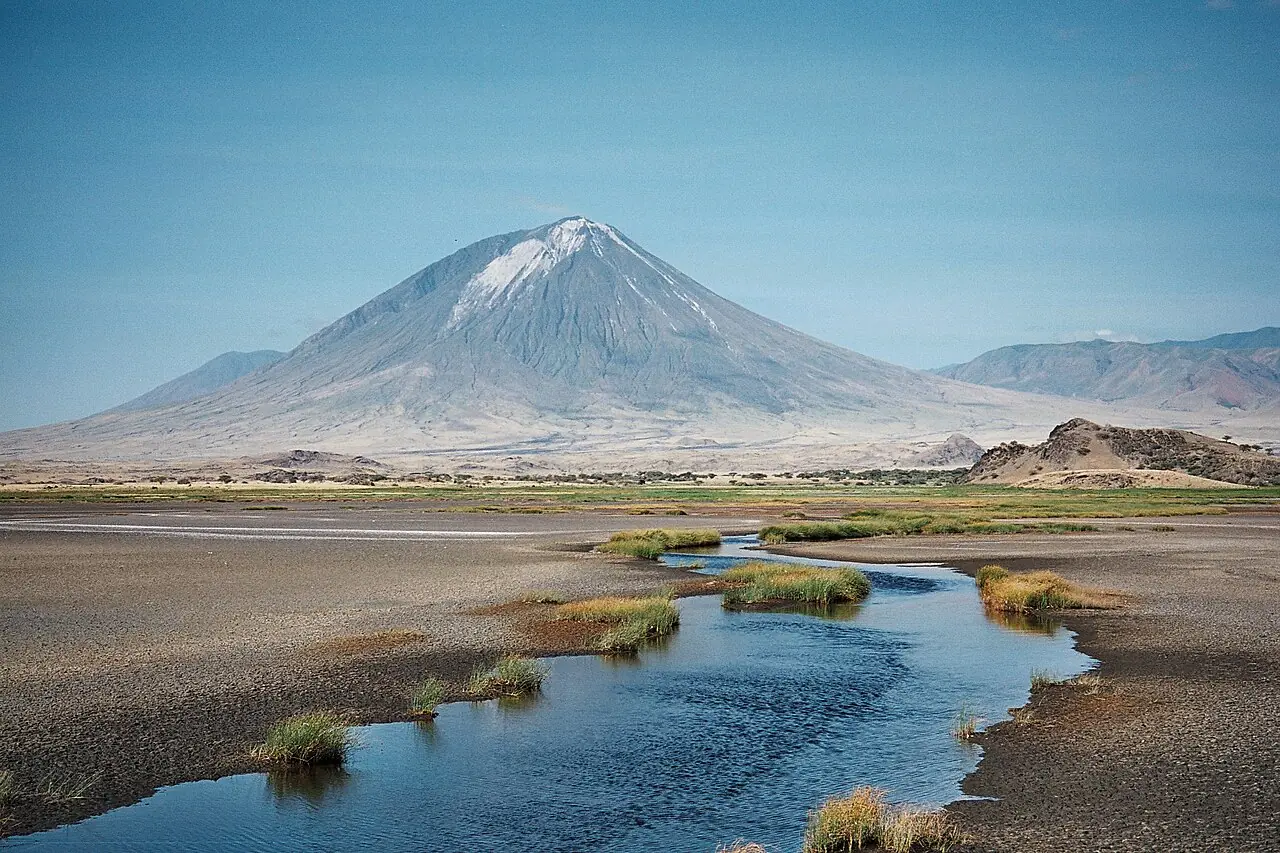 Photo: Clem23 · CC BY-SA 3.0
Published by Adama Doumbia, founder of Afrique Unie · updated 28 November 2026 · our method and sources
Why go
In the far north of Tanzania, at the bottom of the Rift Valley and up against the Kenyan border, Lake Natron is one of the strangest landscapes in East Africa. Shallow, less than three metres deep, it stretches for more than fifty kilometres between arid escarpments, in heat that often exceeds 40 °C. Evaporation concentrates natron and other sodium salts, to the point that the water's pH can approach 12. In the dry season, microorganisms that thrive in this brine tint the water and the salt crusts red, orange and pink.
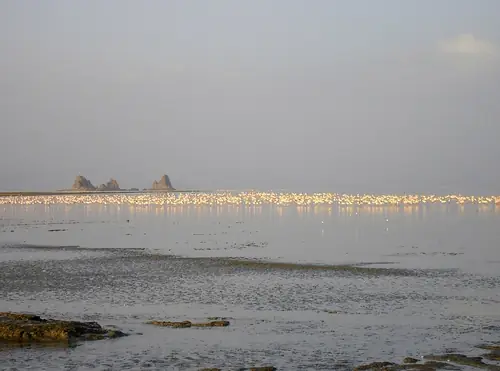
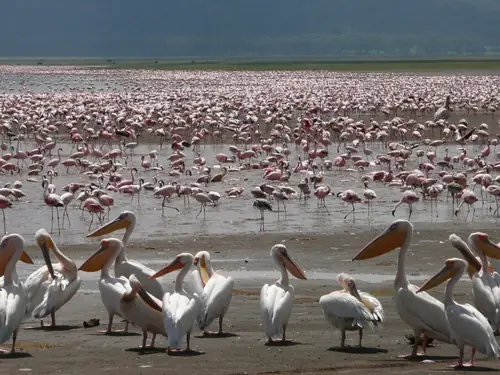
Yet this hostile environment is vital for the lesser flamingo: the lake is the species' only regular breeding site in East Africa, and an estimated three quarters of the world's lesser flamingos are born here. The birds nest on salt islands in the middle of the lake, protected from predators by the caustic water, and come to feed on algae along the shores. The Lake Natron Basin has been listed as a wetland of international importance under the Ramsar Convention since 2001.
South of the lake rises Ol Doinyo Lengai, the Maasai “Mountain of God”, an active volcano of almost 2,960 metres and the only active volcano known to erupt natrocarbonatite lavas, which turn white as they cool. Near the village of Engare Sero, a vast slab of hardened mud preserves more than 400 human footprints several thousand years old, the largest such collection known in Africa. The area, home to Maasai herders, is best explored on foot, from the lakeshore to the waterfalls of a nearby gorge.
Getting there
Allow about five to six hours by road from Arusha: the tarred road to Mto wa Mbu, near Lake Manyara, then a long, dusty and bumpy track through the Rift that requires a 4x4. The lake can also be part of a circuit coming from the Serengeti in the north, on remote tracks. Campsites and lodges are mostly around Engare Sero, at the southern end of the lake. Local fees are collected on entering the area.
Frequently asked questions
Can you see flamingos at Lake Natron all year round?
Flamingos are present for most of the year, but their numbers vary greatly with the water level and salinity, and breeding does not take place every year. The nesting colonies are far out in the middle of the lake and cannot be reached. The groups that feed near the shore, often near Engare Sero, can be watched on foot with a local guide.
How do you get to Lake Natron from Arusha?
Most travellers go by 4x4 with a driver, often as part of a northern Tanzania circuit. The journey takes about five to six hours: tarred road to Mto wa Mbu, then a long track through the Rift Valley.
Can you climb Ol Doinyo Lengai?
Yes, but it is a very demanding climb: you usually set off around midnight to reach the summit at sunrise, on steep slopes of ash and loose rock, and the descent is gruelling. It must be done with an experienced guide. The volcano is active, so check its recent activity before planning the climb.
How long should you spend at Lake Natron?
Two nights are ideal: a full day lets you walk out to the flamingos, follow the gorge to the waterfalls and see the Engare Sero footprints. Add a night if you climb Ol Doinyo Lengai, as you will need rest after the night ascent.
Can you swim in Lake Natron?
No: the water is highly alkaline, hot near the springs and irritating to skin and eyes. You can, however, cool off in the river's natural pools at the foot of the waterfalls in the nearby gorge, with a local guide. Also avoid walking barefoot on the shores and salt crusts.
 Burundi
 Djibouti
 Kenya