 AfriqueUnie
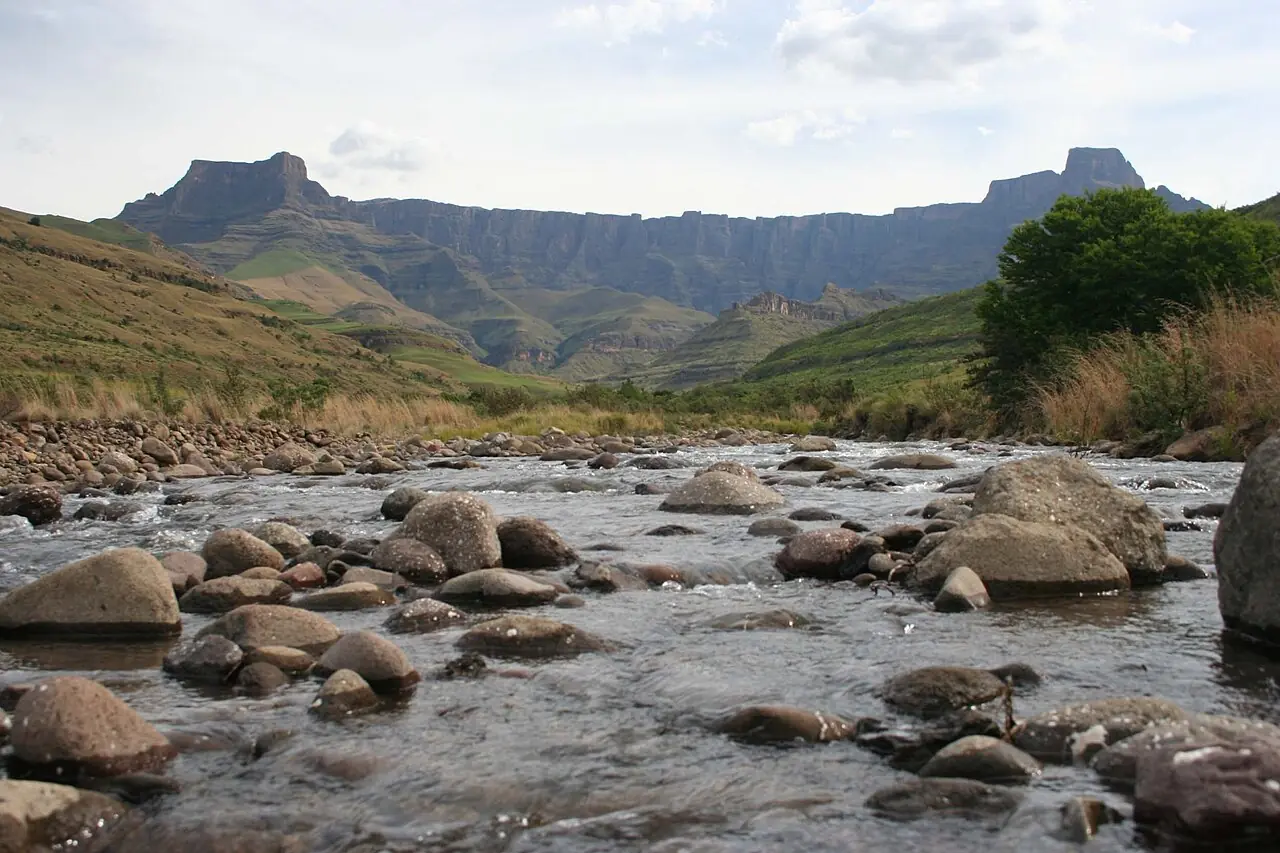 Photo: Bothar · Public domain
Published by Adama Doumbia, founder of Afrique Unie · updated 28 November 2026 · our method and sources
Why go
In western KwaZulu-Natal, along the border with Lesotho, the Drakensberg, "dragon mountain" in Afrikaans, known as uKhahlamba, "barrier of spears", in Zulu, raises a wall of basalt more than 3,000 metres high above the green foothills. The uKhahlamba-Drakensberg Park has been a UNESCO World Heritage Site since 2000, for both its landscapes and its cultural value; in 2013 the site was extended to Sehlabathebe National Park, on the Lesotho side, under the name Maloti-Drakensberg Park.
The north of the range is dominated by the Amphitheatre, a wall of cliffs about five kilometres long over which the Tugela Falls plunge, considered among the highest in the world. In the centre, the Cathedral Peak, Champagne Castle and Giant's Castle areas offer countless trails, waterfalls and natural pools, while bearded vultures glide above the ridges. Rock shelters hold thousands of paintings left by the San, hunter-gatherer peoples, showing eland, hunting scenes and rituals; some can be seen with a guide, notably at Giant's Castle and Kamberg.
Getting there
The Drakensberg is about three hours by road from Durban and four to five hours from Johannesburg. A car is essential to move between the different areas, each reached by its own access road from towns on the plain such as Bergville, Winterton or Underberg. Accommodation ranges from park camps run by Ezemvelo KZN Wildlife to lodges and guest farms. Sani Pass, in the south, leads up into Lesotho by 4x4.
Frequently asked questions
How can you see the Tugela Falls?
Two trails lead there. From Royal Natal National Park, the Tugela Gorge trail follows the river for about 7 kilometres to the foot of the Amphitheatre, finishing with some boulder-hopping. To reach the top of the falls, you start from the Sentinel car park, on the Free State side, on a high-altitude hike that includes two chain ladders. The falls are seasonal: they are far more impressive in summer, after the rains, than at the end of the dry winter.
Can you see the San rock paintings without a guide?
The main painted shelters open to the public, such as those at Giant's Castle and Kamberg, are visited with a guide, booked at the park office. These guided visits explain the meaning of the scenes and protect very fragile works. Never touch the paintings, never wet them to brighten the colours and do not use flash photography.
What is the best season for hiking in the Drakensberg?
Autumn (April to May) and spring (September to October) often offer the best balance of mild temperatures and settled weather. Summer, from November to March, is green and the waterfalls are in full flow, but thunderstorms break out almost every afternoon. Winter, from June to August, is dry and bright, with freezing nights and possible snow on the peaks.
Can you drive into Lesotho via Sani Pass?
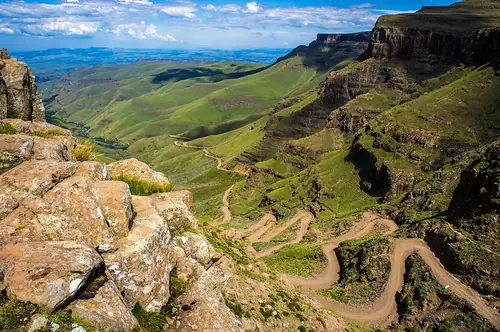
Yes, the Sani Pass road links the southern Drakensberg with Lesotho, with a border post on each side, so you will need your passport. The lower section of the road is now tarred, but the final climb to the pass is still a very steep gravel track, restricted to 4x4 vehicles on the South African side; many visitors choose an organised excursion from Underberg or Himeville. The border posts only open during the day and the pass can be closed by snow or ice in winter, so check conditions before you set off.
Is it safe to hike alone in the Drakensberg?
It is best avoided: official advice for South Africa recommends hiking in a group rather than alone. In the mountains the weather changes very quickly, mist and storms can be disorientating, and there is often no mobile signal. Sign the mountain register at the park office before any long hike and carry gear for cold and rain.

 Lesotho
 Malawi
 Algeria
 Angola