 AfriqueUnie
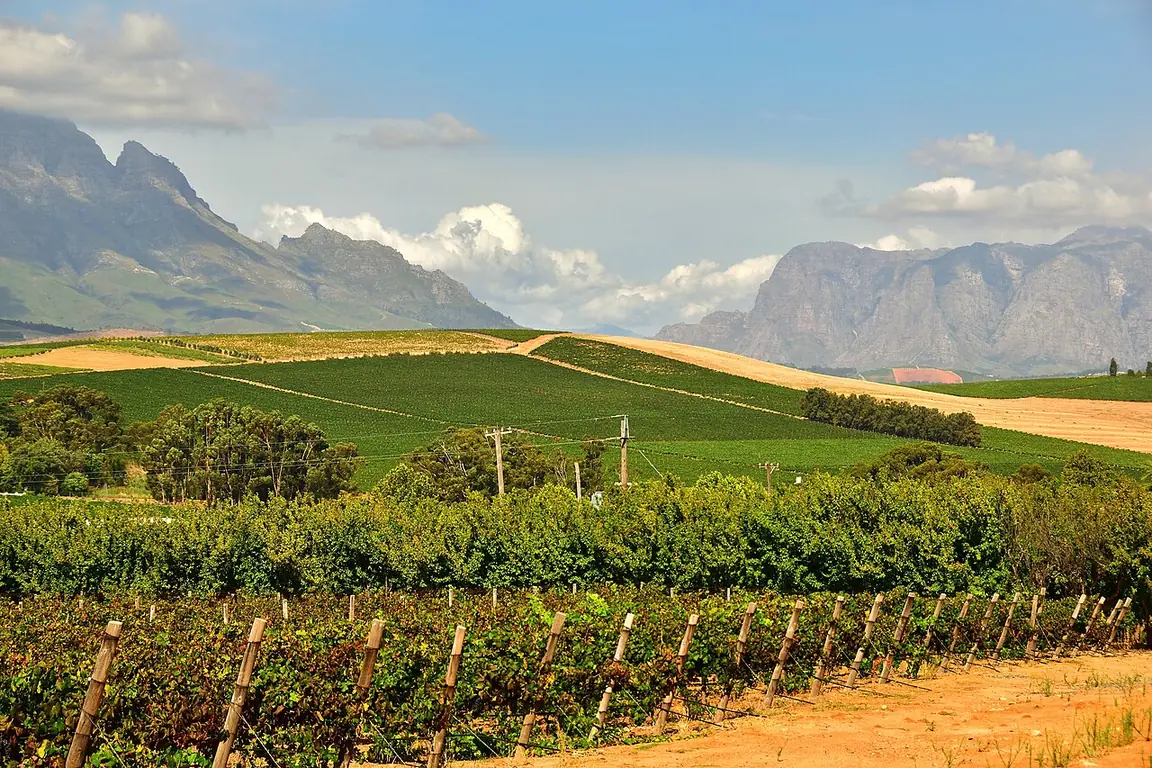 Photo: Matthias Bethke · CC BY-SA 4.0
Published by Adama Doumbia, founder of Afrique Unie · updated 28 November 2026 · our method and sources
Why go
Around fifty kilometres east of Cape Town, Stellenbosch is the historic heart of the Winelands, the great wine region of the Western Cape. Founded in 1679 by Simon van der Stel, then head of the Cape Colony, who gave it his name, it is the second-oldest town in South Africa. Its streets lined with centuries-old oaks earned it the nickname Eikestad, “City of Oaks” in Afrikaans. All around, vineyards cover the valleys right up to the foot of rugged mountains such as the Simonsberg and the peaks of Jonkershoek.
A Mediterranean climate of hot, dry summers and cool, wet winters, together with a wide range of soils, from light sands to decomposed granite, makes the area some of the finest wine country in South Africa. The arrival of French Huguenots from 1688 onwards helped wine growing take off in the colony. It was at Stellenbosch University that Professor Abraham Perold created Pinotage in the 1920s, a cross between Pinot Noir and Cinsaut that became South Africa's signature grape. The region is also known for its red wines based on Cabernet Sauvignon.
The Stellenbosch Wine Route, founded in 1971, links dozens of estates that welcome visitors for tastings, often in Cape Dutch farmhouses with whitewashed walls and ornate gables. In town, Dorp Street is lined with fine old houses, and the Stellenbosch Museum opens several historic homes, including the Blettermanhuis, built in 1789. The Moederkerk, the Dutch Reformed church with its pointed spire, and the shady terraces of the centre round off a day that is about more than wine.
Getting there
Stellenbosch is about fifty kilometres from central Cape Town, roughly 45 minutes to an hour by road depending on traffic, and Cape Town International Airport is on the way. A hire car is the most flexible way to move between estates, but the driver must not drink: choose a driver, an organised day tour or the tourist shuttles that link several estates instead. Franschhoek and Paarl, the other two great valleys of the Winelands, are about half an hour away by road.
Frequently asked questions
How much time do you need for the Stellenbosch Winelands?
A day trip from Cape Town is enough to see the town and three or four estates. Two or three nights let you take your time, hike in the Jonkershoek mountains and also explore Franschhoek and Paarl. Many travellers fit a stay here between Cape Town and the Garden Route.
When is the best time to visit Stellenbosch?
The vineyards can be visited all year round. The southern summer, from November to March, is hot and dry, with the harvest in February and March and a lively atmosphere. Autumn, from April to May, brings golden colours and milder temperatures. Winter, from June to August, is cool and rainy, but the estates are quieter.
Can you visit the wine estates without a car?
Yes, and it is the wiser choice if you are tasting. Day tours leave from Cape Town, drivers can be booked by the hour or the day, and tourist shuttles link several estates around the town. Some visitors also cycle between the nearby vineyards.
Do you need to book wine tastings in Stellenbosch?
It is strongly recommended, especially at weekends, during South African school holidays and for meals at the estates. Opening hours and tasting options vary from one estate to another, so check their websites before you go. Some close or shorten their hours on certain days of the week.
What is there to see in Stellenbosch besides wine?
Stroll along Dorp Street and around the Braak, the town's large square, and visit the historic houses of the Stellenbosch Museum and the Moederkerk. Jonkershoek Nature Reserve, a few minutes from the centre, has hiking trails among mountains, waterfalls and fynbos. The university and its old buildings also give the town a lively student atmosphere.



 Eswatini
 Algeria
 Benin
 Burundi