 AfriqueUnie
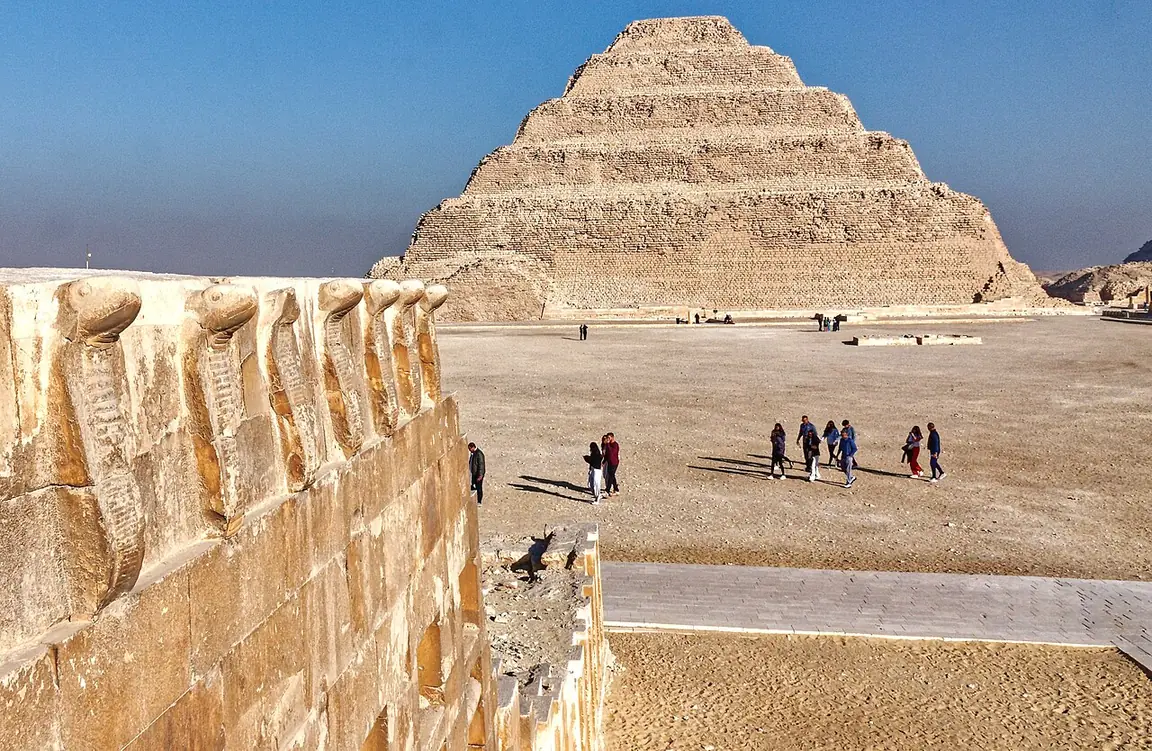 Photo: Holger Uwe Schmitt · CC BY-SA 4.0
Published by Adama Doumbia, founder of Afrique Unie · updated 28 November 2026 · our method and sources
Why go
Some thirty kilometres south of Cairo, on the edge of the desert overlooking the Nile Valley, Saqqara was for centuries the great necropolis of Memphis, the first capital of unified Egypt. The site stretches for about seven kilometres and holds tombs from every period, from the earliest dynasties to Graeco-Roman times. Together with Giza, Abusir and Dahshur, it is part of “Memphis and its Necropolis – the Pyramid Fields from Giza to Dahshur”, inscribed on the UNESCO World Heritage List in 1979.
Its star monument is the Step Pyramid of Pharaoh Djoser, built in the 27th century BC under the Third Dynasty, roughly a century before the Great Pyramid of Khufu. It is the first Egyptian pyramid and the country's oldest monumental building in cut stone: until then, royal tombs were made of mud brick. The architect Imhotep, later deified, stacked six tiers to reach an original height of about 62 metres. The pyramid stands at the heart of a vast funerary complex ringed by a niched enclosure wall, with a ceremonial court, dummy chapels and a frieze of rearing cobras. After a fourteen-year restoration, its interior reopened to visitors in 2020.
Beyond Djoser, Saqqara rewards a longer stay. The Pyramid of Unas, the last king of the Fifth Dynasty, was the first to be inscribed with the Pyramid Texts, religious spells carved on the walls of the burial chamber. The mastabas of high officials, such as those of Ti, Mereruka and Ptahhotep, preserve exceptionally fine reliefs of daily life: fishing, herding, crafts and banquets. The Serapeum, discovered by Auguste Mariette in 1850, lines its underground galleries with gigantic sarcophagi made for the Apis bulls. At the entrance to the site, the Imhotep Museum, opened in 2006, displays objects found on site.
Getting there
Saqqara lies about 30 kilometres south of central Cairo, in Giza Governorate. There is no practical public transport to the site: come by taxi, ride-hailing app or with a driver hired for the day, allowing around an hour depending on traffic. From the Giza plateau, the drive usually takes less than an hour. Many travellers combine Saqqara in a single day with the remains of Memphis at Mit Rahina, including the reclining colossus of Ramesses II, and the Bent and Red Pyramids of Dahshur, a little further south.
Frequently asked questions
Is the Pyramid of Djoser older than the Giza pyramids?
Yes. It was built in the 27th century BC, during the reign of Djoser in the Third Dynasty, about a century before the Great Pyramid of Khufu. It is the first Egyptian pyramid and Egypt's first large building in cut stone. Its steps show the stage that led to the smooth-sided pyramids of Dahshur and then Giza.
Can you go inside the Pyramid of Djoser?
Yes, since it reopened in March 2020, after a restoration that began in 2006. The interior visit may require an extra ticket and lets you see the corridors and the burial shaft. Access conditions can change, so check at the ticket office on the day of your visit.
How do you get to Saqqara from Cairo?
The easiest option is to book a taxi, a ride-hailing car or a car with driver for the day, as the site is not served by public transport. Allow about an hour from central Cairo depending on traffic. An organised tour also lets you combine Saqqara with Memphis and Dahshur.
How long does it take to visit Saqqara?
Allow three to four hours for the Djoser complex, the Pyramid of Unas, a few mastabas and the Imhotep Museum, more if you add the Serapeum. With Memphis and Dahshur, plan a full day, leaving early to avoid the heat.
What else is there to see at Saqqara besides the Step Pyramid?
Do not miss the mastabas of Ti, Mereruka or Ptahhotep for their reliefs of daily life, the Pyramid of Unas and its Pyramid Texts, the Serapeum and its giant sarcophagi, and the Imhotep Museum at the entrance. The tombs open to visitors vary with conservation work.

 Algeria
 Morocco
 Tunisia