AfriqueUnie
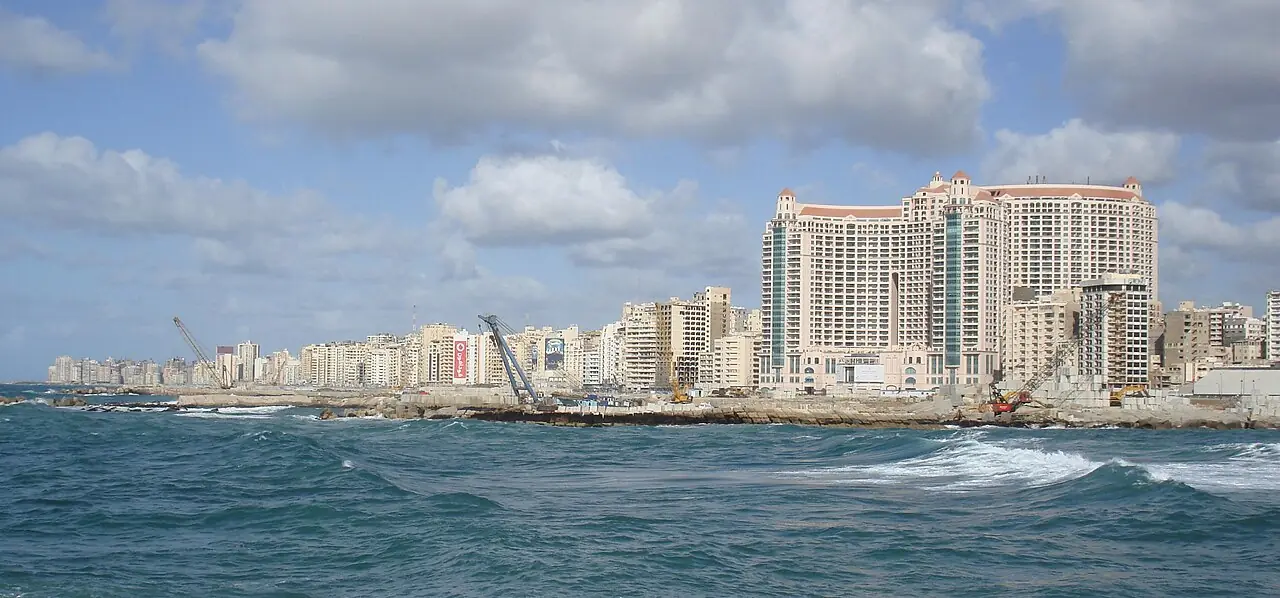 Photo: TheEgyptian · CC BY-SA 3.0
Published by Adama Doumbia, founder of Afrique Unie · updated 28 November 2026 · our method and sources
Why visit Alexandria?
Founded by Alexander the Great in 331 BC, Alexandria was for centuries the capital of Ptolemaic Egypt, the city of Cleopatra, of the Lighthouse, one of the Seven Wonders of the World, and of the Great Library, the intellectual centre of the ancient world. Little of that splendour remains visible, as the modern city was built on top of it and part of the ancient city sank beneath the sea. But Alexandria's cosmopolitan spirit has survived.
In the 19th and early 20th centuries the city was a melting pot of Greeks, Italians, Jews, Armenians, Levantines and Egyptians, an atmosphere celebrated by the poet Constantine Cavafy and the novelist Lawrence Durrell. The crumbling façades of the centre, the old cafés and the European-style pastry shops still bear its traces. The long corniche, which follows the bay for kilometres, is the heart of Alexandrian life.
As for sights, the Bibliotheca Alexandrina, opened in 2002, pays tribute to its illustrious predecessor with its tilted-disc architecture. The Citadel of Qaitbay stands on the supposed site of the Lighthouse. The catacombs of Kom el-Shoqafa, mixing Egyptian and Graeco-Roman styles, Pompey's Pillar and the National Museum complete the tour. And everywhere, fresh fish and seafood.
Things to do in Alexandria: 6 ideas
- 01The Bibliotheca AlexandrinaA library, museums, a planetarium and exhibitions in a spectacular building facing the sea.
- 02The Citadel of QaitbayA 15th-century Mamluk citadel built on the supposed site of the ancient Lighthouse.
- 03The catacombs of Kom el-ShoqafaAn astonishing underground necropolis where Egyptian gods wear Roman dress.
- 04The corniche at sunsetA stroll along the bay among fishermen, families and sellers of grilled corn.
- 05The old cafés and pastry shopsThe city centre still has historic establishments where you take coffee as in the early 20th century.
- 06A fish supperChoose your fish from the counter, then have it grilled or fried the Alexandrian way.
A little history
Alexander the Great founded the city in 331 BC beside Rhakotis, a fishing village. Under the Ptolemies, Alexandria became the capital of Egypt and one of the largest cities in the Mediterranean: the lighthouse on the island of Pharos guided ships in, while the Mouseion and its library drew scholars and copyists. After Cleopatra's death in 30 BC it came under Rome, then Byzantium, and remained a major centre of Christianity until the Arab conquest in the mid-7th century.
Overshadowed by Cairo, the city declined in the Middle Ages; an earthquake finished off the lighthouse, whose stones Sultan Qaitbay reused for his fort around 1480. In the 19th century Muhammad Ali revived the port and linked it to the Nile with the Mahmoudiya Canal, and Greek, Italian and Levantine merchants poured in. Bombarded by the British fleet in 1882, the city was where Nasser announced the nationalisation of the Suez Canal in 1956, after which many of the foreign communities left. Today, the ancient city is mostly found underground and under the sea.
What to eat in Alexandria
Alexandria looks to the sea: grilled or fried fish, prawns, squid and sayadeya, brown rice cooked in fish stock with caramelised onions, are the classics. People often choose their fish by weight from the counter, especially around Anfushi and the fishing harbour, and have it cooked on the spot. The most Alexandrian street food is kebda eskandarani, beef liver fried with garlic, chilli and cumin and served in bread.
In the morning, ful (slow-cooked fava beans) and taameya, Egypt's fava-bean falafel, are eaten standing up at stalls in the centre. Pastries inherited from the Greek and Italian communities, roz bel laban (rice pudding) and om ali make an afternoon treat. To drink, there is tea, Turkish coffee, karkadé (hibiscus tea) and freshly squeezed fruit juice; alcohol is only served in a handful of licensed places.
Where to stay in Alexandria
The historic centre, around Saad Zaghloul Square and Raml Station, lets you do everything on foot and has old hotels with views over the bay. Further east, the residential districts along the corniche, as far as Montaza and its park, suit those looking for peace and the beach. In summer the city is overrun by Egyptian holidaymakers.
Getting there and getting around
Alexandria International Airport, known as Borg El Arab until 2025, is about 40 km south-west of the centre: allow close to an hour by taxi or pre-booked transfer. Many travellers fly into Cairo (CAI) instead and take the train from Ramses station, which takes two and a half to three hours to Misr station or Sidi Gaber.
In town, the tram runs along the coast, taxis are everywhere and ride-hailing apps work well; agree the fare in advance in a taxi without a meter. The currency is the Egyptian pound: cards are accepted in hotels and larger shops, but keep cash for cafés, markets and tips.
French official advice places Alexandria in its heightened-vigilance zone, and the UK Foreign Office does not list it among the areas it advises against; both urge caution about the risk of terrorism in busy places and recommend avoiding gatherings. Spring and autumn are the best seasons; summer is hot, humid and crowded, and winter windy and sometimes rainy.
See places to stay in Alexandria
Frequently asked questions
How many days do you need in Alexandria?
One day covers the Bibliotheca Alexandrina, Qaitbay Citadel and the Kom el-Shoqafa catacombs, but two days let you enjoy the corniche, the old cafés and a fish lunch without rushing. Add a day for El Alamein or Rosetta.
Can you do Alexandria as a day trip from Cairo?
Yes: trains leave from Ramses station and take about two and a half to three hours. Set off early and focus on two or three sights, as distances along the bay are long. Staying the night is more relaxing.
When is the best time to visit Alexandria?
Spring (March to May) and autumn (September to November) bring mild temperatures and pleasant sea conditions. In July and August the city fills with Egyptian holidaymakers and the humidity is high. Winter is mild but windy, with storms that whip up the corniche.
What is there to see around Alexandria?
To the west, El Alamein, scene of decisive Second World War battles, has war cemeteries and a museum. To the east, Rosetta (Rashid), where the famous stone was found, keeps some fine Ottoman houses. The gardens of Montaza, on the eastern edge of the city, also make for a quiet half-day.
 Egypt