AfriqueUnie
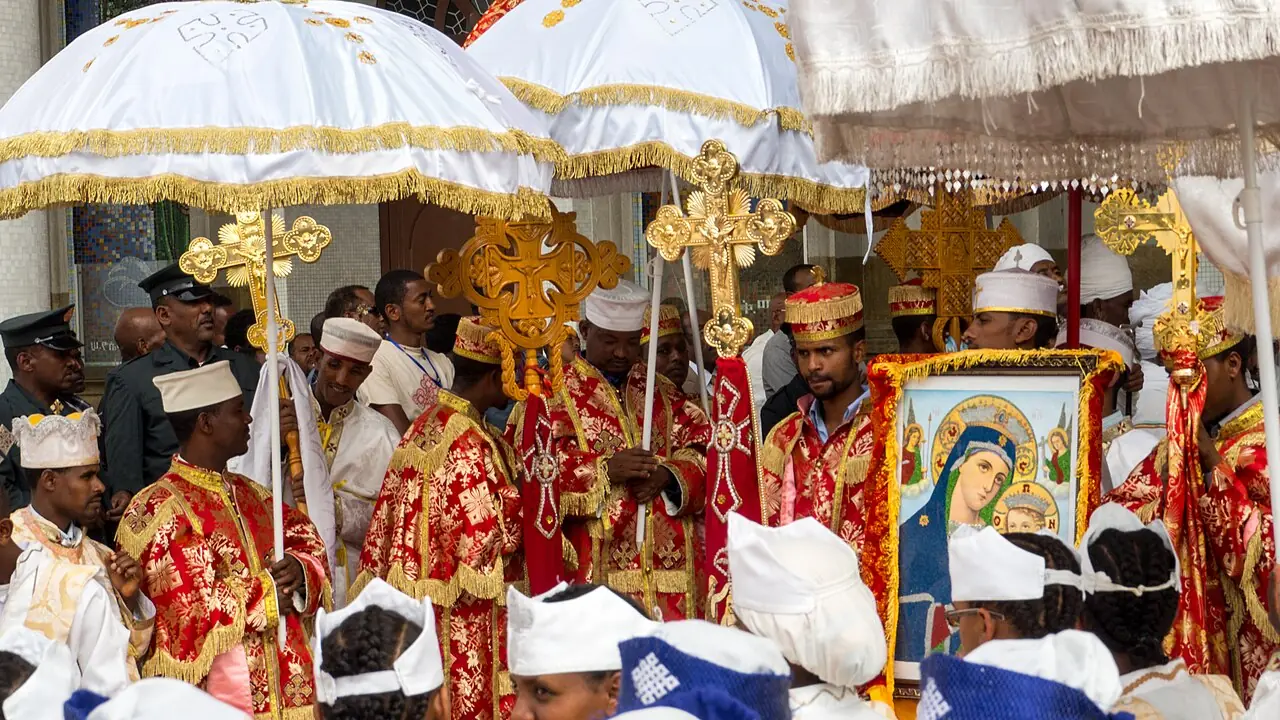 Photo: Jean Rebiffé · CC BY 4.0
Published by Adama Doumbia, founder of Afrique Unie · updated 28 November 2026 · our method and sources
Before you go: what to know
Most of the great Muslim pilgrimages follow the lunar calendar: their date moves about eleven days earlier each year in the Gregorian calendar and is only confirmed after the sighting of the crescent moon, a few days or a few weeks before. We therefore only give a 2027 date when it is fixed or published by an official source; otherwise we use the estimated date from our 2027 public holidays list and say so.
These gatherings draw enormous crowds: gridlocked roads, packed transport and accommodation booked out. Respectful visitors are welcome, but these are religious occasions: covering clothes, discretion during prayers, photos only with people's consent. Official advice from the UK and France also urges caution in large crowds, and some pilgrimages take place in areas currently advised against: we flag this for each one.
The Grand Magal of Touba (Senegal)
The Grand Magal is the great annual pilgrimage of the Mouride brotherhood, founded by Cheikh Ahmadou Bamba. It commemorates the founder's departure into exile, when he was deported to Gabon by the French colonial administration in 1895, and takes place on the 18th of the Islamic month of Safar in Touba, the Mourides' holy city in central Senegal. Pilgrims come to pray at the Great Mosque of Touba and the mausoleum of Cheikh Ahmadou Bamba, and are hosted by the city's families. Each year the Senegalese press reports organisers' estimates that run into the millions of visitors.
When? The 2027 Magal will fall on 18 Safar 1449. Our 2027 public holidays list estimates it for 23 July 2027, a date that remains a projection. The official date is known after the sighting of the crescent that opens the month of Safar: in 2026 the crescent was sighted on 15 July and the Magal was held on 2 August, about two and a half weeks later.
Getting there: from Dakar and Blaise Diagne International Airport, Touba is reached by road, notably via the Ila Touba motorway. During the Magal, roads and transport are gridlocked for several days, in both directions. Touba has a special status: alcohol and tobacco are banned there. Bring covering clothes, water and patience, as the Magal falls in the rainy season and the hot season.
Safety: Touba and Tivaouane are not in the areas France advises against, although France reports pickpockets at large gatherings. The UK points out that traffic becomes much heavier before and during religious festivals. Areas near the Malian border and parts of Casamance remain advised against except for essential travel.
The Gamou of Tivaouane (Senegal)
The Gamou is the Tijaniyya brotherhood's celebration of the Prophet's birthday (Mawlid) in Tivaouane, in the Thiès region. It was instituted by Seydi El Hadji Malick Sy in the early 20th century (in 1902 according to the daily Le Soleil). During the first ten nights of the month of Rabi al-Awwal, the faithful recite the Burda, Imam al-Busiri's famous poem in praise of the Prophet; the great night of the Gamou is its climax. Other towns in Senegal also celebrate the Mawlid.
When? According to our 2027 public holidays list, the Mawlid is expected around 14 or 15 August 2027 (15 August in Senegal), an estimated date that depends on the sighting of the moon. The night of the Gamou comes before the public holiday. The official date is announced after the sighting of the crescent of the month of Rabi al-Awwal.
Getting there: Tivaouane is reached by road from Dakar, via Thiès. As with the Magal, expect very busy roads and scarce accommodation: most pilgrims are hosted by families or dahiras (associations of the faithful). The same rules on dress and discretion apply, and the same advice on vigilance in crowds.
Namugongo Martyrs' Day (Uganda, 3 June)
Every 3 June, a public holiday in Uganda, vast crowds gather at Namugongo, on the outskirts of Kampala, to honour the Uganda Martyrs: young Catholic and Anglican Christians, many of them pages at the court of Kabaka (King) Mwanga II of Buganda, who were killed between 1885 and 1887 for refusing to renounce their faith. Many were burned alive at Namugongo on 3 June 1886. The 22 Catholic martyrs were canonised by Pope Paul VI on 18 October 1964.
A Catholic basilica, raised to the rank of minor basilica in 1993, stands on the site of the martyrdom, and the Anglican Church of Uganda also has its shrine at Namugongo. Paul VI came in 1969, John Paul II in 1993 and Francis in 2015. Many pilgrims walk for days or even weeks from every part of Uganda and from neighbouring countries, and some camp on site for more than a week before the day. Organisers and the press put attendance in the millions, but estimates vary widely.
When? The date is fixed: Thursday 3 June 2027. Getting there: via Entebbe International Airport, then by road to Kampala and Namugongo, with huge traffic jams on pilgrimage days.
Safety: the UK considers terrorist attacks very likely in Uganda, lists major gatherings, including religious events, among possible targets and advises avoiding large gatherings of any kind in the country. It notes that an explosion took place on 3 June 2025 near the Catholic basilica in Munyonyo, Kampala, where the martyrs had been sentenced. France places Kampala under heightened vigilance and reports the Ebola epidemic that affected Uganda and the DRC, with stricter health checks. If you are considering going, read this advice just before you leave and follow the instructions of the local authorities.
Timkat and Meskel (Ethiopia)
The two great festivals of the Ethiopian Orthodox Church, both on UNESCO's intangible cultural heritage list, each have their own page in our events calendar. Timkat, the Epiphany, falls on 19 January 2027, with the Ketera vigil on the 18th: processions in white, tabots carried to the water and a blessing at dawn. Meskel, the Finding of the True Cross, falls on 28 September 2027, with the great Demera bonfire lit the evening before, on the 27th, in Addis Ababa's Meskel Square.
Be aware: Gondar and Lalibela, famous for their Timkat celebrations, are in the Amhara region, where the UK and France advise against all travel because of fighting, as they do for Tigray. Addis Ababa remains the most accessible place to experience these festivals. The UK considers attacks very likely in Ethiopia, including at religious events, and France reports many assaults around Meskel Square: do not go alone, keep your belongings close and go back by car.
Other great gatherings to know about
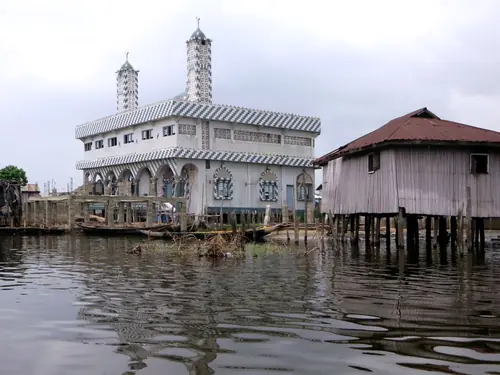
- Vodun Festival (Ouidah, Benin): Ceremonies, dances and processions celebrate the Vodun religions on the beach at Ouidah and across the country. In 2027 the Vodun Days run from 2 to 9 January, with public holidays on 7 and 8 January.
- Maha Shivaratri at Grand Bassin (Mauritius): Hundreds of thousands of Hindu pilgrims walk to the sacred lake of Grand Bassin. Hindu calendars give Saturday 6 March 2027, but the official date of the Mauritian public holiday has not yet been published.
- Imilchil Marriage Festival (Morocco): A great gathering of the Aït Haddidou in the High Atlas in late September or early October: souk, weddings, songs and dances. The 2027 dates have not yet been announced.
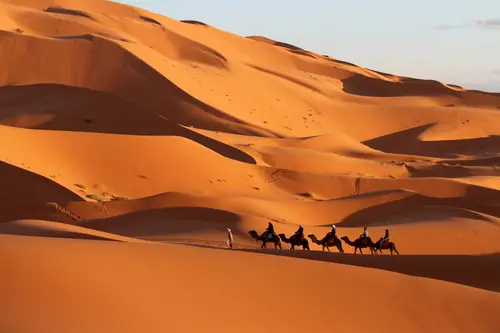
- Moussem of Tan-Tan (Morocco): On UNESCO's intangible cultural heritage list since 2008, this great gathering of the nomadic tribes of the Sahara celebrates their culture: tents, camels, poetry and song. Its dates vary from year to year: in 2026 it was held from 30 October to 3 November, after being moved from early October. Morocco also has many moussems, annual festivals held around a saint's tomb, whose dates are set locally.
- Fes Festival of World Sacred Music (Morocco): Not a pilgrimage, but a major gathering of spiritual music, Sufi music in particular, in late May or early June in the palaces and gardens of the medina.
Practical tips for every pilgrimage
- Clothing: Shoulders and legs covered for everyone; a headscarf for women in mosques and often in Orthodox churches; white or sober clothes in Ethiopia. Take off your shoes when asked.
- Photos: Ask before photographing worshippers, clergy and prayers. Some places ban photography: respect the rule, even if others do not.
- Crowds: Agree a meeting point with your companions, carry a copy of your passport and little cash, and move away from crushes. Avoid taking young children into the heart of the crowd.
- Heat and health: Water, a hat, sunscreen: many pilgrimages take place in full sun or in the hot season. Check vaccinations and malaria prevention with a doctor.
- Transport and accommodation: Book very early, or rely on a family or an association of the faithful, as most pilgrims do. Allow for much longer journeys than usual.
- Safety: Read the UK (GOV.UK) or French (France Diplomatie) travel advice just before you leave, sign up for your foreign ministry's alerts (FCDO email alerts in the UK) and follow the instructions of the authorities and organisers.
Further reading
- Timkat: Ethiopian Orthodox Epiphany
- Meskel: the Finding of the True Cross in Addis Ababa
- Vodun Festival: Ouidah, Benin
- Maha Shivaratri at Grand Bassin: Mauritius's Hindu pilgrimage
- Imilchil Marriage Festival: Morocco's High Atlas
- Fes Festival of World Sacred Music
- Public holidays in Senegal in 2027: Grand Magal, Mawlid, Tabaski
- Public holidays in Uganda in 2027: including Martyrs' Day
- Public holidays in Ethiopia in 2027: Timkat, Meskel, Fasika
- Dakar: the starting point for Touba and Tivaouane
- Kampala: Uganda's capital, gateway to Namugongo
- Addis Ababa: Meskel and Timkat in the capital
- Ouidah
- Tabaski 2027: date and travel tips
- Summer holidays 2027: where to go in Africa in July and August
- Events calendar: the continent's 47 big events