AfriqueUnie
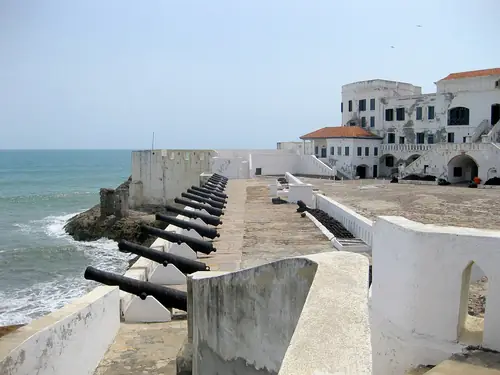
 Photo: ABORISADEADETONA · CC BY-SA 4.0
Published by Adama Doumbia, founder of Afrique Unie · updated 28 November 2026 · our method and sources
Nine economic hubs, nine different realities
Talking about "doing business in Africa" as if it were one thing makes little sense. Lagos, Nairobi, Abidjan, Johannesburg, Casablanca, Cairo, Accra, Dakar and Kigali differ in working language, pace and logistics. In some, a single meeting can cost half a day in transit; others are compact enough to fit several meetings into one morning.
Several of these cities are not political capitals: Lagos (Nigeria's capital is Abuja), Johannesburg (South Africa's institutions are split between Pretoria, Cape Town and Bloemfontein), Casablanca (Morocco's capital is Rabat) and Abidjan (Côte d'Ivoire's official capital is Yamoussoukro). If you need to meet ministries, check where they are before booking your flights.
Before you go: visas, invitation letters and documents
First, and often overlooked: a business visa is not a tourist visa. In many countries, attending meetings, negotiating a contract or speaking at a conference falls under a specific category; entering on a tourist visa to work can lead to refusal of entry. Rules depend on your nationality and change often: check them on the embassy website or the country's official e-visa portal, and beware of third-party sites that imitate them. Kenya, for example, has replaced the traditional visa with an Electronic Travel Authorisation (eTA) for most visitors.
An invitation letter from your local partner is often required. It states the purpose of the trip, the dates and the host company's details. Add a letter from your employer, paper copies of your documents and a passport valid for several months beyond your return, with blank pages.
Finally, pack plenty of business cards: they are still widely used, particularly in government and large companies. A French version is appreciated in French-speaking countries.
West Africa: Lagos, Abidjan, Accra and Dakar
- Lagos (Nigeria): The commercial capital of Africa's most populous country, Lagos is home to much of Nigeria's finance, telecoms and tech, as well as the national stock exchange. Business is done mainly on the islands: Victoria Island, Ikoyi and, increasingly, the Lekki peninsula. Murtala Muhammed Airport is in Ikeja, on the mainland: the drive to the islands can take under an hour at night and much longer at rush hour. Stay on Victoria Island or in Ikoyi, group your meetings by area and arrange a pre-booked airport transfer.
- Abidjan (Côte d'Ivoire): The leading economic centre of French-speaking West Africa, Abidjan is home to the headquarters of the African Development Bank (AfDB), which returned after several years in Tunis, and to the regional stock exchange (BRVM) shared by the WAEMU countries. Le Plateau, on the Ébrié Lagoon, is the historic business district; Cocody, Riviera and Zone 4 in Marcory mix offices and residences. Félix Houphouët-Boigny Airport is in Port-Bouët, to the south: journey times depend heavily on traffic on the bridges. Le Plateau is convenient for institutions; Cocody and Marcory suit a more residential stay.
- Accra (Ghana): Ghana's political and economic capital, Accra hosts the secretariat of the African Continental Free Trade Area (AfCFTA). Offices cluster around Airport City, a business district next to the airport, as well as in Ridge, Cantonments and the Airport Residential Area. Accra International Airport, known as Kotoka until February 2026, is close to the centre. English is the language of business. Staying near Airport City or in Cantonments keeps journeys short.
- Dakar (Senegal): Dakar is the headquarters of the Central Bank of West African States (BCEAO) and a regional base for international organisations and conferences. Le Plateau, at the tip of the peninsula, is home to ministries, banks and head offices; Almadies, Ngor and Mermoz host offices and residences. Blaise Diagne Airport is near Diass, around 40 kilometres from the centre: allow plenty of time on the toll motorway, or take the TER rail link, which has served the airport since September 2026 (around 55 minutes from Dakar station). Stay in Le Plateau for institutional meetings, or Almadies for somewhere quieter.
East, Southern and North Africa: Nairobi, Kigali, Johannesburg, Casablanca and Cairo
- Nairobi (Kenya): East Africa's hub, Nairobi hosts many regional headquarters and the United Nations Office at Nairobi in Gigiri, home to the UN Environment Programme and UN-Habitat among others. Business is split between Westlands, a mixed-use district north-west of the centre, and Upper Hill, to the west. Jomo Kenyatta Airport is in Embakasi, about 18 kilometres south-east of the centre; the toll expressway to Westlands has shortened some journeys, but traffic remains heavy at peak times. Westlands, Upper Hill and Gigiri are logical places to stay.
- Kigali (Rwanda): A compact capital known for its cleanliness, Kigali has made conferences a priority. The city hosted the AfDB annual meetings in 2014; completed in 2016, the Kigali Convention Centre then hosted the 2018 extraordinary African Union summit, where the AfCFTA agreement was signed, and the Commonwealth Heads of Government Meeting in 2022. As the airport is close to the centre, transfers are usually short. The centre and Kimihurura, around the convention centre, are convenient places to stay. On the last Saturday morning of each month, Umuganda, a compulsory community work session, slows activity right down. Plastic bags are banned.
- Johannesburg (South Africa): The continent's leading financial centre, Johannesburg is home to the JSE, Africa's largest stock exchange by market capitalisation, based in Sandton since 2000. Sandton is packed with head offices, banks and consultancies; Rosebank is another hub. From O. R. Tambo Airport, the Gautrain reaches Sandton in around 15 minutes. Stay in Sandton or Rosebank, near a Gautrain station. Security calls for genuine vigilance: use a car with a driver or a ride-hailing app, and avoid walking alone at night.
- Casablanca (Morocco): Morocco's economic capital, Casablanca is home to the Casablanca Stock Exchange and Casablanca Finance City (CFC), a financial hub created by a 2010 law and built on the site of the former Anfa airport. Boulevard d'Anfa, Maârif and the marina also host many offices. Mohammed V Airport is in Nouaceur, south of the city, and a rail link connects it to the centre. French is widely used in business alongside Arabic. Anfa and Maârif are convenient places to stay.
- Cairo (Egypt): A vast metropolis, Cairo is home to head offices, banks and government bodies, although the government and ministries began moving in 2023 to the New Administrative Capital, some 45 kilometres to the east. Downtown and Garden City host banks and embassies, Zamalek is a sought-after residential district on a Nile island, while Heliopolis, Nasr City and New Cairo attract more and more companies. The airport, to the north-east, is fairly close to Heliopolis; heading into the centre, traffic can be very slow. Stay near your meetings: crossing the city takes time.
Getting around, where to stay and security
Journey time is often the main constraint on a business trip to Africa's big cities. In Lagos, Cairo or Nairobi, plan no more than two or three meetings a day if they are in different districts, and leave a margin before a flight. Your local contacts know better than anyone how much time to allow.
On arrival, especially at night, opt for a transfer arranged in advance by your partner, your employer or your accommodation. Once there, ride-hailing apps provide a tracked journey; a car with a driver recommended by your contacts remains the most comfortable option for a day of meetings.
For accommodation, choose the district before the property, and check for backup power, good internet and secure access.
When it comes to security, discretion is your best ally: do not show off a watch, laptop or phone in the street, take off your conference badge outside and share your schedule with a colleague. Risks vary greatly from one city and district to another: read your government's travel advice for each country and sign up for its alert service where available.
Business culture: some pointers, without the clichés
There is no single African business culture, but a wide variety of settings, from Nairobi start-ups and Johannesburg multinationals to Dakar's civil service and Cairo's family firms. A few common threads come up often: the importance of personal relationships, respect for seniority and hierarchy, and the time devoted to greetings.
Greet everyone and exchange a few words before getting down to business. Use titles (Doctor, Director, Minister) until you are invited to do otherwise. Smart dress is the norm, even in the heat; tech circles are often more relaxed.
Be on time, but do not be surprised if a meeting starts late or is moved because of traffic. Confirm the day before by message. A first meeting is often about getting to know each other; decisions may take several exchanges.
In Muslim-majority countries, take prayer times and Ramadan into account, as working days may be shorter during the holy month. Everywhere, rely on your local contacts: they know the customs of their own world better than anyone.
Practical tips for daily life
- Working days and hours: In Egypt, the weekend falls on Friday and Saturday: Sunday is a working day and it is hard to get a meeting on a Friday. Elsewhere, the working week generally runs from Monday to Friday, but Friday afternoons can be quieter where many attend Friday prayers, such as Senegal and Morocco. Check public holidays, several of which follow the lunar calendar.
- Mobile money and bank cards: In Kenya, M-Pesa, launched in 2007, is used every day to pay, send money or settle a taxi fare, and mobile money is also very widespread in West Africa. Bank cards are accepted in most large establishments in business districts: tell your bank you are travelling and keep some local cash.
- Connectivity: A local SIM card or eSIM is the easiest option; buying a SIM generally requires your passport. Messaging apps are commonly used to confirm meetings. Have a backup option for video calls.
- Power cuts: Load-shedding has affected several countries in recent years, including South Africa, and many buildings run on generators. Bring a power bank and a universal adapter, and save your work regularly.
- Languages: English dominates in Lagos, Accra, Nairobi, Kigali and Johannesburg; French in Abidjan and Dakar, and it remains widely used in business in Casablanca; it is also spoken in Kigali, where English has largely replaced it since 2008. In Cairo, English is common in international companies, but a few words of Arabic are always appreciated.
Health: what to plan for
See a doctor or travel clinic several weeks before you leave. A yellow fever vaccination certificate is required to enter some countries, or if you arrive from a country where the disease is present: check the requirements for each stop on your itinerary.
Malaria is present in much of sub-Saharan Africa, including some major cities: preventive medication may be recommended, and protection against mosquitoes is essential. Johannesburg, Casablanca and Cairo have a different profile, to be assessed with your doctor.
Take out insurance covering medical costs and repatriation, identify a reputable clinic near where you are staying, drink bottled or filtered water and carry your usual medication with the prescription.