AfriqueUnie
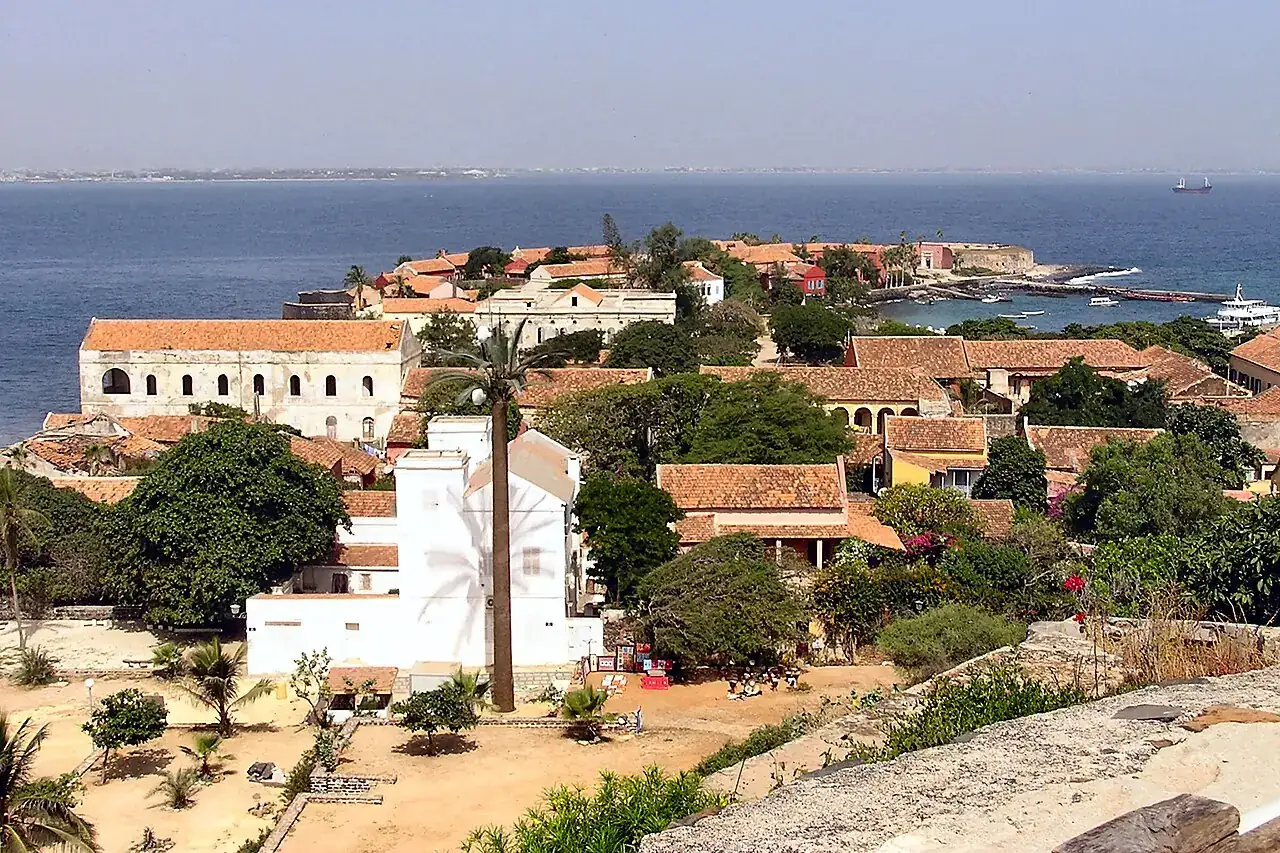 Photo: Manu25 · CC BY-SA 4.0
Published by Adama Doumbia, founder of Afrique Unie · updated 28 November 2026 · our method and sources
Being useful: the question to ask first
Before looking for a placement, ask yourself what you can actually contribute. African organisations and institutions rarely need goodwill without skills: they are looking for teachers, engineers, qualified health workers, managers, agronomists, and digital or communications specialists. The more closely your placement matches your training, the more useful it will be, and the more valuable the experience will be for you.
Length matters just as much. A few weeks is barely enough to understand the context, learn the unwritten rules and be accepted by a team. That is why public volunteering schemes offer commitments of six months to two years. If you only have a few weeks, responsible travel, a supervised internship or a study stay is often a more honest choice than an improvised "volunteering" trip.
Finally, remember that you will mainly be there to learn. The best volunteers listen, work alongside local colleagues rather than instead of them, and pass on their skills so that the project carries on after they leave.
Public volunteering schemes
- UN Volunteers (UNV): Founded in 1970 and based in Bonn, the UNV programme is administered by the United Nations Development Programme. It places volunteers, often experienced professionals, with UN agencies worldwide, including in many African countries.
- VSO (UK): Founded in Britain in 1958, VSO is an international development charity working with international, national and community volunteers in countries across Africa and Asia, on education, health and livelihoods.
- Peace Corps (US citizens): An independent US government agency set up in 1961, the Peace Corps recruits American citizens, usually graduates, for assignments of at least two years after around three months of training.
- European Solidarity Corps: A European Commission programme that succeeded the European Voluntary Service, open to people aged 18 to 30. It is mainly focused on Europe: check the official EU portal to see whether any placements are offered in African countries.
- VIE and VIA (French and EU citizens): France's international volunteering scheme in companies or public administration is open to people aged 18 to 28, for 6 to 24 months with French companies or French public administrations abroad. It is run by the public agency Business France and covers many countries, including several in Africa.
- French international solidarity volunteering (VSI): Governed by a 2005 French law, a VSI placement is full-time with a state-approved association, for at least one year. Volunteers receive an allowance, which is not a salary, and social protection. There is no nationality requirement, and associations select mainly on skills.
- French civic service abroad: France's civic service lets young people commit to six to twelve months of public-interest work. Abroad, it is open from the age of 18, and placements are managed by the public platform France Volontaires.
Choosing a reputable organisation
Outside public schemes, there are plenty of offers of varying quality. A few simple questions help you sort them. Who asked for you to come: a local association or institution that has identified a need, or an organisation mainly looking for paying participants? Is the role linked to your skills, with a clear job description? Who will supervise you on site, and who will take over once you leave?
Financial transparency is another good sign. A reputable organisation explains clearly what any fees cover and how much goes to the local project. It trains you before departure, supports you during the placement and holds a debrief when you return, and it checks your background, for example with a criminal record check if you will be working with children. Be wary of organisations that accept anyone, for any length of time, without an interview.
In Canada, Belgium or Switzerland, ask your country's public development cooperation services which programmes are recognised.
Voluntourism and orphanages: what to avoid
Voluntourism refers to trips sold as humanitarian missions, often short and fee-paying, organised by travel companies. Some of them deliberately blur the line with genuine international volunteering by borrowing its vocabulary: the customer becomes a "volunteer" and the holiday becomes a "mission".
The most serious problem concerns orphanages. Researchers and NGOs have shown that visits and volunteer stays in orphanages can fuel a system in which children, many of whom still have a living parent, are placed in institutions to attract donations and visitors. Bonds formed and then broken each time a volunteer leaves also harm children who are already vulnerable. The rule is simple: do not visit orphanages, and turn down any placement that puts you alone with children without a background check or relevant qualifications.
Likewise, do not provide medical care, teach or build a school if you are not qualified to do so: if you would not do it at home, do not do it abroad.
Studying in Africa: exchanges and leading universities
The simplest way to spend a semester or a year studying in Africa is through your own university. Erasmus+, the European programme for education, training and youth, is not limited to Europe: it also supports cooperation and mobility with partner countries, including African universities, depending on the agreements in place. Your university's international office can tell you which exchanges exist. UK students should note that the British government has announced the UK will rejoin Erasmus+ from 2027.
You can also apply directly to an African university. Here are some well-known institutions with reputations that reach well beyond their own countries. Their positions vary from one league table to another, so judge them mainly on the courses that interest you.
- University of Cape Town (South Africa): Founded in 1829 as the South African College, it is South Africa's oldest university, known for its research and its diverse campus.
- University of the Witwatersrand, or Wits (South Africa): A public research university in Johannesburg that grew out of a school of mines founded in 1896 and gained full university status in 1922.
- Makerere University (Uganda): Uganda's largest and oldest institution of higher learning, in Kampala, and the oldest university still operating in East Africa.
- University of Nairobi (Kenya): Kenya's largest university, which became independent in 1970 when the University of East Africa split into three: Makerere, Nairobi and Dar es Salaam, in Tanzania.
- Cheikh Anta Diop University, Dakar (Senegal): Established in 1957 and inaugurated in 1959, one of the oldest universities in West Africa, welcoming students from many countries and teaching in French.
- Mohammed VI Polytechnic University (Morocco): A non-profit private research university founded in 2013, with its main campus in Benguerir, near Marrakesh, and another in Rabat.
- Ashesi University (Ghana): A private, non-profit university in Berekuso, near Accra, which began teaching in 2002 and places strong emphasis on ethics and leadership.
- African Leadership University (Rwanda and Mauritius): A higher education network whose first campus opened in Mauritius in 2015, followed by a second in Kigali, Rwanda, in 2017.
Scholarships, student visas and internships
For scholarships, go straight to official sources: your university's international office, your government's higher education ministry or department, the international pages of the African universities you are interested in, and the official Erasmus+ portal. Be wary of websites that promise scholarships in exchange for a fee: a genuine scholarship never requires payment.
Student visa and residence permit rules differ from country to country and change frequently. Only the embassy or consulate of the host country can give you a definitive answer: contact them early, as the process can take several weeks. Do not travel on a tourist visa to study or work, even unpaid, if the country requires a different status.
An internship is another good way in, especially as part of your degree. Make sure your institution signs an internship agreement setting out your tasks, supervision and cover. Companies operating in Africa, embassy cultural services and UN agencies sometimes offer internships: apply through their official websites.
Health, insurance and safety
- Pre-travel appointment: Book an appointment at a travel health clinic several weeks before you leave. Yellow fever vaccination is required or recommended in several countries, and malaria prevention is often advised: the clinician will tailor the advice to your destination and length of stay.
- Health and repatriation insurance: For a long stay, check exactly what your cover includes: local treatment, hospital care, repatriation and personal liability. Some public schemes include cover as part of the volunteer's status; students should check with their university and their insurer.
- Safety and areas to avoid: Read your government's travel advice (gov.uk, the US State Department, France Diplomatie, etc.) before choosing a placement: some regions are advised against. Register with your embassy if your government offers this service.
- Mental health: Culture shock, isolation or a disappointing placement are common during a long stay. Stay in touch with family and friends, and know whom to contact within your organisation if things go wrong.
Preparing to leave
Learn at least the basics of the local language: a few words of Wolof in Senegal, Swahili in Kenya or Tanzania, Kinyarwanda in Rwanda or Malagasy in Madagascar will open many doors. In French-speaking countries such as Senegal, Benin or Madagascar, French helps you fit in; in Ghana, Uganda, Kenya or South Africa, English is essential.
Read up on the country's history and society, on local customs regarding dress, greetings and religion, and on photography etiquette: always ask before taking someone's picture, and do not post photos of children on social media. Finally, think about coming home: volunteering or studying abroad is all the more valuable when you can explain what you learned and achieved.