 AfriqueUnie
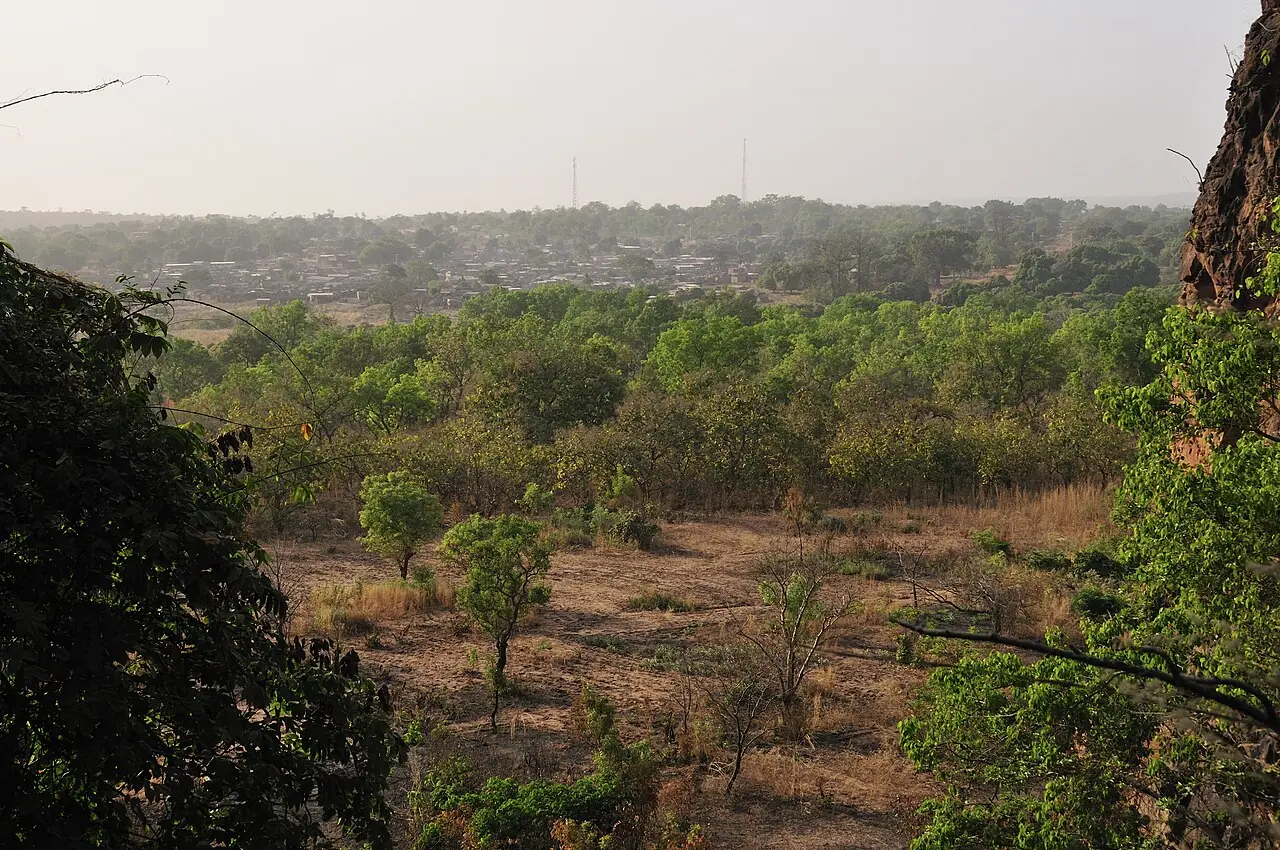 Photo: This Photo was taken by croucrou / Sylvain Crouzillat Cette Photo a été prise pa · CC BY-SA 3.0
 Burkina Faso
Published by Adama Doumbia, founder of Afrique Unie · updated 28 November 2026 · our method and sources
Why go to Burkina Faso
First, one essential point: Burkina Faso has been going through a serious security crisis for several years, and almost the entire country is currently classed as an area where all travel is advised against by European foreign ministries. Before even considering a trip, check your government's official travel advice, which changes regularly. What follows describes the country as we hope to rediscover it once the situation allows, and as it is remembered by those who have known it.
You don't come to Burkina for grand monuments, but for its people. The country's very name, chosen in 1984 and forged from Mooré and Dioula, means “the land of upright people”, and that idea of integrity, of keeping your word, still shapes the way you are welcomed. Here people take time to greet you, to ask after your family, to share a glass of dolo, the millet beer fermented in great earthenware jars. Conversation matters more than the day's itinerary, and it is often conversation that makes the journey.
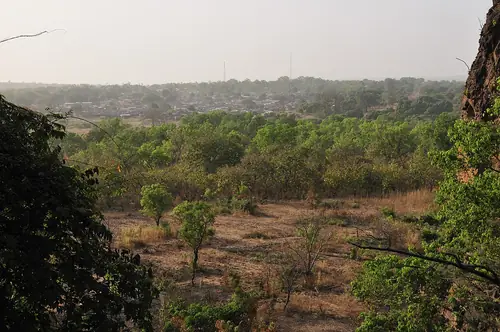
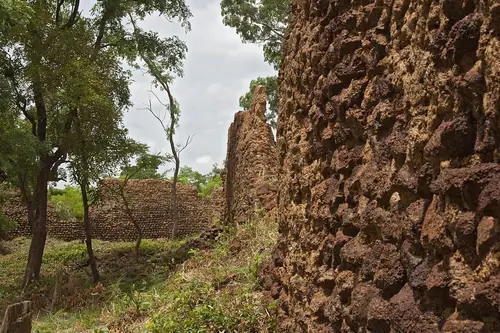
Burkina is also a land of creativity. Since 1969 Ouagadougou has hosted FESPACO, the great gathering of African cinema, and it has established itself as a capital of craftsmanship, from lost-wax bronze casting to hand-woven cotton. The wooden masks that emerge at funerals and harvest festivals among the Bwa and the Mossi are among the most striking in West Africa. Bobo-Dioulasso, meanwhile, pulses to the sound of the balafon and the djembe. In the south and west, the landscapes are full of surprises: the sandstone needles of Sindou, the Karfiguéla waterfalls, the painted houses of Tiébélé, the stone walls of Loropéni. All good reasons to keep this country in mind and follow its news, until you can return with peace of mind.
History and culture
From around the 15th century, the Mossi kingdoms took shape on what is now Burkinabè soil, the best known being the kingdom of Ouagadougou, ruled by the Mogho Naba. Their robust political organisation allowed them to hold out for a long time against the great neighbouring empires. To the west and south lived other peoples, the Bobo, Senufo, Lobi and Gurunsi, whose structures were often more village-based, and whose legacy survives today in a remarkably varied architecture and art.
Colonised by France at the end of the 19th century, the territory became Upper Volta, a colony that was dismantled and then reconstituted, and gained independence in 1960. In 1983 Captain Thomas Sankara seized power and renamed the country Burkina Faso the following year; he remains a powerful presence in people's memories. After the long rule of Blaise Compaoré, toppled by a popular uprising in 2014, the country has faced attacks by armed groups since the mid-2010s, followed by a succession of coups, which have profoundly disrupted the daily lives of millions of Burkinabè.
8 experiences not to miss in Burkina Faso
- 01Attend FESPACOWhen the situation allows, experience an edition of the festival in Ouagadougou, between open-air screenings and passionate debates with film-makers.
- 02Listen to the balafon in BoboSpend an evening in a maquis in Bobo-Dioulasso, where musicians play the balafon and the djembe late into the night.
- 03Visit a bronze workshopWatch lost-wax casting in Ouagadougou, from the figurine modelled in wax to the molten metal poured into the clay mould.
- 04Taste doloShare a calabash of millet beer at a dolotière's, in a courtyard where people chat sitting on wooden benches.
- 05Walk among the Sindou PeaksExplore the sandstone corridors carved by erosion with a local guide, just as the evening light turns the rock golden.
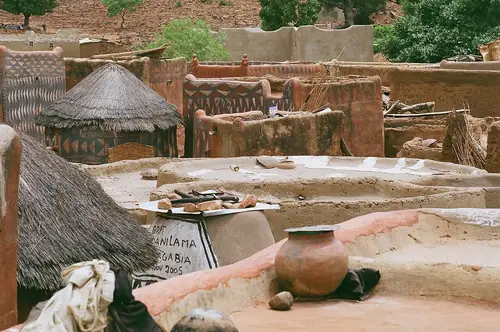
- 06Discover the painted housesAdmire the geometric patterns that Kassena women apply to the earthen walls of the royal court at Tiébélé.
- 07See the Laongo sculpturesWander among granite boulders carved on the spot by artists from several continents, east of the capital.
- 08Swim at the foot of the waterfallsEnjoy the cool of the Karfiguéla waterfalls near Banfora, before looking for the hippos of Lake Tengréla.
When to go to Burkina Faso
The most pleasant season runs from November to February: nights are cool and days bright and dry, although the harmattan, the dust-laden wind blowing in from the Sahara, sometimes veils the sky in December and January. From March the heat becomes oppressive, with temperatures regularly topping 40 °C in April and May, until the rains arrive. The wet season, from June to September, turns the country spectacularly green and makes the south-west very beautiful, but some dirt roads become difficult. These pointers remain theoretical for as long as the security situation does not allow travel.
Getting around
In normal times, Burkina's coach companies are known for their reliability, with regular services between Ouagadougou, Bobo-Dioulasso and Banfora, and an old railway linking the country to Abidjan. In the towns, mopeds and motorbikes rule, and Ouagadougou's green taxis are often shared. Today, however, the roads carry major risks, and overland travel outside the capital is strongly advised against. Before making any plans, you would need to consult your embassy and your government's official travel advice, and never travel without precise, up-to-date knowledge of the ground.
Etiquette and customs
Greetings are an art in Burkina: you never start a conversation, or even a purchase, without asking how the family is, how someone's health is, how work is going. Take that time, it opens every door. Give and receive with your right hand. Elders are treated with great deference, and you should avoid photographing a person, a sacred place or a masked ceremony without having been clearly invited to. In villages, it is customary to introduce yourself to the chief or a village elder before wandering around. Clothing that covers your shoulders and knees is appreciated, and humour, which is everywhere, is often the best way to make a connection.
Food and drink in Burkina Faso
The everyday staple is tô, a thick paste of millet, sorghum or maize that you roll with your fingertips before dipping it into a slippery okra or baobab-leaf sauce. Riz gras, rice cooked in a meat and tomato broth, is shared at celebrations. Poulet bicyclette, a free-range local breed of chicken with firm, flavourful flesh, is eaten grilled or braised in the maquis. You will also come across babenda, a mix of leaves and grains, bean fritters first thing in the morning and, to drink, bissap, fiery ginger juice or the dolo served in neighbourhood cabarets.
 Benin
 Cape Verde
 Côte d'Ivoire
 Ghana
 Guinea
 Guinea-Bissau
 Liberia
 Mali
 Mauritania
 Niger
 Nigeria
 Senegal
 Sierra Leone
 The Gambia
 Togo