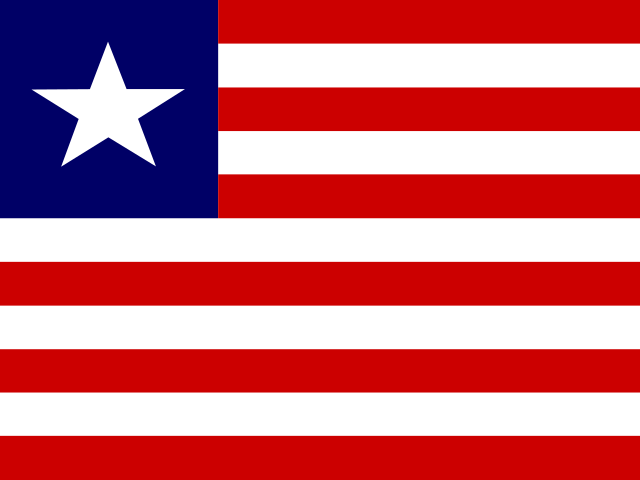
Liberia is like none of its neighbours. Its streets are named after American presidents, its flag borrows the star and stripes of the United States, and the English spoken here carries hints of the American South mixed with local turns of phrase. This singular history, that of a country founded by freed slaves from across the Atlantic, gives travel here a particular depth: walking around Monrovia, you understand how America and Africa met, sometimes painfully.
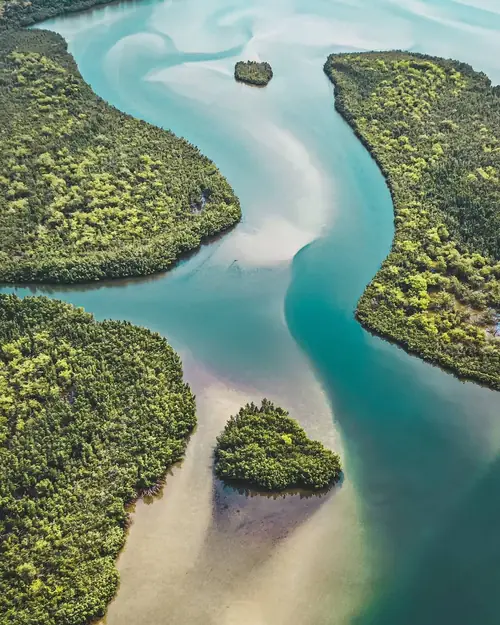
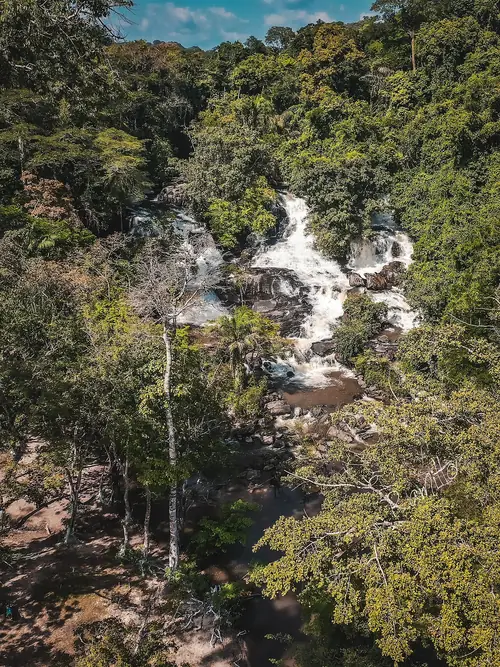
It is also one of the greenest countries in the region. A large share of the remaining Upper Guinean primary forest lies here, in a forest block that shelters forest elephants, pygmy hippos, chimpanzees and a multitude of birds. Sapo National Park is its wild heart, hard to reach but unforgettable. Closer to the coast, Lake Piso stretches its calm waters behind a strip of beaches, and Kpatawee Falls offer a refreshing swim deep in the hinterland.
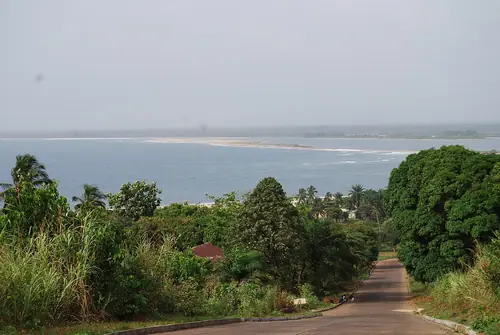
Finally, Liberia has a surfer's soul. Robertsport, in the north-west, unrolls several long, consistent waves in front of a fishing village, and a small community of Liberian surfers grew up here after the war. Tourism is still in its infancy, roads are often poor and comfort is limited outside the capital: this is a trip for those who enjoy the unexpected and straightforward encounters. Liberians, direct and warm, love to talk and will ask you a thousand questions. Before you go, check your government's official travel advice, as the health and security situation can change.
History and culture
From 1822, the American Colonization Society settled free Black people and former slaves from the United States on the Grain Coast, landing notably on Providence Island, in Monrovia. In 1847 the colony declared its independence, making Liberia Africa's first republic, with Joseph Jenkins Roberts as its first president. For more than a century, an Americo-Liberian elite ruled the country, at the cost of deep inequalities with the indigenous peoples: Kpelle, Bassa, Gio, Mano, Kru, Vai and others.
Samuel Doe's coup in 1980 ended that dominance but ushered in a period of violence. Two civil wars, from 1989 to 2003, devastated the country. With peace restored, Ellen Johnson Sirleaf was elected in 2005, becoming the first woman elected to lead an African state; she received the Nobel Peace Prize in 2011, shared notably with the Liberian activist Leymah Gbowee. The country then faced the Ebola epidemic and is continuing its democratic reconstruction.
8 experiences not to miss in Liberia
Photo : mjmkeating · CC BY 2.001Surf at RobertsportPaddle out on one of the bay's waves, from the easiest to the longest, then watch the fishermen's pirogues come home at sunset.
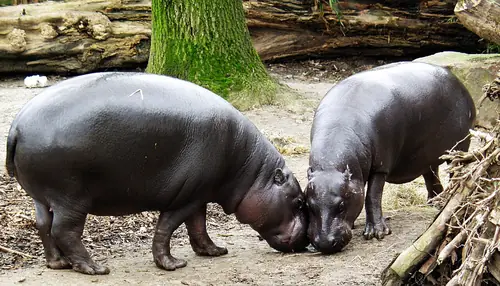
Photo : Raimond Spekking · CC BY-SA 4.003Explore Sapo National ParkSet off on an expedition of several days into the primary forest, in search of the tracks of elephants and pygmy hippos.
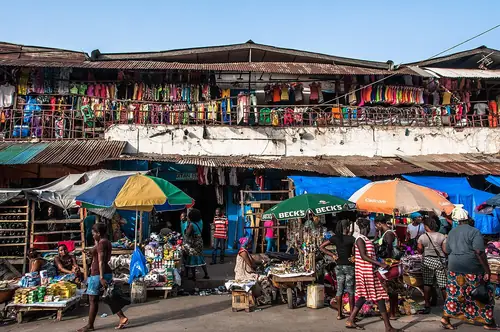
Photo : Mark Fischer · CC BY-SA 2.005Walk around WatersideDive into Monrovia's great market, on the banks of the Mesurado River, among fabrics, smoked fish and vendors selling just about everything.
06Read history on Providence IslandVisit the island in the middle of the estuary where the first settlers landed, and reflect on the founding of the country.
07Climb up to the ruins of the DucorFrom Mamba Point, take in the shell of Monrovia's former grand hotel, which towers over the city and the ocean.
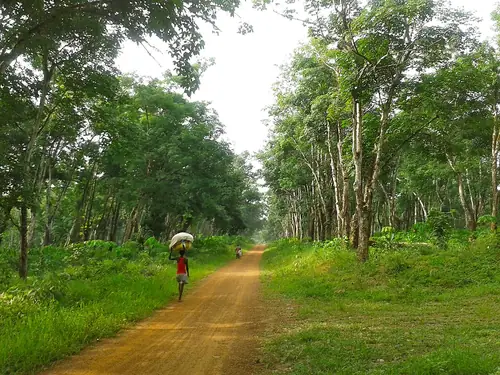
Photo : Erik Cleves Kristensen · CC BY 2.008Discover the Harbel plantationsLearn the story of the rubber tree and rubber itself, a pillar of the Liberian economy in the 20th century.
When to go to Liberia
The dry season, from November to April, is the only time really recommended for travelling in Liberia. Dirt roads in the interior become passable then, which is essential for reaching Sapo, and the skies clear over the coast. December and January are the most comfortable months. The rainy season, from May to October, is particularly intense: Monrovia is one of the wettest capitals in the world, and many roads turn into impassable quagmires. For surfing, the most consistent swells tend to arrive from April to October, but the dry season also delivers good sessions in cleaner conditions. Whatever the season, pack light clothing and good protection against mosquitoes.
Getting around
Roberts International Airport lies about sixty kilometres from Monrovia, towards Harbel: allow a good hour by road. In town, shared yellow taxis and keke (motorised tricycles) are the most common ways to get around; motorbike taxis are banned in some parts of the centre. Getting to Robertsport takes two to three hours, partly on a tarmac road and finishing on a dirt track. Inland, roads are gradually improving, but reaching the south-east, and therefore Sapo, requires a four-wheel drive, an experienced driver and often a very long day. Domestic flights are very limited. Avoid driving at night.
Etiquette and customs
In Liberia people greet each other with the famous snap handshake: a handshake that ends with your middle fingers snapping against each other. Don't worry if you fluff it, people will happily teach you. Conversations are direct, and you'll sometimes be called “my man” or “my sister” with easy familiarity. Liberian English has its own expressions: someone will say “I coming” to mean they'll be back shortly. The country is very religious, mostly Christian with a significant Muslim community: dress respectably in places of worship. As elsewhere, ask before taking photos, and steer clear of government and military buildings. The US dollar circulates widely alongside the Liberian dollar.
Food and drink in Liberia
Liberian cooking is generous and often fiery. Palm butter, a thick sauce made from palm nuts, simmers with fish or chicken and is eaten with rice. Cassava leaf and potato greens, cassava or sweet-potato leaves cooked for a long time, are everywhere. Fufu and dumboy, doughs made from fermented or pounded cassava, accompany light fish soups. In Robertsport, grilled fish and, in season, lobsters come straight off the pirogues. On the streets of Monrovia you'll find plantain fritters, jollof rice and fresh coconuts. As for drinks, try ginger juice and, in moderation, village palm wine.
The best time to visit Liberia: November to April.
What should I see first in Liberia?
The must-sees: Sapo National Park, Lake Piso, Kpatawee Falls.
Which cities should I visit in Liberia?
Monrovia, Robertsport, Buchanan. The capital is Monrovia.
How much should I budget for a trip to Liberia?
Mid-range: around €60–120 per person per day, excluding flights. This is only a guide and depends above all on the accommodation and activities you choose.
What currency and languages are used in Liberia?
Currency: Liberian dollar (LRD). Languages: English.
How do I get to Liberia?
The main international airport has the code ROB. Compare flights with the ‘Flights’ button on this page.
Do I need a visa to visit Liberia?
Entry requirements depend on your nationality and change regularly. Check them on the country's official website or with your foreign ministry before booking, and make sure your passport is valid.
What should I eat in Liberia?
Dishes to try while you're there: Rice and palm butter, fufu.
Map
Liberia on the map
Cities Places to see · Approximate positions
On the ground
Getting around and staying healthy
Getting around
There are no passenger trains or scheduled domestic flights for visitors, so travel is by road. Shared taxis and minibuses leave Monrovia for Robertsport, Buchanan, Gbarnga and Ganta. Paved roads are scarce beyond the main routes, and many become difficult in the rainy season, from May to October. In Monrovia, yellow taxis and kekes (tricycles) are everywhere; for the interior, hire a 4x4 with driver. Driving is on the right.
Health and safety
Yellow fever
Certificate required only if you arrive from, or transited through, a country with a risk of yellow fever (from 1 year, incl. airport transits over 12 h); vaccine recommended for the whole country (from 9 months).
Malaria
Present throughout the country: ask a doctor about preventive medication and protect yourself from mosquitoes.
Water and food
Unless your accommodation says otherwise, drink sealed bottled or filtered water, and wash your hands often.
Affiliate cookiesWe would like to load a script from our partner Travelpayouts. It may set cookies so that we receive a commission when you book through our links, at no extra cost to you. If you decline, the site works in exactly the same way. Find out more
 AfriqueUnie
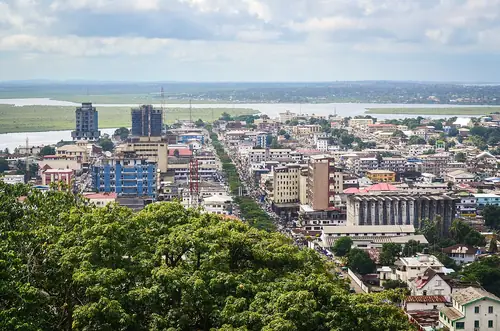
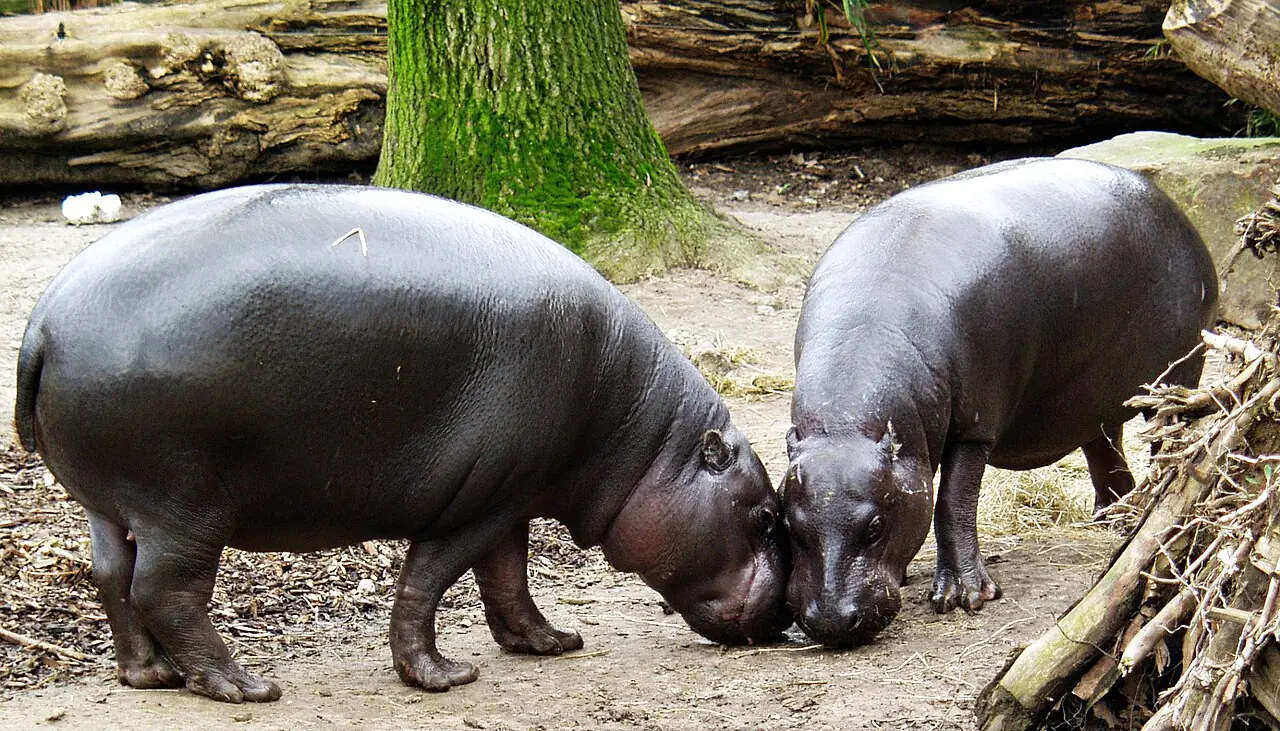 Photo: Raimond Spekking · CC BY-SA 4.0
 Liberia
 Benin
 Burkina Faso
 Cape Verde
 Côte d'Ivoire
 Ghana
 Guinea
 Guinea-Bissau
 Mali
 Mauritania
 Niger
 Nigeria
 Senegal
 Sierra Leone
 The Gambia
 Togo