AfriqueUnie
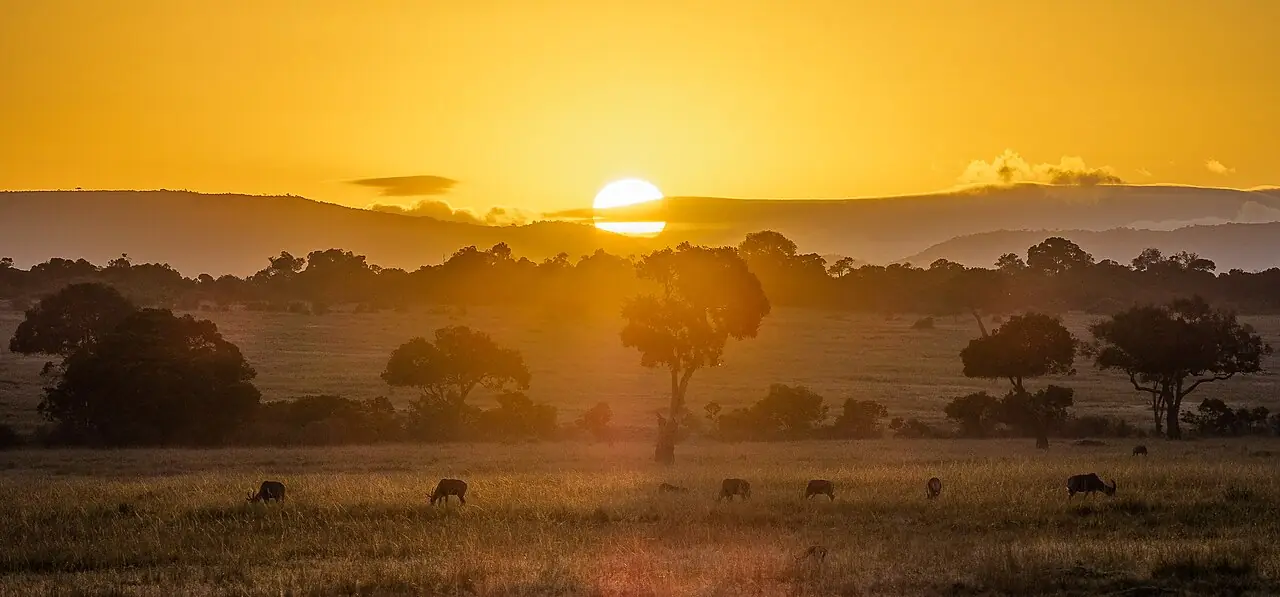 Photo: Danijel Mihajlovic · CC BY-SA 4.0
Published by Adama Doumbia, founder of Afrique Unie · updated 28 November 2026 · our method and sources
Why July is a great month for a safari
In July the dry season is in full swing on both sides of the equator. In East Africa it generally runs from June to October; in southern Africa, from May to October. Vegetation turns yellow and thins out, tracks are passable and wildlife gathers around rivers and waterholes: sightings are easier than in the rainy season.
July also coincides with the European school holidays. Together with August, it is the month when camps, domestic flights and gorilla permits sell out fastest: for small camps and the most popular parks, book six months to a year ahead.
As for the weather, the southern winter makes mornings cool or even cold. According to the climate averages used on our When to go pages, July averages about 22°C in the afternoon and 4°C at night in Gaborone, 21°C and 6°C in Windhoek, and 24°C and 12°C in Nairobi. These figures are for the capitals: in the parks, the difference between day and night can be greater.
Kenya and Tanzania: the Great Migration
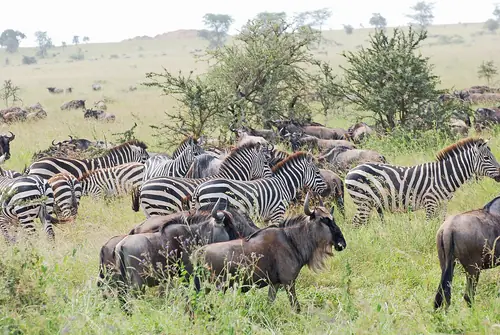
The Great Migration is the annual movement of more than a million wildebeest, along with zebras and gazelles, between the Serengeti in Tanzania and the Maasai Mara in Kenya. In July, the herds usually leave the western Serengeti and head for the north of the park, then start arriving in the Maasai Mara. The first crossings of the Mara River often take place between July and September.
The timing depends on each year's rains: no crossing date can be guaranteed. Rather than aiming for a particular day, plan at least three or four nights in the area, in the Maasai Mara or the northern Serengeti, and trust your guides, who follow the herds day by day.
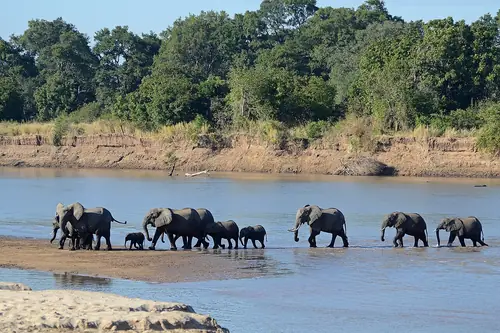
The migration is not everything. July is also an excellent time for Amboseli and its elephants below Kilimanjaro, for Samburu National Reserve, for the Ngorongoro Crater and for Tarangire, where elephants gather along the river in the dry season. In southern Tanzania, Nyerere National Park, formerly the Selous, is ideal for boat and walking safaris.
- Kenya: The Maasai Mara for the migration, Amboseli, Samburu. Some areas in the north and east of the country, near the borders, are advised against by the French and British authorities: these parks are not among them, but check official advice before booking.
- Tanzania: The northern Serengeti, Ngorongoro, Tarangire, Nyerere; and you can end your trip on Zanzibar, which is also in its dry season.
Botswana: the Okavango in flood in midwinter
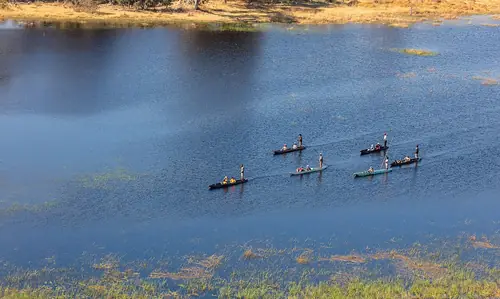
In July Botswana experiences something unique: rain that fell months earlier on the Angolan highlands reaches the Okavango Delta and floods it, while the rest of the country is bone dry. Wildlife flocks to this giant oasis, which you explore by 4x4, on foot and by mokoro, the traditional dugout canoe.
Further east, Chobe National Park draws huge herds of elephants to the riverbank in the dry season, which you can also watch from a boat. Nights are cold: bring a warm jacket, a hat and gloves for dawn drives.
Namibia and South Africa: self-drive safaris
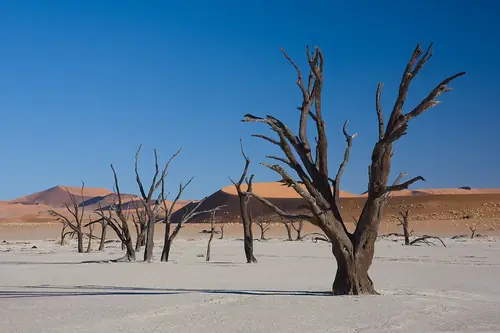
In Namibia, Etosha National Park is at its best in the dry season: under clear skies, elephants, lions, giraffes and rhinos come to drink at the waterholes, where you wait in your car. It is one of the easiest parks to visit in a hire car, combined with the Sossusvlei desert.
In South Africa, the southern winter gives Kruger National Park sparse vegetation and excellent visibility, with cold mornings and mild days. Its network of roads and rest camps also makes self-drive safaris possible, or you can stay in a private reserve with guides.
Zambia and Zimbabwe: walking safaris and Victoria Falls
Zambia and Zimbabwe are famous for walking safaris, an intense way to experience the bush with an armed guide and a tracker. In July the dry season is well established in South Luangwa, Kafue, Mana Pools and Hwange, where elephants gather around the waterholes. Days stay mild and nights cool.
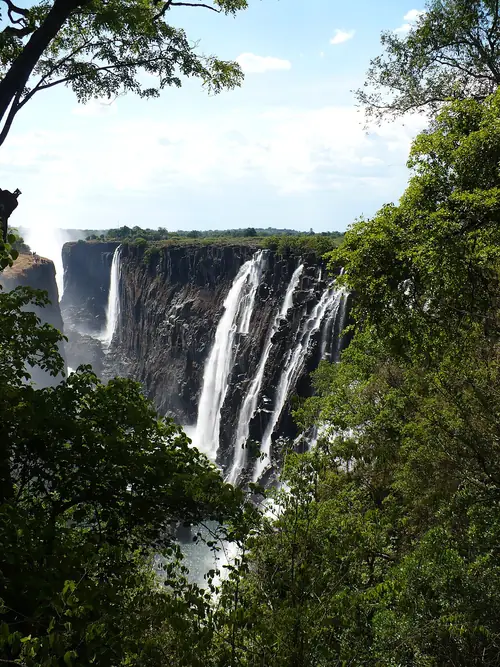
Between the two countries, Victoria Falls still carry a large volume of water in July, after the high water at the end of the rainy season: the sight is powerful, with plenty of spray. They are easy to combine with Chobe in Botswana or with Hwange.
Rwanda and Uganda: gorillas in the dry season
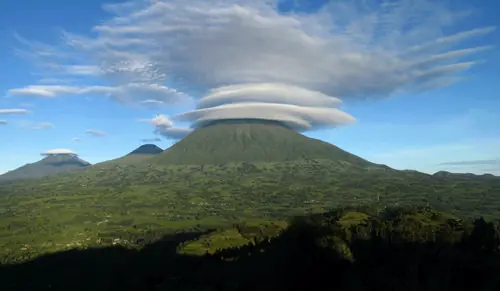
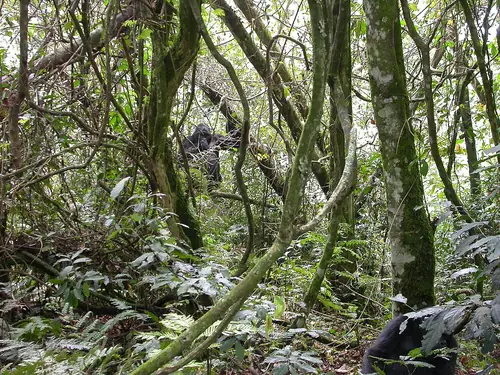
From June to September, the dry season makes the trails less muddy in Volcanoes National Park in Rwanda and Bwindi Impenetrable Forest in Uganda: it is a sought-after time for mountain gorilla trekking. Permits, limited in number each day, sell out very quickly in July: book them before the rest of your trip.
Before booking, read the official advice carefully. Both parks lie near the border with the DR Congo, where the security situation has deteriorated, and the Ebola outbreak in the region led in 2026 to health checks and entry restrictions for travellers who had been in certain countries. Our Rwanda and Uganda budget and entry requirements guides cover these rules.
Off the beaten track: Gabon
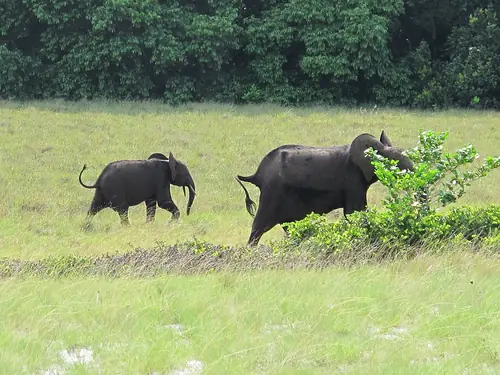
In Gabon, July falls in the long dry season. It is the time to combine forest and ocean in Loango, where humpback whales pass offshore from July to September, and to track the mandrills of Lopé. A very different, forest-based safari, more demanding but far less crowded.
Where not to go on safari in July
In West Africa, July is the height of the rainy season: humid heat, storms and tracks that are sometimes cut off. The region's parks are best visited in the dry season, generally from November to April.
We do not recommend any park in an area advised against by the French foreign ministry or the UK government, whatever the season. This applies to some once-famous parks in West and Central Africa, and to certain reserves close to unstable borders. Always check the official advice map for the specific park you have in mind.
Booking a July safari: our tips
- Book early: Six months to a year ahead for small camps, domestic flights and gorilla permits.
- Stay several nights: At least three nights per park, four for the migration: the animals do not follow your schedule.
- Consider the shoulder seasons: If your dates are flexible, late June and October often offer good conditions with fewer people.
- Choose less famous parks: Kafue, Nyerere or the northern Serengeti away from the crossing points are often quieter than the busiest areas.
- Dress in layers: A warm jacket, hat and gloves for dawn in southern Africa; neutral colours everywhere.
- Health: Malaria is present in most of these parks: get advice from a doctor, and check yellow fever vaccination requirements for your route.
Further reading
- The safari guide: choosing your country, types of safari, budget and good habits
- The best safari parks: our favourite parks, region by region
- Where to go in Africa in July: every destination for the month, safari or not
- Kenya in July: weather and tips
- Tanzania in July: weather and tips
- Namibia in July: weather and tips
- Maasai Mara
- Serengeti National Park
- Okavango Delta
- Chobe National Park
- Etosha National Park
- Kruger National Park
- South Luangwa National Park
- Mana Pools National Park
- Victoria Falls
- Volcanoes National Park
- Bwindi Impenetrable Forest
- Gabon nature guide: Loango, Lopé, Ivindo and Pongara